Matternet M3 Drone Platform Targets Rooftop Delivery Micro-Hubs
Matternet unveiled its M3 autonomous drone delivery platform on September 28, 2026, pairing a new aircraft, dock, and drop-box portal for rooftop micro-hubs. Commercial service is targeted for the second half of 2027, with implications for logistics operators and fleet planners watching the autonomous delivery market.

Quick answer
Matternet unveiled its M3 autonomous drone delivery platform on September 28, 2026, pairing a new aircraft, dock, and drop-box portal for rooftop micro-hubs, with commercial service targeted for the second half of 2027.
- The M3 system is designed for restaurants, retailers, and hospitals to send packages without staff on site
- Matternet is headquartered in Mountain View, California
- Commercial service is targeted for the second half of 2027
- The announcement was reported by DRONELIFE on September 29, 2026
Evidence: DRONELIFE
Market context
Turn market news into a buy, repair, or trade-in decision.
Compare pre-owned availability, resale timing, and repair economics before the market moves again.

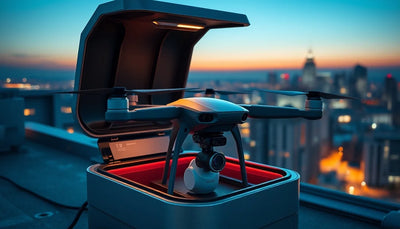
Matternet, the Mountain View, California company focused on autonomous drone logistics, unveiled its next-generation M3 delivery platform on September 28, 2026, according to reporting by DRONELIFE. The announcement pairs a new aircraft with a dock and drop-box portal, creating a system designed so restaurants, retailers, and hospitals can send packages without staff physically on site.
The commercial service target lands in the second half of 2027, giving fleet operators, logistics providers, and procurement teams a concrete window to evaluate how autonomous rooftop delivery might fit into their operational planning. For the broader commercial drone market, the M3 announcement signals continued investment in infrastructure-driven delivery models rather than point-to-point pilot-operated flights.
What the M3 platform actually changes
The M3 system is built around rooftop micro-hubs, a design choice that shifts the operational burden away from ground-level staff interaction. Instead of requiring a person to receive, load, or unload each package, the dock and drop-box portal are intended to handle those functions autonomously. DRONELIFE reports that the system is aimed at restaurants, retailers, and hospitals, sectors where labor availability and on-site staffing constraints have historically limited delivery drone adoption.
For commercial operators, this matters because it changes the cost structure of drone delivery. A system that removes the need for staff on site reduces the marginal labor cost per delivery, which is often the deciding factor in whether drone logistics programs scale beyond pilot projects. Fleet managers evaluating delivery drones should watch whether the M3's rooftop infrastructure approach proves more reliable than curbside or parking lot handoff models, which have faced weather, security, and access challenges in early deployments.
What this means for drone owners and the market
The M3 announcement is a market signal as much as a product reveal. Matternet's move toward a fully integrated aircraft, dock, and portal system suggests that the commercial delivery drone segment is consolidating around infrastructure-heavy models, where the aircraft is only one component of a larger logistics stack. For individual drone owners and small operators, this does not create immediate buying pressure, but it does indicate where enterprise capital is flowing.
For pre-owned DJI drone buyers and repair customers, the relevant takeaway is that the commercial drone market continues to bifurcate. Enterprise logistics platforms like the M3 operate in a different procurement and maintenance ecosystem than camera drones, inspection aircraft, and mapping platforms. Buyers evaluating pristine pre-owned DJI drones for commercial work should consider whether their use case sits closer to autonomous delivery infrastructure or to piloted inspection and imaging, because the resale value and spare parts demand differ significantly between those segments. Readers tracking these shifts can review the Drone Wiki for context on how commercial drone categories are evolving. For owners evaluating service and lifecycle risk, Drone Wiki explains the relevant repair, parts, resale, or operational path.
The second half of 2027 commercial service target also gives fleet operators time to assess maintenance and repair implications. Autonomous delivery systems with docks and portals introduce new failure points beyond the aircraft itself: sensors, docking mechanisms, package handling hardware, and rooftop power systems all require service planning. Repair providers who currently focus on airframes and flight controllers may need to expand into ground infrastructure support as these systems deploy.
Why rooftop micro-hubs are a meaningful design bet
Rooftop micro-hubs solve a specific operational problem: ground-level drone delivery requires either a receiving person or a secure landing zone, both of which are scarce in dense urban environments. Hospitals, in particular, face strict access control and patient privacy requirements that make street-level drone handoffs difficult. A rooftop dock with a drop-box portal allows packages to enter the building through controlled internal channels rather than through public entrances.
For fleet planners, the rooftop model also reduces conflict with pedestrians, vehicles, and ground-level obstacles. This is not a new insight in drone logistics, but Matternet's decision to build the aircraft, dock, and portal as a single integrated platform suggests the company believes rooftop infrastructure will be the standard for urban medical and retail delivery. Operators evaluating delivery drone programs should factor rooftop access, structural load capacity, and building management agreements into their site selection criteria early, since these constraints can determine whether a micro-hub model is viable at all.
What operators should watch between now and 2027
The gap between the M3 unveiling and the targeted commercial service date leaves room for regulatory, technical, and commercial developments that will shape how the platform actually performs. DRONELIFE's report does not detail pricing, payload specifications, or certification status, so procurement teams should treat the M3 as a forward-looking platform rather than an immediately available option.
Fleet managers and repair customers should track three things as the 2027 window approaches. First, whether Matternet secures the operational approvals needed for autonomous rooftop delivery in its target markets. Second, whether early partners in healthcare and retail report meaningful labor savings or throughput gains. Third, how the maintenance and spare parts ecosystem for dock-based delivery systems develops, since that will determine long-term operating costs more than the initial aircraft price. For now, the M3 is a signal of where commercial drone logistics is heading, not a reason to change current fleet decisions.
FAQ
Frequently asked questions
What did Matternet announce?
Matternet unveiled its M3 autonomous drone delivery platform on September 28, 2026. The system pairs a new aircraft with a dock and drop-box portal designed for rooftop micro-hubs, targeting restaurants, retailers, and hospitals.
When will the M3 be commercially available?
According to DRONELIFE reporting, Matternet is targeting commercial service for the M3 platform in the second half of 2027. No pricing or payload specifications were included in the announcement.
How does the M3 affect the broader drone market?
The M3 signals continued investment in infrastructure-driven autonomous delivery, where the aircraft is part of a larger dock and portal system. This reinforces the divide between enterprise logistics platforms and piloted commercial drones, with different implications for procurement, repair, and resale value.
Which sources support this update?
The visible evidence links identify DRONELIFE; each source is used only for the claim it directly supports.
What remains subject to change?
Retail pricing, availability, product bundles and regulatory timelines can change. Readers should verify the latest terms with the named retailer, manufacturer or regulator before acting.
How should buyers or operators use this analysis?
Use the verified facts as a starting point, then compare mission fit, lifecycle support, maintenance needs and current procurement terms before making a purchase or fleet decision.
Konzultované zdroje
- DRONELIFE - primary source
V době publikování nebyla k dispozici žádná další oficiální dokumentace.
Redakce Reboot Hub poskytuje vlastníkům dronů analýzy nákupů, oprav, prodejní hodnoty a provozu. Pokud narazíte na chybu, kontaktujte nás pro revizi opravy v souladu s našimi redakčními zásadami.