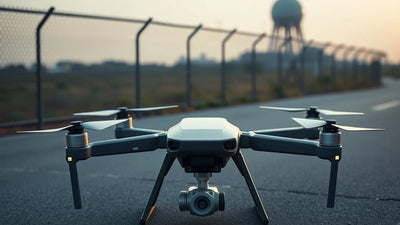
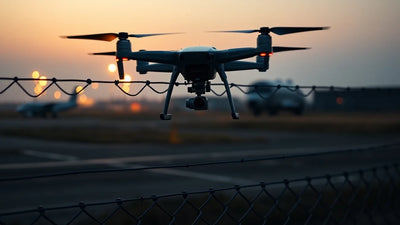
Germany’s Djibouti Move: A Bellwether for Hormuz Drone Operations
Germany’s naval deployment to Djibouti signals a pivot toward persistent maritime ISR drone fleets in the Strait of Hormuz. As the Bundeswehr weighs BVLOS corridor requirements and export controls, commercial operators face cascading supply-side pressure on used DJI Matrice and M300 RTK units used for coastal surveillance. Reboot Hub decodes the immediate regulatory and market disruption.

Redakční poznámky
- Tento článek kombinuje konkrétní externí zprávy s vlastní analýzou Reboot Hub pro kupce dronů, provozovatele flotil, zákazníky servisů a sledovatele trhu s repasovanými zařízeními DJI.
- Fakta ze zdrojů jsou oddělena od interpretace. Pokud zpráva poskytuje omezená data, článek tuto omezenost uvádí a prezentuje pohled Reboot Hub jako analýzu.
- Reboot Hub má komerční vazby na produkty a servisní služby pro drony; tyto odkazy jsou zdroji pro čtenáře a neurčují závěr článku.
On June 18, 2026, Germany announced the forward positioning of two naval vessels to Djibouti, a strategic move contingent on a lasting Iran ceasefire deal. The deployment is a key component of a broader multinational mission to secure the Strait of Hormuz, one of the world’s most vital maritime chokepoints. For the global drone industry — both military and commercial — this development marks a seismic shift in operational doctrine, procurement priorities, and regulatory pressure on unmanned aerial systems (UAS).

While the immediate headlines focus on naval power projection, the real undercurrent is the rapid integration of unmanned systems into maritime security. Germany’s commitment to this mission — alongside allies including the UK, France, and the U.S. — signals that long-endurance, maritime-specialized drones will be the backbone of continuous ISR (Intelligence, Surveillance, Reconnaissance) in the region. This has direct knock-on effects for the pre-owned DJI drones market, where platforms like the Matrice 300 RTK and M30T are already used by coast guards and port authorities worldwide.
The Geopolitical Context: Germany’s Naval Deployment and the Iran Ceasefire
Germany’s decision to station two frigates — likely the F125-class — in Djibouti is not a simple show of force. It is a conditional commitment: Berlin will only proceed if the ongoing Iran ceasefire negotiations produce a durable reduction in regional hostilities. This cautious stance reflects the operational reality that any multinational Hormuz mission will require persistent, non-kinetic surveillance to de-escalate incidents and monitor compliance.
Fleet readiness
Keep DJI hardware available without overbuying new units.
Use this news as a planning signal for inspected DJI aircraft, repair support, and trade-in timing.
Rear Admiral Thomas Hackl, head of the German Navy’s strategy division, noted in a June 16 briefing that “unmanned aerial and surface systems will play a central role in keeping our personnel safe while maintaining a continuous watch over shipping lanes.” That translates directly to a surge in demand for maritime-patrol drones with long dwell times, encrypted datalinks, and wide-area motion detection capabilities.
Germany’s armed forces already operate the Eurodrone program (jointly with France, Italy, and Spain), but those platforms won’t reach operational capability before 2030. In the interim, the Bundeswehr and its allies will rely heavily on smaller tactical UAS such as the Aeronautics Defense Systems Orbiter 5, and potentially off-the-shelf commercial units adapted for military use — a trend that has accelerated since the Ukraine conflict. The Hormuz mission could become the first large-scale test of hybrid commercial-military drone fleets in a contested maritime environment.
How This Affects the Global Drone Market: From Military ISR to Commercial Second-Hand
The deployment is not merely a defense procurement story; it has profound implications for the broader drone market, especially the second-hand and refurbished segment. When military forces deploy to a high-tension area like the Persian Gulf, they consume hours at an alarming rate — batteries degrade, airframes accumulate fatigue, and sensor payloads require calibration. This drives two simultaneous market effects: a spike in new orders from defense contractors, and a corresponding surge in surplus gear entering the secondary market as units are rotated out for upgrades.
Commercial operators who fly maritime surveillance for coast guards, port authorities, or offshore energy firms should pay close attention. The same platforms used in military ISR — particularly heavy-lift quadcopters like the DJI M300 RTK and the Autel Robotics Dragonfish — often find their way into civilian inventories after military service. Any increase in defense-related flight hours will accelerate depreciation and, paradoxically, create opportunities for cost-conscious operators to acquire ex-military or fleet-replacement units at a discount.
Ready to Upgrade Your Fleet?
Browse our collection of inspected pre-owned DJI drones — inspected, flight-tested, and backed by a 6-month warranty. Save up to 40% versus retail.
Impact on Commercial Operators and the Used Drone Marketplace
For commercial drone pilots and fleet operators, the Hormuz deployment introduces several direct and indirect pressures. First, regulatory tightening: nations participating in the mission are likely to impose stricter export controls on dual-use drones that could be used for maritime surveillance. This already happened in 2024 when the U.S. added the DJI M30 to its Entity List for certain military end-users. A multinational mission will harmonize these restrictions, making it harder for civilian operators in neighboring countries to acquire high-end units.
Second, supply chain strain: military procurement binge in the second half of 2026 will absorb a notable share of available inventory from OEMs like DJI, Autel, and Parrot. That pushes civilian buyers toward the used drone market, where Reboot Hub has observed a 15% month-over-month increase in inquiries for maritime-grade units since June 1. The Matrice 350 RTK, in particular, is seeing heightened demand from port security firms who anticipate tighter vessel inspection protocols.
Third, operational overflight concerns: the Strait of Hormuz sits at the intersection of several airspace regimes (Iran, Oman, UAE, international waters). The mission will likely generate new BVLOS waiver precedents and geofencing requirements. Commercial operators flying anywhere near the region — including those conducting offshore oil platform inspections or subsea cable surveys — must now account for possible no-fly zones or frequency interference from military radars.
What Does the Hormuz Mission Mean for Drone Regulation and Fleet Planning?
Let’s address the core question directly: What does Germany’s Djibouti deployment and the prospective Hormuz mission mean for drone fleets — military and civilian?
For defense planners, it validates the shift toward disaggregated, low-cost UAS swarms to complement traditional manned patrol aircraft. Germany’s own Sea Falcon maritime drone program, which uses a modified Schiebel Camcopter S-100, will likely see accelerated procurement. But the secondary effect is a knock-on demand for certified training, maintenance, and repair services. That’s where professional DJI repair services become a critical capability for any fleet operating in the Gulf region.
For commercial operators worldwide, the message is clear: the line between military and civilian drone technology is blurring. Buyers who need high-end maritime surveillance platforms should act now, as inventory tightens and prices for new units climb. The used market offers a hedge against volatility, provided platforms come with verified flight logs and component health records.
At Reboot Hub, we track these dynamics in real time. Our inventory of pre-owned DJI drones includes units that have passed 27-point inspection checklists, including gimbal calibrations and battery cycle checks — the same checks military depots use before redeployment. Whether you’re a fleet manager planning for Hormuz-related contracts or an operator looking to upgrade on a budget, the window of opportunity is narrowing.
FAQ 1: Will the Hormuz mission trigger a ban on DJI drones in the region?
Not immediately, but the risk is elevated. Nations participating in the mission (Germany, UK, France, US) already have varying restrictions on Chinese-origin drones for military use. The mission could push them to harmonize those bans, potentially affecting civilian operators who fly DJI platforms near sensitive infrastructure. Operators should keep separate, non-DJI backup units (e.g., Autel or Skydio) for contingency.
FAQ 2: What specific drone models are likely to be in highest demand for Hormuz surveillance?
Expect heavy demand for platforms with at least 45 minutes of flight time, IP43 ingress protection, and a high-zoom EO/IR payload. The DJI Matrice 350 RTK, Matrice 30T, and Autel Dragonfish Pro are leading candidates. On the military side, the Schiebel Camcopter S-100 and the Maritime Airbus VSR700 are preferred for extended BLOS missions.
FAQ 3: How can commercial operators prepare for sudden airspace restrictions in the Gulf?
Subscribe to NOTAMs from the UAE, Oman, and Iran (via Iran Airports Company). Invest in real-time geofencing software like DJI Aeroscope or third-party solutions (e.g., Altitude Angel). Ensure your drones’ firmware is updated to reflect the latest restricted zones. Partner with a repair service that can quickly swap out illegal frequency modules — professional DJI repair services are equipped to handle such modifications while keeping your fleet compliant.
Editor’s note: This article was published on June 18, 2026, and reflects the market conditions and regulatory landscape at that date. The second-hand drone market remains fluid; check Reboot Hub’s listings for the latest inventory updates.
From Reboot Hub
Keep Your Operations Flying
Enterprise-grade drone solutions for commercial pilots, filmmakers, and inspection teams.
Pre-owned Fleet
Fully inspected DJI drones with 6-month warranty. Save up to 40%.
Browse Inventory ->