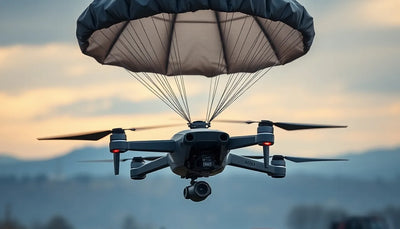
FCC Still Weighing Ban on Foreign Thermal and Spray Drones
FCC national security counsel Adam Chan says the agency is still weighing restrictions on already-authorized foreign thermal, LiDAR, and spray drones. The review could reshape fleet planning, parts availability, and pre-owned DJI demand for commercial operators.

Quick answer
The FCC is still weighing a ban on already-authorized foreign thermal, LiDAR, and spray drones, according to national security counsel Adam Chan.
- FCC national security counsel Adam Chan confirmed the agency is still evaluating restrictions.
- The review covers thermal, LiDAR, and spray drones from foreign manufacturers.
- No final decision or transition period has been announced.
- Commercial operators should monitor FCC actions before expanding specialized drone fleets.
Evidence: DroneXL.co · FAA UAS official guidance
Operator checklist
Turn policy news into a safer fleet decision.
Before changing aircraft, compare repair paths, available DJI inventory, and trade-in timing against the rule change.

The Federal Communications Commission is still weighing whether to ban already-authorized foreign thermal, LiDAR, and spray drones, according to reporting by DroneXL.co citing FCC national security counsel Adam Chan. The statement, made public on November 3, 2026, signals that the agency has not yet finalized its position on restrictions that could affect commercial operators, public safety agencies, and agricultural service providers who rely on specialized drone payloads.
For drone buyers and fleet managers, the uncertainty matters. Thermal, LiDAR, and spray drones represent a meaningful share of high-value commercial operations, from roof inspections and utility mapping to precision agriculture. A ban or phased transition could change the math on new purchases, parts inventory, and long-term fleet strategy. While the FCC has not issued a final rule, the fact that the review remains active is itself a planning signal for operators who need to make procurement decisions in the coming quarters.
What the FCC review covers
According to the DroneXL.co report, Adam Chan indicated that the FCC is still evaluating restrictions on foreign-made thermal, LiDAR, and spray drones that have already received authorization. The phrase "already-authorized" is significant: it suggests the review extends beyond future equipment approvals and could potentially affect devices currently in commercial use. However, the source does not confirm whether existing units would be grandfathered, phased out, or subject to a transition period.
Reboot Hub analysis: the practical exposure for operators depends on how the FCC defines the scope of any eventual action. Thermal drones are widely used in public safety, search and rescue, and building inspection. LiDAR payloads support surveying, construction, and infrastructure mapping. Spray drones are increasingly common in agriculture. If restrictions target new authorizations only, the near-term impact would be limited to procurement planning. If they extend to existing units, operators would face difficult questions about fleet longevity and resale value.
What this means for drone owners and the market
The most immediate consequence is planning uncertainty. Fleet operators who were considering adding thermal, LiDAR, or spray drones from foreign manufacturers now face a decision: proceed with purchases that could be affected by future FCC action, or delay and risk losing operational capability. For agricultural service providers, spray drones are often mission-critical during planting and treatment windows. For inspection firms, thermal and LiDAR payloads are core revenue tools. Waiting for clarity is not always an option, but neither is ignoring the regulatory risk.
For the pre-owned DJI market, the review introduces a new variable. DJI drones with thermal payloads, such as the Mavic 3 Thermal and Matrice series thermal configurations, are popular in the second-hand market. If FCC restrictions eventually limit the operation or resale of certain foreign thermal drones, pre-owned values could shift. Buyers may become more cautious about investing in used thermal platforms, while sellers may look to move inventory before any rule takes effect. Operators who want to understand current pre-owned DJI options and parts availability can review the Drone Wiki for model-specific guidance.
Repair and parts considerations also come into play. If a ban or transition period reduces the number of new foreign thermal, LiDAR, or spray drones entering the U.S. market, existing units would need to stay operational longer. That increases demand for genuine OEM spare parts, gimbal repairs, thermal sensor servicing, and battery replacements. Operators who maintain their current fleet rather than buying new equipment will depend more heavily on reliable repair channels and parts availability. The commercial repair ecosystem could see sustained demand even if new sales slow. For owners evaluating service and lifecycle risk, Drone Wiki explains the relevant repair, parts, resale, or operational path.
What operators should watch next
The key indicator to monitor is whether the FCC moves from "weighing" to a formal rulemaking or public comment process. A Notice of Proposed Rulemaking would give operators a clearer picture of scope, timing, and any transition provisions. Until then, the safest approach is to treat the review as an active regulatory risk rather than a settled outcome.
Fleet managers should consider documenting their current thermal, LiDAR, and spray drone inventory, including purchase dates, authorization status, and operational role. That documentation could be valuable if the FCC eventually requires registration, reporting, or phased replacement. Buyers evaluating new specialized drones should ask vendors about FCC authorization status and whether the equipment falls within the categories under review. Sellers and brokers in the pre-owned market should stay informed, because a rule change could affect buyer confidence and pricing for affected platforms.
One operator-facing takeaway: if you are planning a significant thermal, LiDAR, or spray drone purchase in the next two quarters, build flexibility into your procurement timeline. Consider whether a phased rollout, rental arrangement, or short-term lease reduces your exposure to a potential rule change. And if you already operate these drones, prioritize maintenance and parts planning now, because a constrained new-equipment market could make keeping existing units airworthy more important than ever.
The FCC review is a reminder that drone regulation in the United States is still evolving across multiple agencies. The FAA governs airspace and operational rules, but the FCC controls equipment authorization for radio frequency devices, which includes most drones. Actions at the FCC can affect what equipment can legally be sold, imported, or operated, even if the FAA has not changed its own rules. That dual-agency structure is why operators need to track both aviation and communications policy.
For now, the DroneXL.co report provides the clearest public signal that the FCC has not closed the door on restrictions. Adam Chan's comments suggest the agency remains engaged on the issue, but they do not indicate a final decision or timeline. Operators should treat the situation as fluid and plan accordingly.
Bottom line for commercial drone buyers
The FCC's ongoing review of foreign thermal, LiDAR, and spray drones is not yet a ban, but it is a material risk factor for anyone buying, operating, or reselling specialized commercial drones. The categories under review are exactly the ones where commercial value is highest and where replacement costs are steepest. A thoughtful operator will monitor the FCC's next steps, document current fleet assets, and keep maintenance and parts strategy front of mind.
For buyers in the pre-owned market, the review adds another reason to understand exactly what you are purchasing, including model, payload type, and authorization history. For sellers, it may be a reason to move inventory sooner rather than later if the regulatory outlook tightens. In either case, the commercial drone market is entering a period where regulatory awareness is as important as technical specifications.
FAQ
Frequently asked questions
Is the FCC banning thermal drones right now?
No. According to DroneXL.co, FCC national security counsel Adam Chan said the agency is still weighing a ban on already-authorized foreign thermal, LiDAR, and spray drones. No final rule or effective date has been announced.
Which drone categories are under FCC review?
The review covers foreign-made thermal drones, LiDAR drones, and spray drones that have already received FCC authorization, according to the DroneXL.co report citing Adam Chan.
What should fleet operators do while the FCC decides?
Operators should document their current thermal, LiDAR, and spray drone inventory, monitor FCC rulemaking activity, and build flexibility into new procurement timelines. Prioritizing maintenance and genuine OEM parts for existing units can reduce exposure if new equipment availability tightens.
Which sources support this update?
The visible evidence links identify DroneXL.co and FAA UAS official guidance; each source is used only for the claim it directly supports.
What remains subject to change?
Retail pricing, availability, product bundles and regulatory timelines can change. Readers should verify the latest terms with the named retailer, manufacturer or regulator before acting.
How should buyers or operators use this analysis?
Use the verified facts as a starting point, then compare mission fit, lifecycle support, maintenance needs and current procurement terms before making a purchase or fleet decision.
Konzultované zdroje
- DroneXL.co - primary source
- FAA UAS official guidance - official regulator source
Redakce Reboot Hub poskytuje vlastníkům dronů analýzy nákupů, oprav, prodejní hodnoty a provozu. Pokud narazíte na chybu, kontaktujte nás pro revizi opravy v souladu s našimi redakčními zásadami.