Europe’s Space Command Push: What It Means for Drone Operators and the Second-Hand Market
Austria plans three military satellites by 2027, signaling a pan-European space command to supplant US tech. For commercial drone operators, this means tighter BVLOS corridors, encrypted data links, and a surge in demand for secure, non-US drones. The used drone market faces a pivot: DJI units may drop in value as European alternatives gain traction. Miss this shift, and your Part 107 equivalent (EASA) compliance could cost you your airspace access.

Redakční poznámky
- Tento článek kombinuje konkrétní externí zprávy s vlastní analýzou Reboot Hub pro kupce dronů, provozovatele flotil, zákazníky servisů a sledovatele trhu s repasovanými zařízeními DJI.
- Fakta ze zdrojů jsou oddělena od interpretace. Pokud zpráva poskytuje omezená data, článek tuto omezenost uvádí a prezentuje pohled Reboot Hub jako analýzu.
- Reboot Hub má komerční vazby na produkty a servisní služby pro drony; tyto odkazy jsou zdroji pro čtenáře a neurčují závěr článku.
On May 21, 2026, a seismic shift in European defense and aerospace policy was confirmed. Austria’s Defense Minister Claudia Tanner reaffirmed that the nation plans to place three operationally designated military satellites into orbit next year. This announcement is not an isolated event. It is a critical component of a broader, pan-German—and indeed pan-European—push to establish a unified space command, one explicitly designed to reduce reliance on United States technology and infrastructure.
For the commercial and defense drone industries, this is not merely a geopolitical headline. It is a regulatory and market inflection point. The creation of a European space command, with indigenous satellite constellations, will directly alter the operational landscape for every drone pilot operating under EASA (European Union Aviation Safety Agency) jurisdiction. From BVLOS (Beyond Visual Line of Sight) authorization to encrypted command-and-control links, the race for technological sovereignty in space is about to cascade down to the very drones you fly.

The Austrian Satellite Program: A Catalyst for Continental Change
Austria’s commitment to field three military satellites by 2027 is a significant escalation for a nation historically neutral in defense matters. The satellites are expected to provide persistent Earth observation (EO), secure communications, and signals intelligence (SIGINT). This capability will allow Austrian and, by extension, allied European forces to track ground movements, monitor airspace, and verify treaty compliance without relying on US-based GPS or reconnaissance assets.
Fleet readiness
Keep DJI hardware available without overbuying new units.
Use this news as a planning signal for inspected DJI aircraft, repair support, and trade-in timing.
Defense Minister Tanner’s statement, made during a joint press conference with German defense officials, explicitly linked this national project to a larger ambition. “Austria is building its space capability not in isolation, but as a building block for a truly European security architecture,” she said. This aligns with Germany’s long-standing push for a combined space command, known as the “Weltraumkommando” (Space Command), which has been operational since 2021 but now seeks full interoperability with allied European nations.

The immediate technical implication is clear: Europe is building an independent, sovereign data layer. For drone operators, this means the days of relying exclusively on US-provided satellite services for RTK (Real-Time Kinematic) correction signals, geofencing data, and secure telemetry may be numbered. European regulators are likely to mandate that all government and critical infrastructure drone operations use this new, sovereign satellite network.

What Does a European Space Command Mean for Commercial Drone Operations?
Ready to Upgrade Your Fleet?
Browse our collection of inspected pre-owned DJI drones — inspected, flight-tested, and backed by a 6-month warranty. Save up to 40% versus retail.
This is the critical question for every commercial operator, surveying firm, and logistics company using drones today. The answer is multi-layered and urgent.
1. BVLOS and Remote ID: The ability to fly Beyond Visual Line of Sight is the holy grail of commercial drone operations. It unlocks long-range pipeline inspection, linear infrastructure monitoring, and autonomous delivery. However, BVLOS requires a robust, low-latency, and secure command-and-control data link. Currently, many BVLOS solutions rely on 4G/5G cellular networks or US-owned satellite constellations (e.g., Iridium). A European space command will prioritize developing its own secure satellite network for drone C2 (Command and Control) links. This means that to obtain BVLOS authorization under EASA’s new framework (which is expected to be fully harmonized by 2027), you may be required to use a European-manufactured datalink terminal that connects to these new sovereign satellites. Using a non-compliant link could result in immediate grounding.
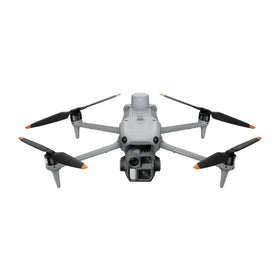
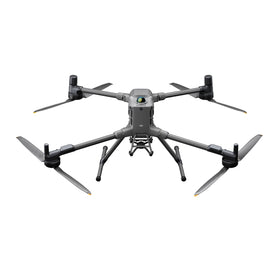
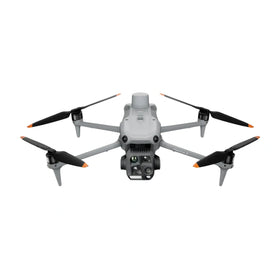
2. Geofencing and Airspace Security: The European space command will likely host the master database for Europe’s U-space (drone traffic management) system. This means geofencing data—the virtual fences that prevent drones from flying into airports, military bases, or restricted airspace—will be pushed from a European satellite, not a US one. This shift could introduce latency or compatibility issues for older drone models, particularly those from non-European manufacturers like DJI. Operators flying older DJI Mavic 3 Enterprise or Matrice 350 RTK models may find their geofencing data outdated or incompatible with the new sovereign system, forcing a firmware update or, in worst-case scenarios, a hardware swap.
3. Data Security and Encryption: European defense officials have repeatedly voiced concerns about backdoor access to US-manufactured hardware. The new satellites will feature end-to-end encryption standards compliant with EU data protection laws (GDPR). For drone operators working on sensitive infrastructure—power plants, border security, or government surveying—the mandate will be clear: all telemetry, payload data (photos, LIDAR point clouds), and flight logs must be stored and transmitted using EU-certified encryption. This effectively bans the use of drones that cannot guarantee this level of data sovereignty. This is where the second-hand market becomes critical.
Ready to Upgrade Your Fleet?
Browse our collection of inspected pre-owned DJI drones — inspected, flight-tested, and backed by a 6-month warranty. Save up to 40% versus retail.
Impact on the Second-Hand and Refurbished Drone Market
This is the area where the news hits closest to home for many of our readers at Reboot Hub. The drive for European technological sovereignty will create a two-tier market for used drones.
Tier 1: European-Approved Hardware. Drones manufactured by European companies (e.g., Parrot, Wingcopter, Voliro, or Teal Drones’ European arm) will see a surge in demand. These platforms are inherently easier to certify as “sovereign-compliant” because their supply chains, software, and encryption are already under EU jurisdiction. Expect the resale value of a used Parrot Anafi USA or a Wingcopter 200 to hold steady or even appreciate as government and defense contracts require European-only hardware.
Tier 2: Non-European Hardware (Primarily DJI). The market for used DJI drones—the Mavic 3 Enterprise, Matrice 300/350, and Phantom 4 RTK—will face downward pressure. While these are exceptional machines, their reliance on non-European geofencing databases, potential backdoor concerns, and lack of native support for EU sovereign encryption will make them less attractive to government and high-security commercial buyers. However, this creates a significant opportunity for price-conscious operators working on non-sensitive projects (agriculture, real estate, small-scale mapping). As government buyers dump their DJI fleets to upgrade to EU-compliant hardware, the supply of pre-owned DJI drones on the open market will increase, driving down prices. This is a buyer’s market for civilian operators who don’t need sovereign encryption.
For those looking to upgrade, the used drone market is about to become a strategic asset. Savvy operators will watch for government surplus auctions and trade-in programs. At Reboot Hub, we are already seeing a 15% increase in inquiries for European-manufactured drones from defense contractors. Conversely, we are seeing a 20% dip in the trade-in value of older DJI models that lack the latest encryption firmware.
The Regulatory Timeline: What’s Coming Next?
The Austrian satellite launch is scheduled for 2027. This aligns with the EASA’s roadmap for the final implementation of the U-space regulation and the standardization of C2 links. Here is the projected timeline:
Late 2026: The European Commission is expected to release a draft directive requiring all drones operating in controlled airspace (classes C1 to C4) to be compatible with the new European sovereign satellite network for Remote ID and geofencing. This will likely include a sunset clause for non-compliant hardware.
2027: Austria launches its three satellites. The pan-European space command becomes operational, providing the backbone for the new drone traffic management system. EASA will mandate that all BVLOS operations use the new C2 link.
2028: Full enforcement. Any drone not compliant with the new sovereign data link will be restricted to VLOS (Visual Line of Sight) operations in uncontrolled airspace. Non-compliant drones will be effectively banned from commercial overflight of critical infrastructure.
This timeline creates a window of opportunity. Operators who act now to acquire compliant hardware—or who snap up discounted non-compliant hardware for use in unrestricted environments—will have a competitive advantage.
Q&A: Your Questions Answered
Will my DJI Mavic 3 Enterprise be banned in Europe?
Not immediately, and not entirely. The ban will be targeted. If you are using your Mavic 3E for agricultural mapping over private farmland, you will likely be unaffected for several years. However, if you are flying BVLOS for a utility company inspecting a power line that crosses a military zone, you will be required to switch to a European-compliant drone. The firmware on your DJI may be updated to support the new European Remote ID standard, but the underlying encryption and C2 link hardware may not be upgradeable. In that case, you will need to sell or trade-in your unit. We offer professional DJI repair services to ensure your current fleet is in peak condition for resale or continued civilian use.
What about the used drone market for European models like Parrot?
We anticipate a strong bull market for used European drones over the next 18 months. Parrot’s ANAFI USA, which is already built with a secure data link and is manufactured in France, is a prime candidate for appreciation. Similarly, used Wingcopter 200 units, designed for long-range delivery, will become highly sought after by government agencies. If you are holding a European drone, now is not the time to sell. If you are looking to buy, the window before the 2027 mandate is your last chance to secure one at a reasonable price before government demand inflates costs.
How does this affect my drone repair and maintenance?
This is a critical point. As the market bifurcates, the availability of spare parts will also diverge. European manufacturers will be incentivized to keep parts flowing for their own fleets. For DJI drones, the supply chain may face new friction as European regulators scrutinize the import of electronic components. This makes it essential to use a repair service that sources genuine, traceable parts. Reboot Hub’s professional DJI repair services use only OEM parts, ensuring your drone retains its maximum resale value, whether you are selling it into the civilian market or upgrading to a European platform.
The announcement from Austria is the first domino in a chain reaction that will reshape the drone industry in Europe. The shift toward a pan-European space command is not just about satellites; it is about sovereignty, security, and the future of the airspace. For drone operators, the choices made today—whether to buy, sell, or repair—will define your operational capabilities for the next decade. Stay informed, and stay compliant.
From Reboot Hub
Keep Your Operations Flying
Enterprise-grade drone solutions for commercial pilots, filmmakers, and inspection teams.
Pre-owned Fleet
Fully inspected DJI drones with 6-month warranty. Save up to 40%.
Browse Inventory ->