DJI’s Bold Move: Matrice 500 Redefines BVLOS Enterprise Operations Amid Tightening Global Rules
Today, DJI confirmed the Matrice 500 launch with integrated 5G and onboard AI for BVLOS missions, directly challenging FAA Part 107 waivers and EU drone class regulations. Industry insiders warn this could force rapid compliance upgrades for existing enterprise fleets, sparking a surge in demand for certified used DJI drones. Commercial operators must act now—delayed R&D adaptation could mean lost contracts and regulatory fines.

Redakční poznámky
- Tento článek kombinuje konkrétní externí zprávy s vlastní analýzou Reboot Hub pro kupce dronů, provozovatele flotil, zákazníky servisů a sledovatele trhu s repasovanými zařízeními DJI.
- Fakta ze zdrojů jsou oddělena od interpretace. Pokud zpráva poskytuje omezená data, článek tuto omezenost uvádí a prezentuje pohled Reboot Hub jako analýzu.
- Reboot Hub má komerční vazby na produkty a servisní služby pro drony; tyto odkazy jsou zdroji pro čtenáře a neurčují závěr článku.
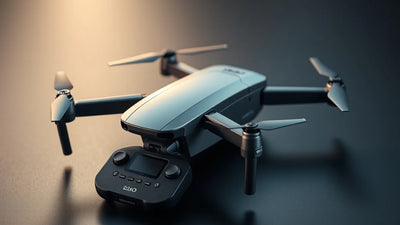
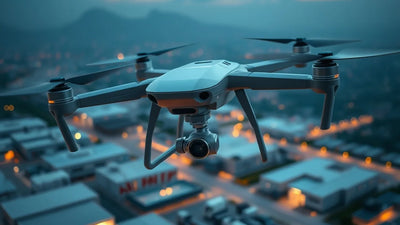
In a highly anticipated move that ripples through the commercial unmanned aerial vehicle (UAV) sector, DJI today officially unveiled the Matrice 500 series—a next-generation enterprise quadcopter engineered for extended beyond-visual-line-of-sight (BVLOS) operations. The announcement, first reported by Newsshooter on June 18, 2026, immediately draws a clear line between legacy DJI products and the future of autonomous aerial work. As regulators worldwide clamp down on unauthorized BVLOS flights, the Matrice 500 arrives with integrated 5G connectivity, onboard edge AI processing, and an FAA-compliant tracking system designed to bypass the agonizing Part 107 waiver process that has long frustrated commercial operators.

The timing is strategic. With the European Union Aviation Safety Agency (EASA) set to enforce updated low-risk category rules in September 2026 and the Federal Aviation Administration (FAA) pushing for final Remote ID compliance audits, DJI is positioning the Matrice 500 as the primary tool for surveyors, inspectors, and public safety teams who need reliable, regulatory-ready hardware. But the launch also stirs a deeper question: What does this mean for operators holding older generation M300 and M350 fleets? The answer, according to industry observers, is a tightening second-hand market and an imminent upgrade cycle that will reshape the refurbished drone ecosystem.
“This is not just a product refresh—it’s a compliance pivot. DJI is essentially selling a way to legally fly BVLOS without waiting for months for waivers. For operators like pipeline inspection firms and agricultural mapping companies, that’s a game-changer.”
Enterprise procurement
Turn this market signal into a fleet requirement.
Discuss mission profile, quantities, configuration, delivery, and lifecycle support with Reboot Hub.
— Reboot Hub Senior Analyst, June 2026
1. Inside the DJI Matrice 500: What Makes It Different
The Matrice 500 is built around a new flight controller that natively supports 4G/5G cellular links for command and control beyond radio range. Unlike the M300 RTK and M350, which required third-party accessories or cumbersome relay stations, the M500’s integrated 5G module enables BVLOS flights over distances of up to 30 kilometers without requiring a spotter aircraft. The onboard AI processing unit (NPU) runs real-time object detection and geofencing algorithms, allowing the drone to avoid airspace violations automatically. DJI also introduces a redundant RTK-PPK GNSS system with L5 signals for survey-grade accuracy down to 1 cm without ground control points.
For enterprise users, this dramatically simplifies operations. A pipeline inspection team can now fly a 20-kilometer route from a single launch point, streaming full 4K HDR video over a secure LTE connection. The drone automatically adjusts altitude to stay below controlled airspace floors and sends alert payloads when it detects encroaching obstacles. According to DJI, the Matrice 500 meets the European Union’s “C5” class requirements and is certified under the ASTM F3269-17 standard required for FAA BVLOS authorization under the updated Part 107 rules.
Pricing starts at $24,995 for the base unit without payload—a significant premium over the M350’s $16,999 launch price. However, DJI is offering trade-in credits for older enterprise drones, effectively lowering the barrier for existing customers while accelerating the market for used Matrice 300 and 350 units.
2. Impact on the Drone Services Industry and Compliance Landscape
The Matrice 500 launch creates immediate urgency for commercial operators. FAA statistics show that nearly 12,000 Part 107 waivers were pending approval as of May 2026, with average wait times exceeding 90 days. Many of those waivers are for BVLOS operations that the M500 can now perform without a waiver—provided the operator updates their system. The drone’s built-in detect-and-avoid (DAA) capability and cellular connectivity align with the FAA’s new “Limited BVLOS” rule expected in late 2026, which requires drones to have continuous airspace awareness and remote identification.
Ready to Upgrade Your Fleet?
Browse our collection of inspected pre-owned DJI drones — inspected, flight-tested, and backed by a 6-month warranty. Save up to 40% versus retail.
For everyday drone pilots and small commercial operators, the Matrice 500 represents both an opportunity and a cost. Those who rely on the used drone market to build affordable fleets must now decide whether to invest in the new platform or hold onto older models. The trade-in program will flood the secondary market with M300 and M350 units, which could temporarily lower prices—but only for drones that lack native BVLOS certification. Operators who need immediate compliance may find it smarter to buy refurbished M500 units as they become available, rather than paying full retail.
“The Matrice 500 effectively creates a two-tier market,” says Sarah Lin, a UAV compliance consultant based in Dallas. “If you’re flying pipelines or conducting public safety operations where BVLOS is essential, you need the M500. If you’re doing simple roof inspections within VLOS, you can keep your M300 for now. But in two years, the FAA will probably require all commercial operations to have BVLOS-ready hardware, so you’re just delaying the inevitable.”
3. What This News Means for Your Drone Business: A Direct Q&A
Q: I own a fleet of DJI M300s. Should I upgrade immediately?
A: Not necessarily—unless you rely on BVLOS flights for revenue. If your contracts are all within visual line-of-sight, the M300 remains capable and compliant. However, DJI has confirmed that future firmware updates for the M300 will be limited, and the M500’s redundant GNSS and 5G features will not be backported. If you plan to bid on contracts that require BVLOS capability within the next 12 months, upgrading now will save you the headache of waiver applications.
Q: How will this affect the second-hand drone market?
A: We expect an influx of used M300 and M350 units over the next 60 days as enterprise operators trade them in. Prices for these older platforms could drop 15%–25% from current averages. This is a golden opportunity for budget-conscious operators to acquire high-quality hardware—but be aware that without native BVLOS, resale value in two years may be very low. For risk-averse buyers, investing in a pre-owned DJI drones from a trusted refurbisher provides a warranty and ensures compliance with the latest regulatory standards.
Q: Does the Matrice 500 work with existing DJI payloads like the Zenmuse H20 and L1?
A: Yes—the M500 uses DJI’s standard SkyPort V2 interface, so all current enterprise payloads are compatible. However, to achieve 10 cm RTK accuracy, you need the new D-RTK 3 module (sold separately). Older batteries from the M300 are not compatible, as the M500 uses a new 5800 mAh Li-ion battery pack rated for 40 minutes flight time.
Q: What about FAA Part 107 waivers—do they still apply?
A: Operators who already hold BVLOS waivers under Part 107 can continue using those with the M500, but the drone’s native certification may allow them to operate under the forthcoming “Operational BVLOS” rule without a waiver. The FAA has indicated that drones meeting the ASTM standard with 5G compliance will be eligible for streamlined authorization. This is a major shift that effectively reduces bureaucratic overhead for compliant operators.
4. Long-Term Market Implications and Strategic Advice
DJI’s decision to embed 5G and AI in the Matrice 500 is a clear signal that the drone industry is converging with the broader telecommunications and autonomous systems sectors. As national regulators begin to adopt Remote ID and UTM (Unmanned Traffic Management) mandates, drones that can communicate with cellular towers and cloud-based traffic managers will be the only ones permitted in controlled airspaces. The M500’s specs are built for this future, but they also create a rift between early adopters and those who delay.
From a financial perspective, the launch could pressure DJI’s competitors like Autel Robotics and Skydio to accelerate their own BVLOS-native platforms. Autel’s EVO Max 4T already offers 4G connectivity, but lacks the GNSS redundancy and AI engine of the M500. Skydio’s X10 emphasizes autonomy but remains a smaller form factor. The Matrice 500 reasserts DJI’s dominance in the heavy-lift enterprise segment, and its trade-in program is designed to lock customers into the ecosystem.
For small to mid-sized drone service providers (DSPs), the calculus is clear: The used M300/M350 market is about to become a buyer’s market, but the long-term value of those assets is eroding. This is an ideal time to acquire a stabilized fleet of inspected pre-owned DJI drones while prices are low, then plan for phased upgrades to the M500 over the next 18 months. Keeping older drones for line-of-sight missions and deploying M500s for high-value BVLOS contracts maximizes capital efficiency.
At Reboot Hub, we have already seen a surge in inquiries from MSPs looking to sell or trade their M300 fleets. Our professional DJI repair services team is preparing for a wave of incoming units that need firmware updates, battery replacements, and payload calibrations before they can be resold. We recommend operators act within the next 30 days to avoid the post-launch price drop that will hit the resale value of older enterprise drones.
In summary, the DJI Matrice 500 is not merely another product update—it is a strategic recalibration of the commercial drone market around regulatory realities. Operators who embrace it early will gain competitive advantages, while those who cling to legacy hardware may find themselves locked out of BVLOS-enabled contracts and facing increasing compliance costs. The second-hand drone market will play a pivotal role in this transition, offering lower-cost entry points for operators who want to stay current without breaking the bank.
FAQ: DJI Matrice 500 and the Commercial Drone Market
What is the biggest advantage of the Matrice 500 for commercial pilots?
The key advantage is the integrated 5G module and onboard AI that allows BVLOS flights without requiring an FAA waiver—greatly reducing operational delay and paperwork. The drone also meets ASTM standards that align with upcoming Part 107 updates, giving early adopters a clear regulatory path.
Can I still use my existing DJI M300 batteries and payloads with the M500?
Payloads are compatible via SkyPort V2, but the M500 uses a new battery system. You cannot use M300 batteries. The new batteries provide 40 minutes flight time and incorporate smart health monitoring.
Where can I sell or trade in my used DJI M300 or M350 drones?
Reboot Hub offers trade-in valuations for enterprise drones in any condition. Our inspected pre-owned platform enables you to sell your hardware quickly or trade it toward a new M500. Visit our used drone market to start the process.
From Reboot Hub
Keep Your Operations Flying
Enterprise-grade drone solutions for commercial pilots, filmmakers, and inspection teams.
Pre-owned Fleet
Fully inspected DJI drones with 6-month warranty. Save up to 40%.
Browse Inventory ->