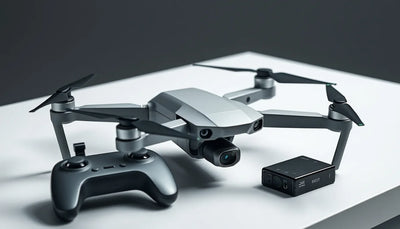
DJI and Insta360 Smart Camera Rivalry Intensifies in China
The smart camera competition between DJI and Insta360 is escalating, with both companies pushing harder into compact stabilized imaging. For drone operators and repair customers, the rivalry signals faster product cycles, shifting accessory ecosystems, and new questions about long-term parts availability and pre-owned value.

Quick answer
A new industry report from OR New Media describes an intensifying smart camera competition between DJI and Insta360 in the Chinese market.
- The report frames the rivalry as a two-company contest over compact stabilized camera products.
- The source does not provide verified launch dates, pricing, or technical specifications.
- The competitive pressure may accelerate product refresh cycles and accessory ecosystem shifts.
- Drone operators should monitor how camera-side competition affects DJI accessory and repair support.
Evidence: DIU Blue UAS
DJI buying context
Match product news to hardware you can actually deploy.
Check inspected DJI aircraft, repair support, and trade-in timing before deciding whether to upgrade, repair, or wait.

Verified facts
What the available evidence confirms
| Factor | DJI | Insta360 |
|---|---|---|
| Market position | Established drone and camera ecosystem player | Strong challenger in compact action and 360 imaging |
| Source characterization | One of two tigers competing on the same mountain | One of two tigers competing on the same mountain |
| Reporting basis | OR New Media industry report | OR New Media industry report |
A new industry report from OR New Media, a China-based outlet, describes an intensifying smart camera contest between DJI and Insta360. The report frames the situation as a two-company battle over compact stabilized imaging products, with both firms competing for the same buyers in the Chinese market and beyond. The source does not include verified launch dates, pricing, or technical specifications, so the operational details remain limited at this stage.
For commercial drone operators, fleet managers, and repair customers, the report matters less for any single product and more for what it signals about competitive pressure. When two well-funded hardware companies fight over the same camera category, the effects tend to show up in faster refresh cycles, accessory fragmentation, and shifting service expectations. Reboot Hub analysis suggests that buyers should treat the rivalry as a signal to plan hardware decisions around ecosystem stability rather than chasing each new release.
What the report actually says
The OR New Media report, carried through a Google News RSS feed, characterizes the DJI and Insta360 competition as a civil war between two dominant players in the smart camera segment. The source title uses the phrase "two tigers on one mountain," a framing that implies neither company can easily expand without directly challenging the other. The report is categorized as an industry analysis rather than a product launch announcement or regulatory filing.
Because the source is limited to this single report, Reboot Hub cannot confirm specific models, sensor changes, pricing moves, or distribution strategies. The absence of verified specification context means operators should avoid reading unconfirmed technical claims into the story. What can be stated with confidence is that the competitive dynamic is real enough to attract dedicated industry coverage from a China-based media outlet, and that both companies are being discussed as direct rivals in the same product category.
Why compact camera competition matters to drone operators
DJI's position in the drone market gives its camera-side decisions broader commercial weight. The company already operates across consumer drones, enterprise platforms, and handheld imaging products. When DJI competes aggressively in smart cameras, the engineering choices, accessory standards, and support priorities can spill over into how the company manages its drone ecosystem. Fleet operators who standardize on DJI hardware may find that camera-side competition influences the pace of firmware updates, accessory compatibility, and the availability of OEM-pulled parts for repair workflows.
Insta360's role is also significant. The company has built a reputation in compact action and 360-degree imaging, and its presence forces DJI to respond. For buyers, that can mean more capable products over time. For repair customers, it can mean shorter production runs, more frequent hardware revisions, and a more complex parts landscape. A camera module that is current today may become harder to source after a rapid refresh cycle, which is a practical concern for anyone maintaining a fleet or planning a pre-owned purchase.
What this means for drone owners and the market
The most immediate implication is that smart camera product cycles may accelerate as both companies try to hold attention. Operators who buy on a fixed procurement schedule should expect more frequent announcements and more pressure to upgrade. The commercial response should not be reactive purchasing. Instead, fleet managers should evaluate whether a new camera product actually changes operational capability or simply adds features that do not affect mission output.
For the pre-owned DJI market, the rivalry introduces a mixed signal. On one hand, healthy competition can improve the quality of new DJI camera products, which eventually supports resale value for well-maintained units. On the other hand, faster refresh cycles can depress the value of older models more quickly. Buyers considering an inspected pre-owned DJI drone should weigh the age of the camera payload against the likelihood of near-term replacement. For deeper technical context on DJI platforms and repair considerations, operators can consult the Drone Wiki. For owners evaluating service and lifecycle risk, Drone Wiki explains the relevant repair, parts, resale, or operational path.
Repair customers should also pay attention to accessory and parts availability. When a manufacturer moves quickly between hardware revisions, independent repair providers must adapt their sourcing strategies. OEM-pulled parts from retired or damaged units become more valuable because they preserve service continuity for models that are no longer in active production. The smart camera rivalry does not change this dynamic, but it may increase the frequency with which parts availability shifts.
How buyers should respond to the competitive pressure
The practical takeaway for a buyer, pilot, or repair customer is to prioritize ecosystem stability over headline features. A new camera product may look compelling, but the operational question is whether it integrates cleanly with existing batteries, mounts, controllers, and repair workflows. If the answer is unclear, waiting for independent verification is a reasonable commercial decision. The source-limited nature of this report means there is no urgent, confirmed development that requires immediate action.
Fleet operators should also document their current camera inventory and note which models are most exposed to refresh risk. If a platform relies on a camera module that is already several years old, it may be prudent to assess spare part availability before a competitive refresh makes sourcing more difficult. This is standard fleet hygiene, but it becomes more relevant when two major manufacturers are actively fighting for the same segment.
Finally, the report is a reminder that DJI's competitive behavior in adjacent product categories can influence the broader ecosystem. Drone buyers do not operate in isolation from DJI's handheld camera business. Engineering priorities, supply chain decisions, and support resources are shared across product lines. Watching how the smart camera rivalry develops may offer early signals about where DJI will focus its drone development efforts next.
FAQ
Frequently asked questions
Is this a confirmed product launch from DJI or Insta360?
No. The source is an industry report from OR New Media, and it does not include verified launch dates, model names, pricing, or technical specifications. The report describes competitive dynamics rather than a specific new product announcement.
Should drone operators delay purchases because of this report?
Not necessarily. There is no confirmed development in the source that requires immediate purchasing changes. Operators should continue evaluating hardware based on mission needs, ecosystem compatibility, and verified performance data rather than reacting to competitive framing.
How could this rivalry affect pre-owned DJI drone values?
Faster refresh cycles could pressure the resale value of older camera-equipped models, while stronger competition may improve the quality of newer units. Buyers should assess payload age and parts availability before committing to a pre-owned purchase.
Which sources support this update?
The visible evidence links identify DIU Blue UAS; each source is used only for the claim it directly supports.
What remains subject to change?
Retail pricing, availability, product bundles and regulatory timelines can change. Readers should verify the latest terms with the named retailer, manufacturer or regulator before acting.
How should buyers or operators use this analysis?
Use the verified facts as a starting point, then compare mission fit, lifecycle support, maintenance needs and current procurement terms before making a purchase or fleet decision.
Konzultované zdroje
- Source material - primary source
- DIU Blue UAS - official government source
Redakce Reboot Hub poskytuje vlastníkům dronů analýzy nákupů, oprav, prodejní hodnoty a provozu. Pokud narazíte na chybu, kontaktujte nás pro revizi opravy v souladu s našimi redakčními zásadami.