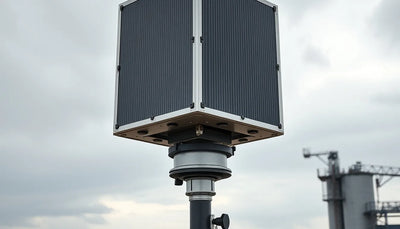
Counter-Drone Optics Firm Opens US Base, Plans Detroit Factory
UK-based OpenWorks Engineering has opened a US regional headquarters in Ashburn, Virginia, and plans a Detroit manufacturing facility before the end of 2026. The expansion signals growing commercial demand for counter-drone detection and tracking systems across North America.

Quick answer
OpenWorks Engineering, a UK counter-drone optics company, has opened a US regional headquarters in Ashburn, Virginia, and plans to open a Detroit, Michigan manufacturing facility before the end of 2026.
- The US headquarters is located in Ashburn, Virginia
- A Detroit manufacturing facility is planned before the end of 2026
- OpenWorks helps operators detect, track, and classify airborne threats
- The expansion increases the company's presence in the North American market
Evidence: DRONELIFE · AeroVironment unmanned systems solutions · FAA UAS official guidance · DIU Blue UAS
Fleet readiness
Keep DJI hardware available without overbuying new units.
Use defense and fleet news as a planning signal for repair support, inspected pre-owned aircraft, and replacement timing.

Verified facts
What the available evidence confirms
| Location | Role | Timing |
|---|---|---|
| Ashburn, Virginia | US regional headquarters | Opened as of September 2026 |
| Detroit, Michigan | Manufacturing facility | Planned before end of 2026 |
OpenWorks Engineering, a UK-based counter-drone optics specialist, has opened a US regional headquarters in Ashburn, Virginia, and announced plans to establish a manufacturing facility in Detroit, Michigan, before the end of 2026. The development was reported by DRONELIFE on September 25, 2026, and marks a notable step in the company's North American expansion strategy.
The company helps operators detect, track, and classify airborne threats, a capability that has become increasingly relevant as commercial drone traffic grows and security teams look for reliable ways to distinguish authorized flights from potential risks. For drone owners, fleet operators, and the broader commercial UAV market, this expansion is less about a single product launch and more about what it signals: counter-drone infrastructure is maturing from a niche defense concern into a sustained commercial and public-safety market.
What the US expansion actually involves
According to the DRONELIFE report, OpenWorks Engineering has established its US regional headquarters in Ashburn, Virginia. The company also plans to open a manufacturing facility in Detroit, Michigan, before the end of 2026. The expansion gives OpenWorks a larger presence in the North American market, where demand for counter-drone systems has grown across airports, critical infrastructure, event security, and public safety operations.
The choice of locations is commercially significant. Ashburn sits within a dense technology and government contracting corridor in Northern Virginia, while Detroit offers established industrial infrastructure and a manufacturing workforce. Reboot Hub analysis suggests that pairing a policy-adjacent headquarters with a production-focused Midwest facility is a common pattern for hardware companies scaling US operations without over-concentrating in a single high-cost region.
What the source does not specify is the size of either facility, the number of jobs involved, the investment amount, or which specific OpenWorks products would be manufactured in Detroit. Those details may emerge as the company moves closer to the factory opening, but they should not be assumed at this stage.
Why counter-drone capability is becoming a commercial market
Counter-drone technology has historically been associated with military and government procurement, but the commercial side has expanded steadily. Airports, stadiums, correctional facilities, energy sites, and large corporate campuses now evaluate systems that can detect and classify nearby drones. The core operational question is simple: when a drone appears near a sensitive area, is it a hobbyist, a commercial operator doing legitimate work, or something that requires escalation?
Optical systems play a specific role in that workflow. Radar and radio-frequency sensors can flag an object, but optical tracking helps confirm what it is. For commercial drone operators, this matters because misidentification can lead to operational disruptions, unnecessary reports, or friction with security teams. A more mature counter-drone market, with better classification tools, could ultimately reduce false alarms and make the airspace more predictable for legitimate flights.
OpenWorks' expansion into US manufacturing also reflects a broader trend in defense-adjacent hardware: buyers increasingly prefer domestic production for supply chain resilience, faster support, and compliance with procurement requirements. Reboot Hub analysis views the Detroit facility plan as a signal that the company expects sustained US demand rather than a one-off sales push.
What this means for drone owners and the market
For commercial drone operators and fleet managers, the growth of counter-drone infrastructure is a double-edged development. On one hand, better detection and classification systems can improve safety and reduce the risk of unauthorized flights interfering with legitimate operations. On the other hand, operators flying near protected sites may face more scrutiny as security teams deploy more capable tracking tools.
The practical takeaway is that operators should keep their flight documentation, authorizations, and Remote ID compliance in order. When a counter-drone system flags an aircraft, the operator's ability to demonstrate that the flight is authorized and properly identified can determine whether the situation resolves quickly or escalates. This is not a new requirement, but it becomes more operationally relevant as detection infrastructure spreads.
For the pre-owned DJI market, the connection is indirect but real. As counter-drone awareness grows, enterprise and public-safety buyers often standardize on specific airframes that integrate cleanly with their tracking and compliance workflows. That can sustain demand for inspected pre-owned DJI drones and genuine OEM spare parts, particularly among smaller operators who need reliable hardware without the lead times or pricing of new enterprise units. Reboot Hub's Drone Wiki provides operator-focused reference material for those evaluating pre-owned DJI equipment and repair considerations.
Repair customers should also note that a more formalized counter-drone market tends to push operators toward better-maintained fleets. Aircraft that are properly serviced, with documented maintenance and genuine parts, are easier to defend as compliant and airworthy if a flight is ever questioned. This reinforces the value of professional DJI repair and OEM-pulled parts over informal fixes. For owners evaluating service and lifecycle risk, Drone Wiki explains the relevant repair, parts, resale, or operational path.
What to watch next
The Detroit facility timeline is the most concrete near-term milestone. If OpenWorks meets its stated goal of opening the plant before the end of 2026, it would represent a fast turnaround from headquarters announcement to domestic production. That speed would suggest either a relatively light assembly footprint or a strong existing US customer pipeline.
Buyers and operators should also watch for any product-specific announcements tied to the US expansion. The source confirms the company's general capability area—detection, tracking, and classification optics—but does not detail which systems would be produced domestically. Procurement teams evaluating counter-drone options will want clarity on that point before factoring the Detroit facility into vendor assessments.
For now, the most defensible conclusion is that counter-drone infrastructure is moving from experimental deployments toward institutional buying. OpenWorks' US headquarters and planned Detroit factory are consistent with that trajectory, and the commercial drone community should treat the trend as a permanent feature of the operating environment rather than a temporary security response.
FAQ
Frequently asked questions
What did OpenWorks Engineering announce?
OpenWorks Engineering, a UK-based counter-drone optics company, has opened a US regional headquarters in Ashburn, Virginia, and plans to open a manufacturing facility in Detroit, Michigan, before the end of 2026, according to DRONELIFE.
What does OpenWorks Engineering do?
The company helps operators detect, track, and classify airborne threats. Its optics-focused systems are part of the broader counter-drone market serving security, public safety, and critical infrastructure customers.
How does this affect commercial drone operators?
As counter-drone detection becomes more common, commercial operators should keep flight authorizations, Remote ID compliance, and maintenance records current. Well-documented, properly serviced aircraft are easier to defend if a flight is flagged by a security system.
Which sources support this update?
The visible evidence links identify DRONELIFE and AeroVironment unmanned systems solutions and FAA UAS official guidance and DIU Blue UAS; each source is used only for the claim it directly supports.
What remains subject to change?
Retail pricing, availability, product bundles and regulatory timelines can change. Readers should verify the latest terms with the named retailer, manufacturer or regulator before acting.
How should buyers or operators use this analysis?
Use the verified facts as a starting point, then compare mission fit, lifecycle support, maintenance needs and current procurement terms before making a purchase or fleet decision.
Konzultované zdroje
- DRONELIFE - primary source
- AeroVironment unmanned systems solutions - official company source
- FAA UAS official guidance - official regulator source
- DIU Blue UAS - official government source
Redakce Reboot Hub poskytuje vlastníkům dronů analýzy nákupů, oprav, prodejní hodnoty a provozu. Pokud narazíte na chybu, kontaktujte nás pro revizi opravy v souladu s našimi redakčními zásadami.