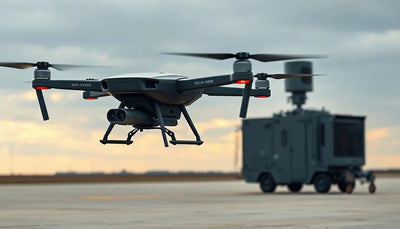
BVLOS Drone-in-a-Box Surveys Reach Australian Grid Project
Skyports Drone Services is running automated beyond visual line of sight survey flights on the HumeLink West transmission project in Australia. The deployment removes on-site pilots from routine construction monitoring and points to broader enterprise appetite for remote drone-in-a-box operations on major infrastructure.

Quick answer
Skyports Drone Services is using automated beyond visual line of sight drone operations to monitor construction on Australia's HumeLink West electricity transmission project, according to DRONELIFE.
- The deployment collects aerial survey data without sending drone pilots to the site.
- The work supports construction monitoring and site safety on a major transmission project.
- Drone-in-a-box technology is the operational model cited in the report.
- The project signals growing commercial use of remote BVLOS infrastructure surveys.
Evidence: DRONELIFE
Market context
Turn market news into a buy, repair, or trade-in decision.
Compare pre-owned availability, resale timing, and repair economics before the market moves again.

Automated beyond visual line of sight drone surveys are now supporting a major electricity transmission project in Australia. According to a report published by DRONELIFE on October 15, 2026, Skyports Drone Services is using drone-in-a-box technology to monitor construction on the HumeLink West transmission project. The deployment allows project teams to collect aerial survey data without sending drone pilots to the site, a meaningful operational shift for infrastructure monitoring.
The report frames the work as both a construction monitoring tool and a site safety measure. For commercial drone operators and fleet buyers, the development is a useful data point on where enterprise drone services are heading: toward remote, repeatable missions that reduce travel, labor, and on-site exposure while producing consistent survey outputs.
What the HumeLink West deployment involves
DRONELIFE reports that Skyports Drone Services is operating automated BVLOS flights on the HumeLink West electricity transmission project in Australia. The source describes the technology as drone-in-a-box, meaning the aircraft is stationed on site and can launch, fly, and land without a pilot physically present at the launch location. The flights are used to collect aerial survey data that supports construction monitoring.
The report also ties the deployment to improved site safety. Removing pilots from active construction zones reduces the number of people exposed to heavy machinery, energized infrastructure, and uneven terrain. For project owners and contractors, that is a practical benefit beyond the data itself. The operation also demonstrates that BVLOS approvals are being applied to real infrastructure work, not just pilot programs or short-term demonstrations.
Reboot Hub analysis: the HumeLink West example matters because it shows a service provider running automated missions as a contracted operational workflow, not as a proof of concept. When drone-in-a-box systems move from trials into routine project monitoring, the economics of fleet planning shift. Operators begin to evaluate aircraft differently: uptime, docking reliability, sensor consistency, and remote maintenance support become more important than portability or manual flight ergonomics.
Why remote BVLOS operations are changing fleet planning
Traditional drone survey work often requires a pilot, a visual observer, travel to the site, and manual battery swaps. A drone-in-a-box deployment changes that model. The aircraft remains on site, charges or docks between missions, and can be tasked remotely. For infrastructure projects that span months or years, the travel and labor savings can be substantial.
The HumeLink West report does not include specific cost figures, aircraft models, or flight frequency data. Reboot Hub cannot verify those operational details from the available source. What the report does establish is that a recognized drone services company is delivering automated BVLOS survey work on a major Australian grid project, and that the work is framed around construction monitoring and site safety.
For fleet operators, this development reinforces a planning question: which missions justify a fixed, remotely managed aircraft versus a manually deployed crew? Projects with long timelines, repeatable flight paths, and difficult access are the most likely candidates for drone-in-a-box economics. Short-duration or highly variable jobs may still favor traditional piloted workflows.
What this means for drone owners and the market
The commercial drone market is gradually splitting into two operational tracks. One track remains centered on portable aircraft flown by on-site pilots for inspections, mapping, and media work. The other track is moving toward persistent, remotely managed systems that stay at a job site. The HumeLink West deployment is an example of the second track maturing.
For individual drone owners and small operators, the immediate impact is indirect. A single automated BVLOS project in Australia does not change the market overnight. But the direction is clear: enterprise customers are increasingly willing to pay for remote, repeatable data collection. That creates demand for service providers who can manage remote systems, maintain docking hardware, and troubleshoot aircraft without being on site. For owners evaluating service and lifecycle risk, Drone Wiki explains the relevant repair, parts, resale, or operational path.
For buyers in the pre-owned DJI market, the trend has a longer-term implication. As enterprise fleets adopt drone-in-a-box and remote BVLOS workflows, the mix of used aircraft entering the market may shift. Some operators will sell portable aircraft that no longer fit their mission profile, while others will seek spare aircraft for backup or training. Buyers evaluating pre-owned DJI drones should consider how their intended mission aligns with this split between portable piloted work and persistent remote operations.
Repair and spare parts demand may also evolve. Docking stations and automated systems place more flight cycles on a single airframe, which can accelerate wear on motors, gimbals, and sensors. Operators running high-frequency automated missions will need predictable access to genuine OEM spare parts and professional repair support. That is a different maintenance profile from a drone flown a few times per week by a manual pilot.
What operators should watch next
The HumeLink West report is one deployment, but it sits inside a broader pattern of infrastructure owners testing remote drone operations. Transmission line construction, rail corridors, pipeline monitoring, and large civil works all share characteristics that favor persistent aerial data collection: long distances, repeatable routes, and safety-sensitive environments.
Operators and buyers should watch for follow-on reporting that clarifies the regulatory framework used for the HumeLink West flights, the specific aircraft and sensor payloads involved, and whether the deployment expands to additional project phases. Those details will matter for anyone modeling the cost and reliability of similar operations.
The practical takeaway for a pilot, repair customer, or fleet manager is to assess whether your current equipment and maintenance plan fit a market that is moving toward more automated, remotely managed missions. If your work involves repeatable infrastructure surveys, persistent site monitoring, or long-duration projects, the drone-in-a-box model is worth studying now, even if you do not adopt it immediately. If your work is varied, short-duration, or requires manual pilot judgment on every flight, portable piloted aircraft will remain relevant for years.
FAQ
Frequently asked questions
What is the HumeLink West drone deployment?
According to DRONELIFE, Skyports Drone Services is using automated beyond visual line of sight drone operations to monitor construction on the HumeLink West electricity transmission project in Australia. The flights collect aerial survey data without sending drone pilots to the site.
Why does drone-in-a-box matter for infrastructure projects?
Drone-in-a-box systems can launch, fly, and land without a pilot physically present at the site. For long infrastructure projects, this reduces travel and labor costs, supports repeatable data collection, and keeps personnel away from active construction zones.
How could this affect the pre-owned drone market?
As enterprise fleets adopt remote BVLOS workflows, some operators may sell portable aircraft that no longer fit their mission profile. High-frequency automated missions can also increase wear on airframes, raising demand for genuine OEM spare parts and professional repair support.
Which sources support this update?
The visible evidence links identify DRONELIFE; each source is used only for the claim it directly supports.
What remains subject to change?
Retail pricing, availability, product bundles and regulatory timelines can change. Readers should verify the latest terms with the named retailer, manufacturer or regulator before acting.
How should buyers or operators use this analysis?
Use the verified facts as a starting point, then compare mission fit, lifecycle support, maintenance needs and current procurement terms before making a purchase or fleet decision.
Konzultované zdroje
- DRONELIFE - primary source
V době publikování nebyla k dispozici žádná další oficiální dokumentace.
Redakce Reboot Hub poskytuje vlastníkům dronů analýzy nákupů, oprav, prodejní hodnoty a provozu. Pokud narazíte na chybu, kontaktujte nás pro revizi opravy v souladu s našimi redakčními zásadami.