Zhuoyi ZMD200 Heavy-Lift Platform Targets Emergency and Infrastructure Work
A new report profiles the Zhuoyi Intelligent ZMD200 as a heavy-payload aerial platform for infrastructure, emergency response, and firefighting. The coverage signals how commercial heavy-lift demand is broadening beyond traditional inspection fleets.

Quick answer
A new industry report profiles the Zhuoyi Intelligent ZMD200 as a heavy-lift aerial platform aimed at infrastructure, emergency response, and firefighting scenarios.
- The report frames the ZMD200 as a heavy-payload multirotor platform rather than a consumer or camera-first drone
- Named use cases include infrastructure work, emergency response, and firefighting support
- The coverage comes from a China-based AI and industry outlet, signaling regional momentum in commercial heavy-lift demand
- No verified technical specifications, pricing, or availability were included in the source material
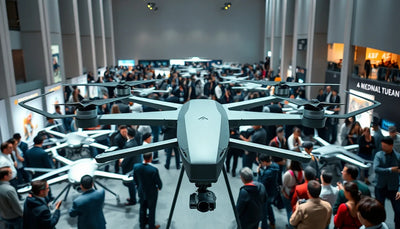
A new industry report from the China-based Artificial Intelligence outlet profiles the Zhuoyi Intelligent ZMD200 as a heavy-lift aerial platform built for infrastructure, emergency response, and firefighting applications. The coverage frames the aircraft as a multi-role heavy-payload workhorse rather than a camera-first or consumer-oriented drone, which is a meaningful distinction for commercial operators evaluating fleet additions in 2026.
Market context
Turn market news into a buy, repair, or trade-in decision.
Compare pre-owned availability, resale timing, and repair economics before the market moves again.

The report, sourced through Google News RSS aggregation, does not include verified technical specifications, payload figures, pricing, or availability details. That absence matters for procurement teams: the ZMD200 is being introduced to English-language readers primarily as a category signal, not as a fully documented product launch. Reboot Hub analysis treats this as early market intelligence about where Chinese commercial drone manufacturers are directing heavy-lift development attention.
What the source actually reports
The central claim in the source material is straightforward: Zhuoyi Intelligent has a heavy-lift drone called the ZMD200, and the company is positioning it across three broad operational domains. Those domains are infrastructure work, emergency response, and firefighting. The source title explicitly frames the aircraft as "an aerial heavy-lift platform for diverse scenarios," which suggests the manufacturer is prioritizing payload flexibility over narrow single-task specialization.
For commercial readers, the practical takeaway is that heavy-lift multirotor development in China is increasingly oriented toward public-safety and critical-infrastructure use cases. This mirrors a broader industry pattern where manufacturers are moving beyond agricultural spraying and logistics demos into fire suppression support, emergency communications relay, and utility-scale inspection with suspended sensor or delivery payloads. The source does not confirm whether the ZMD200 is in serial production, prototype testing, or limited deployment, so operators should treat the report as directional rather than transactional.
Why heavy-lift category signals matter in 2026
Heavy-lift drones occupy a distinct commercial segment from the compact inspection platforms that dominate most enterprise fleets. Where a typical commercial quadcopter carries a camera, gimbal, or small sensor package, heavy-lift platforms are designed around payload mass, endurance under load, and attachment systems for specialized modules such as fire retardant tanks, cable stringing tools, or emergency supply containers. The ZMD200 coverage suggests Zhuoyi Intelligent is targeting exactly that operational layer.
For fleet planners, the strategic question is whether a heavy-lift platform complements or replaces existing assets. In most cases, the answer is complementary. A utility operator still needs compact inspection drones for close visual work on transmission towers, while a heavy-lift unit might carry heavier sensing packages, deploy equipment, or support logistics in terrain where ground access is slow. The source does not provide enough detail to evaluate the ZMD200 against specific Western or DJI enterprise platforms, and Reboot Hub has not verified any comparative performance claims.
What this means for drone owners and the market
The emergence of more heavy-lift options from Chinese manufacturers has a second-order effect on the broader commercial drone market, including the pre-owned segment. As enterprise buyers evaluate new heavy-lift platforms, some will rotate out existing mid-size inspection drones that no longer fit their evolving mission profiles. That rotation can increase supply in the second-hand market, which is where disciplined buyers look for value. The pre-owned DJI ecosystem remains the most liquid segment for inspected enterprise and prosumer aircraft, and shifts in new-platform availability often influence how quickly operators refresh their existing fleets.
For operators considering a heavy-lift purchase, the ZMD200 report is a reminder that category maturity is uneven. A platform can be announced, profiled, and discussed in industry media long before it has verified endurance data, service documentation, spare parts availability, or regional support infrastructure. Buyers who need mission-critical reliability should weigh those operational factors as heavily as payload capacity. The source does not confirm any certification, warranty, or support network details for the ZMD200, so procurement teams should request those specifics directly before shortlisting the platform. In the meantime, operators managing existing DJI enterprise or prosumer fleets can keep maintenance costs predictable through genuine OEM spare parts and professional repair channels, such as the repair support market coverage Reboot Hub maintains around Geocomm And Skyfireai Integrate Dfr Routing For Faster Emergency Response, which tracks how emergency-response drone workflows are evolving alongside hardware choices. For owners evaluating service and lifecycle risk, Geocomm And Skyfireai Integrate Dfr Routing For Faster Emergency Response explains the relevant repair, parts, resale, or operational path.
The firefighting angle deserves particular attention. Aerial firefighting support with drones is still an emerging operational category, and the gap between a manufacturer's stated scenario and a fire agency's actual deployment requirements is substantial. Thermal management, payload release reliability, communications in smoke-affected environments, and integration with incident command systems all matter more than raw lift capacity. The ZMD200 source material does not address these operational details, so fire service buyers should treat the platform as an early-stage option rather than a proven tool.
What operators should watch next
The most useful follow-up signals for commercial buyers will be regulatory, not just technical. Heavy-lift drones operating in populated areas, near infrastructure, or in emergency airspace face more demanding approval pathways than small inspection aircraft. If Zhuoyi Intelligent pursues deployment in firefighting or utility corridors, certification and airspace integration progress will matter as much as the platform itself. Buyers should also watch whether the ZMD200 appears in procurement tenders, pilot program announcements, or partnership disclosures, which would indicate movement from profile to operational reality.
For now, the ZMD200 report is best understood as market intelligence about manufacturer direction. It tells commercial operators that Chinese heavy-lift development is actively targeting emergency and infrastructure roles, which may shape competitive pricing and feature expectations across the segment in the next procurement cycle. It does not yet tell buyers whether the ZMD200 is a credible alternative to established enterprise platforms, and Reboot Hub has not verified any specification or performance claims.
FAQ
Frequently asked questions
Is the Zhuoyi ZMD200 available for purchase now?
The source report does not confirm pricing, availability, production status, or distribution channels for the ZMD200. Buyers should treat it as an early-stage platform profile and request direct verification from the manufacturer before making procurement decisions.
What makes a heavy-lift drone different from a standard commercial drone?
Heavy-lift platforms prioritize payload mass, attachment systems, and endurance under load rather than camera stabilization or compact portability. The ZMD200 is framed around infrastructure, emergency response, and firefighting scenarios, which typically require carrying specialized equipment rather than just sensors.
Should fleet operators wait for the ZMD200 before upgrading?
No. The source provides no verified specifications or deployment evidence, so waiting on this specific platform would be premature. Operators with active mission requirements should evaluate proven platforms with documented support, spare parts, and service networks, while monitoring the heavy-lift category for future options.
Which sources support this update?
The article distinguishes reported information from analysis and does not present an unverified source as official confirmation.
What remains subject to change?
Retail pricing, availability, product bundles and regulatory timelines can change. Readers should verify the latest terms with the named retailer, manufacturer or regulator before acting.
How should buyers or operators use this analysis?
Use the verified facts as a starting point, then compare mission fit, lifecycle support, maintenance needs and current procurement terms before making a purchase or fleet decision.
تمت استشارة المصادر
- Source material - primary source
ولم تكن الوثائق الرسمية الإضافية متاحة في وقت النشر.
تضيف افتتاحية Reboot Hub المشتري والإصلاح وإعادة البيع والتحليل التشغيلي لأصحاب الطائرات بدون طيار. إذا اكتشفت خطأ، فاتصل بنا لمراجعة التصحيح من خلال سياستنا التحريرية.