Pentagon Pairs $500M Counter-Drone Deal With $820M US Parts Loan
The Pentagon announced two major drone funding actions in two days: a $500 million counter-drone ceiling for CACI and an $820 million loan to Performance Drone Works for US-made parts. Neither is cash out the door yet, but both signal where defense drone procurement is heading.

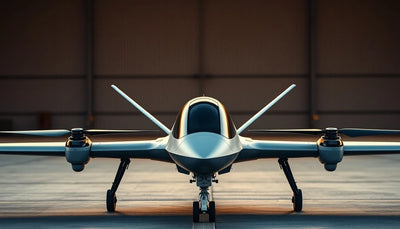
The Pentagon moved on two fronts this week in a way that drone fleet operators and repair businesses should watch closely. On Thursday, the Joint Interagency Task Force 401 (JIATF-401) awarded CACI a $500 million ceiling for counter-drone capabilities. On Friday, the Office of Strategic Capital signed an $820 million conditional loan agreement with Performance Drone Works (PDW) to build drone components that the United States does not currently manufacture domestically.
Both actions now report to the same deputy secretary, and both carry a critical caveat: neither number represents money that has actually been disbursed. The ceilings and loan commitments are authorizations, not checks. Still, the pairing of a counter-drone contract ceiling with a domestic manufacturing loan signals a deliberate strategy to harden the US drone supply chain while simultaneously investing in the systems designed to defeat hostile drones.
The two announcements in context
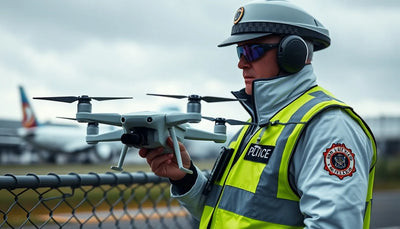
The CACI award is a ceiling, not a guaranteed spend. JIATF-401, the task force responsible for counter-narcotics and counter-transnational threat operations, has given CACI the authority to deliver counter-drone systems and services up to $500 million over the life of the arrangement. For commercial operators, this is a reminder that counter-UAS capability is no longer a niche military concern. The same technology that protects military installations is increasingly relevant for airports, critical infrastructure, and large-scale public events.
Fleet readiness
Keep DJI hardware available without overbuying new units.
Use defense and fleet news as a planning signal for repair support, inspected pre-owned aircraft, and replacement timing.

The Performance Drone Works loan is the more structurally interesting piece. The Office of Strategic Capital, a relatively new Pentagon office created to leverage private capital for supply chain resilience, has signed a conditional loan agreement worth $820 million. The conditionality matters: PDW must meet specific milestones and demonstrate progress before funds are released. The stated purpose is to build drone parts that America currently does not make, which points directly at a known vulnerability in the Western drone ecosystem.
Both actions now fall under the same deputy secretary, which suggests the Pentagon intends to coordinate counter-drone procurement with domestic manufacturing investment as a single strategic portfolio. That coordination could mean faster fielding of counter-UAS systems and a more deliberate approach to reducing reliance on imported drone components.
What this means for drone buyers
For commercial drone buyers and fleet operators, the immediate takeaway is that the US defense drone supply chain is about to become more crowded and more expensive to enter. The $820 million loan to PDW is aimed at building domestic manufacturing capacity for components that are currently sourced overseas. That shift will not happen overnight, but it will eventually change the availability and pricing of certain drone parts in the commercial aftermarket.
Reboot Hub analysis: If you operate a fleet that depends on imported components, this is the moment to review your spare parts inventory and repair pipeline. The Pentagon's push to build US-made alternatives will not immediately affect the price of existing imported parts, but it could create a two-tier market where defense-grade domestic components carry a premium while commercial imports follow their own pricing logic. For repair customers, the practical advice is to secure genuine OEM spare parts now rather than waiting for supply chain shifts to tighten availability.
For those considering pre-owned DJI drones, the defense procurement news does not directly change the commercial market, but it does reinforce the value of buying inspected hardware with a clear parts history. As defense demand for domestic components grows, the commercial second-hand market will likely see more separation between well-documented fleets and those with uncertain provenance. A drone with a clean service record and genuine OEM parts will hold its value better in this environment.
Fleet managers should also watch how the CACI counter-drone ceiling plays out. If JIATF-401 begins fielding counter-UAS systems at scale, the technology will mature quickly and may eventually trickle down to civilian security applications. That could affect airspace management around sensitive commercial sites, so it is worth tracking how these systems are deployed and where they operate.
Supply chain implications for repair and resale
The $820 million loan to Performance Drone Works is explicitly aimed at building parts that America does not currently make. That phrasing is a direct acknowledgment that the US drone industry remains dependent on foreign manufacturing for key components, including motors, flight controllers, and possibly sensors. For the repair market, this is a signal that domestic alternatives are coming, but they will take time to reach commercial volumes.
In the meantime, the practical implication for repair customers is straightforward: genuine OEM spare parts remain the safest choice for maintaining airworthiness and resale value. The defense supply chain will prioritize its own needs first, and commercial repair shops may face periodic availability constraints as manufacturers allocate production capacity. Professional DJI repair services that use genuine parts will be better positioned to maintain consistent turnaround times than shops relying on aftermarket or unverified components.
For the pre-owned market, the defense push toward domestic manufacturing could eventually create a clearer distinction between drones built with US-made components and those built with imported parts. That distinction may matter for resale value, particularly if defense contractors or government agencies begin buying commercial drones for training or secondary missions. Buyers should ask about component provenance when purchasing used equipment, and sellers should document their parts history carefully.
The drone trade-in guide becomes more relevant in this environment because trade-in values will increasingly reflect the quality of the parts documentation and the condition of the flight hardware. A well-maintained drone with a clear service record will command a better trade-in price than one with an unknown repair history, especially as the market becomes more sensitive to supply chain provenance.
What operators should do now
The most concrete action for any drone buyer, pilot, or fleet manager is to review your current spare parts inventory and repair pipeline before the defense supply chain absorbs more domestic manufacturing capacity. If you rely on imported components, consider whether you have enough stock to cover your next 12 months of maintenance. If you are planning a fleet expansion, factor in the possibility that some components may become harder to source as defense demand grows.
For operators considering new equipment, the defense procurement news does not change the immediate commercial landscape, but it does suggest that the long-term direction of the US drone market is toward domestic manufacturing. That direction could mean higher initial costs for US-made components, but also greater supply chain security. Buyers should weigh those factors against their operational needs and budget cycles.
Finally, keep an eye on how the CACI counter-drone ceiling is executed. Counter-UAS technology is a growth area, and the systems fielded by JIATF-401 will likely inform civilian security applications in the coming years. If you operate in sensitive airspace or near critical infrastructure, understanding the capabilities and limitations of these systems will help you plan your operations more effectively.
Is the $1.3 billion already spent?
No. The CACI award is a $500 million ceiling, meaning it authorizes up to that amount in work over time, and the PDW loan is conditional, meaning funds will only be released when Performance Drone Works meets specific milestones. Neither amount represents immediate cash out the door.
How does this affect the commercial drone market?
The immediate commercial impact is limited, but the long-term signal is clear: the US defense sector is investing heavily in domestic drone manufacturing and counter-drone capabilities. This could eventually tighten the supply of imported components and increase demand for US-made parts, which may affect pricing and availability in the commercial aftermarket.
Should I change my drone buying or repair plans?
It is wise to review your spare parts inventory and repair pipeline now, especially if you depend on imported components. Securing genuine OEM spare parts and maintaining clear service documentation will protect your fleet's value and operational readiness as the defense supply chain evolves.
تمت استشارة المصادر
- Trump Sons Back Powerus Drone Roll-Up — But the Math Behind 10,000 Drones a Month Doesn’t - primary source
- DroneXL.co - primary reporting source
- AeroVironment unmanned systems solutions - official company source
- Defense.gov official source - official government source
تضيف افتتاحية Reboot Hub المشتري والإصلاح وإعادة البيع والتحليل التشغيلي لأصحاب الطائرات بدون طيار. إذا اكتشفت خطأ، فاتصل بنا لمراجعة التصحيح من خلال سياستنا التحريرية.