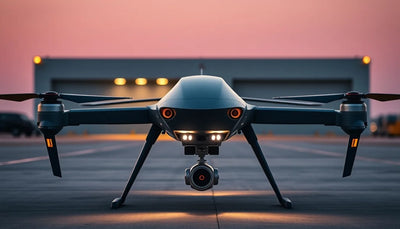
Mountain rescue teams adopt automated DJI drones to cut response time
Mountain rescue groups are turning to automated DJI drones to locate people faster and reduce manual search time, according to a DroneDJ report. The shift points to growing demand for reliable, mission-ready commercial platforms in time-critical public safety operations.

Quick answer
Mountain rescue teams are using automated DJI drones to reduce search time and improve response efficiency, according to DroneDJ.
- The report highlights automated DJI platforms in time-critical mountain rescue operations
- Automation reduces manual pilot workload during searches
- The development signals rising demand for dependable commercial drone fleets in public safety
- Operators and buyers should watch how automation shapes procurement and support needs
Mountain rescue organizations are increasingly turning to automated DJI drones to cut the time it takes to locate missing or injured people in difficult terrain, according to a report published by DroneDJ. The development, covered in a Google News DJI feed focused on global market trends, points to a practical shift in how time-critical public safety teams think about unmanned aircraft.
Market context
Turn market news into a buy, repair, or trade-in decision.
Compare pre-owned availability, resale timing, and repair economics before the market moves again.

Rather than relying solely on manual piloting and visual scanning, rescue groups are adopting automation features that allow a drone to handle more of the search workflow. For commercial operators, fleet managers, and buyers who evaluate DJI hardware for demanding missions, the report offers a useful signal about where real-world deployment is heading.
The reported shift toward automated search operations
The central finding from the DroneDJ report is that mountain rescuers are turning to automated DJI drones specifically to save time. In rescue scenarios, minutes can determine outcomes, and automation can reduce the cognitive load on a pilot while covering terrain more systematically. The source frames this as an operational improvement rather than a speculative technology demo.
For procurement teams, the implication is straightforward: automation is becoming a deciding factor in platform selection. A drone that can execute a structured search pattern with less manual input is more attractive to a rescue organization than a platform that requires constant stick-and-camera management. This does not mean pilots are being removed from the loop, but it does mean their role is shifting toward mission supervision.
Reboot Hub analysis suggests this trend may also influence how buyers evaluate pre-owned DJI drones. As public safety teams upgrade to newer automated platforms, older but still capable models can enter the secondary market. Buyers who understand the automation gap between generations will be better positioned to assess whether a given pre-owned unit meets their operational needs.
Why automation matters in mountain rescue missions
Mountain rescue environments are among the most demanding for drone operations. Variable wind, rapidly changing visibility, complex topography, and the physical strain on ground teams all complicate a search. The DroneDJ report indicates that automated DJI drones are being adopted because they help rescue groups save time in these exact conditions.
Automation can assist with repeatable flight paths, consistent altitude management, and more predictable coverage of a search area. For a rescue coordinator, that predictability is valuable. It allows ground teams to focus on extraction planning while the aircraft handles a structured scan. The source does not provide specific model numbers or technical specifications, so Reboot Hub is not attributing particular range figures, flight modes, or firmware capabilities to any single platform.
From a maintenance and support perspective, rescue organizations that depend on automated flight features also depend on firmware stability and component reliability. A drone that is flown frequently in alpine conditions will accumulate wear on motors, gimbal assemblies, and battery systems. Fleet managers should factor in access to genuine OEM spare parts and professional DJI repair when planning long-term operational budgets.
What this means for drone owners and the market
The reported adoption of automated DJI drones by mountain rescue teams reinforces a broader market pattern: public safety buyers are prioritizing reliability, repeatability, and reduced pilot workload. For commercial operators who fly inspection, survey, or emergency response missions, the same logic applies. A platform that can automate part of the flight reduces fatigue and improves consistency across repeated deployments.
For individual drone buyers and smaller operators, the news is a reminder that automation features are not just consumer conveniences. They are becoming core operational tools in professional settings. When evaluating a DJI drone, whether new or pre-owned, buyers should ask how its automation capabilities align with the missions they actually fly. A lower-cost platform without robust automated search functions may be a poor fit for time-sensitive work.
Reboot Hub analysis: The pre-owned DJI market is likely to feel this shift in two ways. First, as rescue and enterprise fleets refresh toward newer automated models, inspected pre-owned units from those fleets can become available to budget-conscious buyers. Second, demand for automation-capable platforms may keep resale values firmer for models that offer meaningful automated flight features. Buyers who research these capabilities before purchasing can make more informed decisions, and resources like the Drone Wiki can help clarify platform differences before committing to a purchase or repair path. For owners evaluating service and lifecycle risk, Drone Wiki explains the relevant repair, parts, resale, or operational path.
For repair customers, the operational stakes are higher when automation is involved. A drone used in mountain rescue cannot afford intermittent sensor failures, unstable gimbal behavior, or battery communication errors. Professional DJI repair with genuine OEM-pulled parts becomes more important as the mission profile becomes more demanding. A repaired unit that has not been properly calibrated or tested may undermine the very automation features that made the platform attractive in the first place.
What buyers and fleet managers should watch next
The DroneDJ report does not specify which rescue organizations are involved, which DJI models are being used, or which regions are leading the adoption. That limits how much operational detail can be responsibly reported. However, the directional signal is clear enough to act on: automation is moving from a premium feature to a baseline expectation in public safety drone programs.
Reboot Hub analysis: Fleet managers should monitor how automation affects training requirements. A team that adopts automated search patterns still needs pilots who understand airspace rules, weather limits, and manual recovery procedures. Automation reduces workload, but it does not eliminate the need for competent oversight. Organizations that invest in automation without investing in pilot proficiency may create new risks.
Buyers in the pre-owned DJI market should also pay attention to firmware update support. Automated flight features often depend on software that evolves over time. A pre-owned drone that can no longer receive updates may lose access to automation improvements or compatibility fixes. Before purchasing, buyers should confirm that the platform they are considering still receives the support needed for the features they value most.
Reboot Hub analysis: Finally, the repair and parts ecosystem will need to keep pace. Drones flown in mountain rescue conditions face cold temperatures, moisture, dust, and hard landings. The demand for reliable component replacement, battery health management, and sensor calibration is likely to grow alongside adoption. Operators who plan for maintenance from day one will avoid downtime during the moments when their equipment is needed most.
FAQ
Frequently asked questions
What did the DroneDJ report say about mountain rescue drones?
The report said mountain rescuers are turning to automated DJI drones to save time during operations. It framed automation as a practical tool for reducing search time in difficult terrain, though it did not provide specific model names or technical specifications.
Should a buyer prioritize automation when choosing a DJI drone?
Buyers should evaluate automation based on their actual mission needs. For time-critical work such as search and rescue, inspection, or emergency response, automated flight features can reduce pilot workload and improve consistency. For casual or creative use, automation may be less important than camera quality or portability.
How does this trend affect the pre-owned DJI market?
As public safety and enterprise fleets upgrade to newer automated platforms, inspected pre-owned DJI drones may become available to secondary buyers. Models with meaningful automation capabilities could hold resale value better, while older units without those features may be priced lower. Buyers should confirm firmware support and feature availability before purchasing.
Which sources support this update?
The article distinguishes reported information from analysis and does not present an unverified source as official confirmation.
What remains subject to change?
Retail pricing, availability, product bundles and regulatory timelines can change. Readers should verify the latest terms with the named retailer, manufacturer or regulator before acting.
How should buyers or operators use this analysis?
Use the verified facts as a starting point, then compare mission fit, lifecycle support, maintenance needs and current procurement terms before making a purchase or fleet decision.
تمت استشارة المصادر
- DroneDJ via Google News - primary source
ولم تكن الوثائق الرسمية الإضافية متاحة في وقت النشر.
تضيف افتتاحية Reboot Hub المشتري والإصلاح وإعادة البيع والتحليل التشغيلي لأصحاب الطائرات بدون طيار. إذا اكتشفت خطأ، فاتصل بنا لمراجعة التصحيح من خلال سياستنا التحريرية.