Jet-Powered Shahed Drones Force New Counter-Drone Cost Math
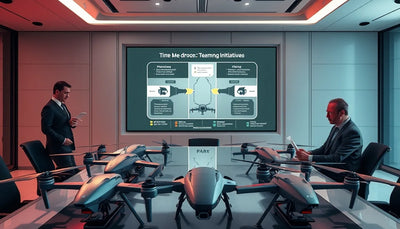
Russia's jet-powered Geran-4 one-way attack drone is changing the economics of low-cost air defense. The War Zone reports the platform uses speed and altitude to evade interceptors Ukraine relies on, with direct implications for counter-drone procurement and fleet planning.

Quick answer
Russia's jet-powered Geran-4 one-way attack drone is evolving to use speed and altitude to evade the low-cost interceptors Ukraine depends on, according to The War Zone.
- The Geran-4 forces defenders to reconsider low-cost interceptor effectiveness against faster, higher-flying threats.
- The development signals a shift in one-way attack drone design toward performance-based evasion rather than mass saturation alone.
- Counter-drone procurement planning must now weigh layered defense costs against evolving threat profiles.
Evidence: The War Zone · AeroVironment unmanned systems solutions
Market context
Turn market news into a buy, repair, or trade-in decision.
Compare pre-owned availability, resale timing, and repair economics before the market moves again.

The jet-powered Geran-4 one-way attack drone is evolving quickly in operational use, and the change is forcing a hard look at the economics of low-cost air defense. According to reporting by The War Zone, the platform now uses speed and altitude to evade the inexpensive interceptors that Ukraine has relied on heavily to blunt Russia's slower, propeller-driven Shahed-class drones.
The development matters well beyond the battlefield. For commercial drone buyers, fleet operators, and the broader counter-UAS market, the Geran-4's evolution signals a shift in how one-way attack drones are designed and how defenders must respond. When a threat platform moves from mass saturation to performance-based evasion, the cost equation for countermeasures changes fundamentally.
The Geran-4 shift and what The War Zone reports
The War Zone's reporting describes the Geran-4 as a one-way attack drone that uses speed and altitude to complicate interception by the low-cost systems Ukraine has deployed in large numbers. The source frames this as a rapid evolution rather than a static capability, with the platform adapting in ways that blunt the effectiveness of the interceptors currently in widespread use.
The practical consequence is that defenders can no longer assume that inexpensive, short-range interceptors will remain sufficient against the next generation of one-way attack drones. Reboot Hub analysis suggests this mirrors a broader pattern in defense technology: countermeasure cost advantages erode as threat platforms gain performance headroom. For procurement planners, the Geran-4 is a data point in a longer trend toward layered, more expensive defense architectures.
The War Zone's reporting does not provide verified technical specifications for the Geran-4 in the source data available here, so specific speed, altitude, or range figures should not be treated as confirmed. What is clear from the source is the operational direction: the platform is being used in ways that exploit the limitations of low-cost interceptors.
Counter-drone economics under pressure
The core commercial implication is cost asymmetry. Low-cost interceptors have been attractive because they let defenders engage cheap threats without spending more per kill than the attacker spent per airframe. The Geran-4's speed and altitude profile, as described by The War Zone, threatens that math. If a faster, higher-flying drone forces defenders to use more expensive interceptors or dedicated air defense systems, the per-engagement cost rises sharply.
For companies supplying counter-UAS hardware, software, and integration services, this creates both pressure and opportunity. Pressure comes from the need to demonstrate effectiveness against faster targets without losing the cost advantage that made low-cost interceptors viable. Opportunity comes from the likely expansion of layered defense budgets, where cheap interceptors remain one layer but are supplemented by detection, tracking, and engagement systems capable of handling higher-performance threats.
Fleet operators and drone buyers outside defense should also pay attention. The same performance trends that make the Geran-4 harder to intercept also influence how regulators, airspace managers, and security planners think about drone threats generally. A drone that can fly faster and higher changes risk assessments for critical infrastructure, public events, and logistics hubs, even if the specific platform is military in origin.
What this means for drone owners and the market
The Geran-4 story is not directly about DJI hardware, but it touches the commercial drone market in meaningful ways. Security-driven airspace restrictions, counter-drone deployments, and evolving threat perceptions all affect where and how commercial operators can fly. When military one-way attack drones evolve, civilian airspace authorities often respond with tighter rules, expanded no-fly zones, and new detection requirements, all of which shape the operating environment for legitimate drone users.
For buyers in the pre-owned DJI market, the practical takeaway is to watch how security policy and airspace regulation respond to evolving drone threats. Tighter restrictions in certain regions can shift demand toward drones with stronger compliance features, while uncertainty around future rules can make buyers more cautious about large fleet commitments. Reboot Hub analysis suggests that operators who plan for regulatory tightening, rather than reacting to it, will be better positioned to keep flying without disruption. Readers tracking how defense drone developments ripple into civilian markets can follow the broader pattern in our coverage of Hivemind Swarm U S Military S Shahed 136 Clone Gets Ai Powered Cooperative Attack Capability, which examines a related shift in cooperative attack drone technology.
Repair and maintenance providers should also note the direction of travel. As counter-drone systems become more sophisticated and more widely deployed, the operating environment for commercial drones grows more complex. Drones that are well-maintained, properly calibrated, and running current firmware are easier to operate safely in restricted or monitored airspace. For owners of pre-owned DJI aircraft, investing in professional inspection and genuine OEM spare parts is a practical way to reduce the risk of an in-flight issue drawing unwanted attention in a security-sensitive environment. For owners evaluating service and lifecycle risk, Hivemind Swarm U S Military S Shahed 136 Clone Gets Ai Powered Cooperative Attack Capability explains the relevant repair, parts, resale, or operational path.
The broader market signal for counter-UAS investment
The Geran-4's evolution, as reported by The War Zone, is best read as a market signal rather than a single procurement event. It tells investors, integrators, and defense planners that the one-way attack drone category is not standing still. Adversaries are iterating on airframe performance, and defenders will need to iterate on countermeasures at a similar pace.
That dynamic historically favors companies with strong research and development pipelines, modular system architectures, and the ability to integrate new sensors and effectors quickly. It also favors procurement approaches that avoid over-committing to any single interceptor type. A layered model, combining low-cost kinetic options with electronic warfare, directed energy, and advanced detection, is more resilient to the kind of performance shift the Geran-4 represents.
For commercial stakeholders, the signal is simpler: drone threat evolution is accelerating, and the market for counter-drone capability will likely grow in complexity and value. Whether you are a fleet operator, a repair provider, or a buyer evaluating pre-owned DJI aircraft, the practical response is the same. Stay informed, plan for regulatory and security changes, and keep your equipment in condition to operate reliably under scrutiny.
FAQ
Frequently asked questions
What is the Geran-4 drone?
The Geran-4 is a jet-powered one-way attack drone that The War Zone reports is being used with speed and altitude to evade low-cost interceptors. Specific technical specifications were not confirmed in the source data available for this analysis.
Why does the Geran-4 matter for counter-drone costs?
The Geran-4's performance profile threatens the cost advantage of low-cost interceptors. If defenders must use more expensive systems to engage faster, higher-flying drones, the per-engagement cost rises and procurement planning becomes more complex.
How does this affect commercial drone operators?
Evolving military drone threats often lead to tighter airspace restrictions and new security requirements for civilian operators. Commercial drone buyers and fleet managers should monitor regulatory responses and keep their aircraft well-maintained to operate reliably under heightened scrutiny.
Which sources support this update?
The visible evidence links identify The War Zone and AeroVironment unmanned systems solutions; each source is used only for the claim it directly supports.
What remains subject to change?
Retail pricing, availability, product bundles and regulatory timelines can change. Readers should verify the latest terms with the named retailer, manufacturer or regulator before acting.
How should buyers or operators use this analysis?
Use the verified facts as a starting point, then compare mission fit, lifecycle support, maintenance needs and current procurement terms before making a purchase or fleet decision.
تمت استشارة المصادر
- The War Zone - primary source
- AeroVironment unmanned systems solutions - official company source
تضيف افتتاحية Reboot Hub المشتري والإصلاح وإعادة البيع والتحليل التشغيلي لأصحاب الطائرات بدون طيار. إذا اكتشفت خطأ، فاتصل بنا لمراجعة التصحيح من خلال سياستنا التحريرية.