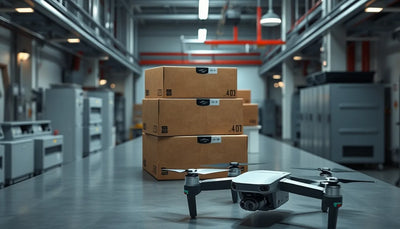
FCC Reports $6 Billion in U.S. Drone Manufacturing Investment
The FCC reports $6 billion in U.S. drone manufacturing investment as conditional approvals expand. For commercial operators, fleet buyers, and repair customers, the shift signals a more diversified domestic supply chain and evolving procurement options.

Quick answer
The FCC reports $6 billion in U.S. drone manufacturing investment as conditional approvals for domestic drone production expand.
- The reported figure reflects growing capital flowing into U.S.-based drone manufacturing capacity
- Conditional approvals are expanding, suggesting a more structured regulatory pathway for domestic production
- Commercial operators and fleet buyers may see a broader domestic supply chain over time
- Repair customers and pre-owned DJI owners should monitor how domestic parts availability evolves
The Federal Communications Commission has reported $6 billion in U.S. drone manufacturing investment, according to a Dronelife report, as conditional approvals tied to domestic drone production continue to expand. The figure marks a notable data point for an industry that has long depended on overseas supply chains for airframes, components, and repair parts.
Operator checklist
Turn policy news into a safer fleet decision.
Before changing aircraft, compare repair paths, available DJI inventory, and trade-in timing against the rule change.

For commercial operators, fleet managers, and repair customers, the reported investment level matters less as a headline number and more as a signal: domestic manufacturing capacity is receiving serious capital, and the regulatory apparatus around it is becoming more structured. That shift could eventually influence parts availability, procurement timelines, and the broader pre-owned drone market.
The reported investment and what it covers
Dronelife's reporting attributes the $6 billion figure to FCC data on U.S. drone manufacturing investment. The report frames the number alongside an expansion of conditional approvals, suggesting that companies pursuing domestic drone production are moving through a more active regulatory pipeline than in previous years.
What the figure does not specify, at least in the source-limited reporting available, is the precise breakdown of where that capital is landing. Reboot Hub analysis suggests that the investment likely spans manufacturing facilities, component production, testing infrastructure, and workforce development, but the source data does not confirm those categories individually. Operators should treat the $6 billion as a top-line indicator rather than a line-item budget.
The expansion of conditional approvals is the more operationally relevant development. Conditional approvals typically allow manufacturers to proceed with production or deployment under defined regulatory conditions, creating a pathway that is faster than full certification but still subject to oversight. For buyers, that means more domestic airframes and components could reach the market sooner than a traditional approval timeline would allow.
What this means for drone owners and the market
For commercial operators running mixed fleets, the reported manufacturing investment could eventually reduce dependence on a single overseas supply chain. If domestic production of airframes, batteries, sensors, and structural components scales up, procurement lead times may shorten, and repair parts could become more consistently available. That is a meaningful consideration for fleet managers who currently plan maintenance windows around international shipping.
Reboot Hub analysis: The pre-owned DJI market is also likely to feel the effects, though not immediately. DJI remains the dominant platform for many commercial and enterprise operators, and the secondary market for inspected pre-owned DJI drones is driven by parts availability, repair costs, and resale confidence. If domestic manufacturing expands into compatible components or service infrastructure, it could support longer operational lifespans for existing airframes. For now, operators tracking the pre-owned market can consult the Drone Wiki to understand how regulatory and supply chain shifts affect repair and resale decisions. For owners evaluating service and lifecycle risk, Drone Wiki explains the relevant repair, parts, resale, or operational path.
Repair customers should watch whether domestic component production translates into faster turnaround times and more predictable pricing for OEM-pulled parts. A more diversified supply base could reduce the bottlenecks that currently delay professional DJI repair work when specific modules or structural components are backordered. None of that is guaranteed by the FCC report, but the direction of travel is worth monitoring.
Regulatory context and commercial implications
The FCC's role in drone manufacturing investment is not always the first thing operators think about, but spectrum allocation and device authorization are directly relevant to UAV production. Drones that transmit video, telemetry, or control signals must comply with FCC equipment authorization rules, and manufacturers building in the United States need to navigate those requirements as part of their production timelines.
The reported expansion of conditional approvals suggests that the FCC is processing more domestic drone manufacturing applications and granting interim or conditional status to a wider set of companies. For procurement teams, that could mean a broader vendor pool over the next several years, particularly for enterprise and industrial platforms that need FCC-compliant transmission hardware.
Reboot Hub analysis suggests that fleet managers should begin tracking domestic manufacturers alongside established overseas brands when evaluating long-term procurement strategies. The $6 billion figure does not mean domestic platforms are ready to replace incumbent systems today, but it does indicate that the supply chain is diversifying. Buyers who plan multi-year fleet refreshes may want to build flexibility into their vendor selection criteria.
What operators should watch next
The most practical step for a buyer, pilot, or fleet manager is to monitor which specific manufacturers receive conditional approvals and what categories of drones they produce. Not all domestic manufacturing is relevant to every operator. A company building agricultural spray drones will not help a cinematographer running a compact camera platform, and vice versa.
Operators should also watch for secondary signals: component suppliers announcing domestic production, repair networks expanding to support new domestic airframes, and pricing shifts in the pre-owned market as supply dynamics change. The FCC report is a macro-level data point, but the operational consequences will show up in parts catalogs, repair lead times, and resale values.
For now, the $6 billion figure and the expansion of conditional approvals point in one direction: the U.S. drone manufacturing base is growing, and the regulatory system is adapting to accommodate it. That is a structural shift, not a short-term market event, and it will take time to reach the repair bench or the procurement spreadsheet.
FAQ
Frequently asked questions
What did the FCC report about drone manufacturing investment?
According to Dronelife, the FCC reported $6 billion in U.S. drone manufacturing investment as conditional approvals for domestic drone production expand. The figure signals growing capital flowing into U.S.-based manufacturing capacity.
How does this affect commercial drone operators?
Commercial operators may eventually see a broader domestic supply chain, which could shorten procurement lead times and improve parts availability. The shift is structural and will take time to reach day-to-day operations.
Should pre-owned DJI drone owners be concerned?
No immediate concern is warranted. The pre-owned DJI market is driven by parts availability and repair costs, and a more diversified domestic supply chain could support longer operational lifespans for existing airframes over time.
Which sources support this update?
The article distinguishes reported information from analysis and does not present an unverified source as official confirmation.
What remains subject to change?
Retail pricing, availability, product bundles and regulatory timelines can change. Readers should verify the latest terms with the named retailer, manufacturer or regulator before acting.
How should buyers or operators use this analysis?
Use the verified facts as a starting point, then compare mission fit, lifecycle support, maintenance needs and current procurement terms before making a purchase or fleet decision.
تمت استشارة المصادر
- Dronelife via Google News - primary source
ولم تكن الوثائق الرسمية الإضافية متاحة في وقت النشر.
تضيف افتتاحية Reboot Hub المشتري والإصلاح وإعادة البيع والتحليل التشغيلي لأصحاب الطائرات بدون طيار. إذا اكتشفت خطأ، فاتصل بنا لمراجعة التصحيح من خلال سياستنا التحريرية.