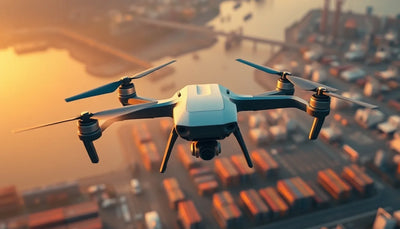
Duke University Drone Tracks Another Drone Using Sound Only
Duke University researchers demonstrated a drone that tracked another drone using only acoustic sensing, according to a DroneXL report. The experiment points toward passive detection methods that could shape counter-drone tools, airspace awareness, and future commercial sensing payloads without relying on radar or radio signals.

Quick answer
Duke University researchers demonstrated a drone that tracked another drone using only sound, as reported by DroneXL.
- The experiment used acoustic sensing rather than radar or radio frequency tracking
- The work was reported by DroneXL based on Duke University research
- The approach could inform future passive counter-drone and airspace monitoring tools
- Commercial operators may see acoustic sensing appear in future detection payloads
Evidence: AeroVironment unmanned systems solutions · FAA UAS official guidance
Operator checklist
Turn policy news into a safer fleet decision.
Before changing aircraft, compare repair paths, available DJI inventory, and trade-in timing against the rule change.

Duke University researchers have demonstrated a drone capable of tracking another drone using only sound, according to a report published by DroneXL. The experiment, covered in a source-limited industry report, describes an acoustic sensing approach that does not depend on radar, radio frequency interrogation, or visual identification to follow a moving unmanned aircraft.
The development matters because passive acoustic detection has long been discussed as a complement to active counter-drone systems, but public demonstrations remain relatively uncommon. For commercial operators, fleet managers, and repair customers, the experiment signals that acoustic sensing may eventually appear in detection payloads, airspace awareness tools, and security applications where active emissions are undesirable or impractical.
What the Duke experiment actually showed
The central reported finding is narrow but significant: a drone at Duke University tracked another drone using only its sound signature. The DroneXL report does not detail specific hardware models, microphone counts, detection ranges, or processing latency, and Reboot Hub has not independently verified the underlying research documentation. Source-limited reporting mode applies here, meaning the central claim should be attributed directly to the named reporting source rather than to Duke University as an official confirmation.
What can be said with confidence is that the experiment involved acoustic sensing as the primary or sole tracking method. That distinction is operationally important. Many current counter-drone tools rely on radar, radio frequency detection, electro-optical cameras, or a fusion of those inputs. A sound-only approach would represent a different detection philosophy, one that listens for propeller noise, motor harmonics, and airframe acoustic signatures rather than transmitting energy or waiting for a drone to emit a detectable radio signal.
For fleet operators, the implication is not that acoustic tracking replaces existing systems today. It is that researchers are testing whether sound alone can provide useful positional information. If that capability matures, it could add a passive layer to airspace monitoring without adding electromagnetic interference to already congested operational environments.
Why passive acoustic detection matters for counter-drone work
Passive sensing has a specific appeal in security and defense contexts: it does not announce its presence. Radar and active radio frequency systems transmit signals that can be detected, jammed, or avoided. Acoustic listening, by contrast, simply receives sound that is already present. A drone that is flying generates noise whether or not anyone is actively tracking it, which makes acoustic signatures difficult to hide without significant engineering changes.
The Duke experiment, as reported, fits into a broader research interest in low-cost, distributed sensing. Acoustic arrays can be built from relatively inexpensive microphone components, and they do not require the same regulatory approvals as active emitters in many jurisdictions. For agencies and private security operators evaluating counter-drone options, passive acoustic tools could offer a lower-cost entry point or a supplementary layer that works alongside existing radar and camera systems.
Reboot Hub analysis suggests that commercial adoption would depend on solving well-known acoustic sensing challenges: wind noise, urban sound clutter, variable propeller signatures across drone models, and limited detection range compared to radar. None of those limitations are addressed in the source data, and operators should treat the Duke demonstration as an early research signal rather than a commercially available capability.
What this means for drone owners and the market
For individual drone owners and small commercial operators, the immediate practical impact is minimal. Acoustic tracking is not currently a compliance requirement, and no regulatory body has proposed sound-based identification as a substitute for Remote ID or other existing frameworks. The Duke experiment does not change how a pilot should fly today, nor does it create a new enforcement mechanism that operators must immediately address.
The longer-term market implication is more interesting. If acoustic detection becomes reliable, it could influence how security-conscious clients evaluate drone activity near sensitive facilities, public events, or infrastructure. A passive listening network might flag drone presence without requiring expensive radar installations. For operators who fly near such sites, the practical takeaway is that drone noise may become a more scrutinized characteristic, not just a nuisance factor for bystanders.
For the pre-owned DJI market, the development is neutral to mildly positive. Acoustic detection does not make existing drones obsolete, and it does not create a new repair burden. However, operators who maintain their aircraft well, replace worn propellers, and keep motors balanced tend to produce cleaner acoustic signatures. That is already a selling point for inspected pre-owned units, and it could become more relevant if acoustic monitoring tools spread. Buyers evaluating pristine pre-owned DJI drones may want to ask about propeller condition and motor wear, since those factors directly affect sound output. Reboot Hub's Drone Wiki provides reference material on drone maintenance and component condition for operators who want to understand how wear affects performance. For owners evaluating service and lifecycle risk, Drone Wiki explains the relevant repair, parts, resale, or operational path.
Repair customers should also note that acoustic anomalies are sometimes early indicators of mechanical problems. A drone that sounds different after a hard landing or extended use may have a damaged propeller, a bent motor shaft, or bearing wear. The Duke research is about tracking other drones, not diagnosing mechanical faults, but the underlying principle is the same: sound carries useful information about a drone's state.
What operators should watch next
The Duke demonstration is a research milestone, not a product launch. No commercial acoustic tracking system has been announced as a direct result of the experiment, and the source data does not identify any company, agency, or procurement program tied to the work. Operators should watch for follow-up publications, peer-reviewed papers, or industry partnerships that would indicate whether the approach is moving toward practical deployment.
Fleet managers evaluating security or airspace awareness tools should continue to rely on established detection methods while monitoring acoustic sensing as an emerging category. The most likely near-term outcome is that acoustic data gets fused with camera, radar, and radio frequency inputs rather than replacing them. A sound-only system, even if technically feasible in controlled conditions, would face significant real-world variability that commercial deployments cannot ignore.
For drone buyers, the practical guidance is unchanged: maintain your aircraft, replace worn components with genuine OEM spare parts, and keep flight logs that document maintenance history. A well-maintained drone is quieter, more reliable, and easier to resell. The Duke experiment reinforces that sound is a measurable characteristic of drone operation, even if it does not yet change what buyers or pilots are required to do.
FAQ
Frequently asked questions
Did Duke University officially confirm the acoustic tracking demonstration?
The source data attributes the report to DroneXL, not to an official Duke University statement. Reboot Hub has not independently verified the underlying research documentation, so the central claim should be treated as reported by the named industry source.
Does acoustic tracking replace Remote ID or other drone identification rules?
No. The Duke experiment is a research demonstration of passive acoustic tracking, not a regulatory proposal. Existing identification and compliance frameworks remain unchanged, and operators should continue to follow current rules.
Should commercial drone operators change their maintenance practices because of this research?
Not directly. However, acoustic output is already a useful indicator of propeller condition, motor wear, and overall airframe health. Operators who maintain clean, balanced aircraft may benefit from quieter operation and better resale value, regardless of whether acoustic tracking tools become commercially available.
Which sources support this update?
The visible evidence links identify AeroVironment unmanned systems solutions and FAA UAS official guidance; each source is used only for the claim it directly supports.
What remains subject to change?
Retail pricing, availability, product bundles and regulatory timelines can change. Readers should verify the latest terms with the named retailer, manufacturer or regulator before acting.
How should buyers or operators use this analysis?
Use the verified facts as a starting point, then compare mission fit, lifecycle support, maintenance needs and current procurement terms before making a purchase or fleet decision.
تمت استشارة المصادر
- FAA UAS official guidance - official regulator source
ولم تكن الوثائق الرسمية الإضافية متاحة في وقت النشر.
تضيف افتتاحية Reboot Hub المشتري والإصلاح وإعادة البيع والتحليل التشغيلي لأصحاب الطائرات بدون طيار. إذا اكتشفت خطأ، فاتصل بنا لمراجعة التصحيح من خلال سياستنا التحريرية.