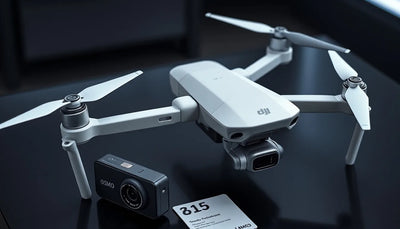
DJI Power Station Doubles as Home Backup for Drone Operators
DJI's drone-charging power station now doubles as emergency home backup, according to a TechRadar report. The dual-use design matters for commercial operators, fleet managers, and repair customers who already depend on portable power in the field and may now consolidate equipment purchases around a single platform.

Quick answer
TechRadar reports that DJI's drone-charging power station doubles as an emergency home backup power source, expanding the utility of equipment already used by commercial drone operators.
- The report positions DJI's power station as a dual-use device for field charging and home emergency power.
- Commercial operators may consolidate power equipment spending around one platform instead of separate drone chargers and home backup units.
- The development could influence resale value and demand for pre-owned DJI power accessories in the secondary market.
- Fleet managers should evaluate whether existing power station inventory can now cover both operational and contingency power needs.
TechRadar reports that DJI's drone-charging power station now doubles as an emergency home backup power source, adding a second operational role to equipment that commercial drone pilots and fleet managers already deploy in the field. The development matters because it shifts the value proposition of DJI's power hardware from a single-purpose drone accessory into a broader energy resilience tool.
DJI buying context
Match product news to hardware you can actually deploy.
Check inspected DJI aircraft, repair support, and trade-in timing before deciding whether to upgrade, repair, or wait.

For operators who already carry portable power stations to job sites, the dual-use capability changes procurement math. A unit that charges flight batteries during the day and keeps essential home equipment running during an outage is no longer just a drone expense. It becomes a household infrastructure purchase that can be justified against two budgets: commercial operations and personal emergency preparedness.
What TechRadar actually reported
The central finding from the TechRadar report is straightforward: DJI's drone-charging power station is designed to function as emergency home backup in addition to its primary role charging drone batteries. The source frames this as a dual-use capability rather than a separate product line or a firmware-limited feature.
Reboot Hub analysis should note what the report does not establish. The source material does not confirm specific output wattage, runtime figures, compatibility lists, or whether the home backup function requires additional adapters, transfer switches, or proprietary cables. Operators should treat any technical performance claims beyond the basic dual-use description as unverified until DJI publishes official specifications or a qualified reviewer tests the equipment under load.
The practical implication is that commercial drone teams may already own hardware capable of serving a second function they have not yet exploited. If a power station purchased for field charging can also support home backup, the equipment's total cost of ownership improves without any additional spend.
Why dual-use power matters for commercial operators
Commercial drone work is power-hungry. Multi-battery flight days, survey missions, inspection jobs, and agricultural mapping all depend on reliable charging infrastructure that travels with the crew. A power station that only charges drone batteries is a cost center. A power station that also protects a home office, refrigerator, or communications equipment during an outage becomes a risk management asset.
This dual-use positioning could influence how fleet managers write equipment requests. Instead of purchasing a dedicated drone charging hub and a separate home backup unit, a single DJI power station may cover both requirements. For small operators and independent pilots, that consolidation is significant because it reduces the number of devices to maintain, store, and transport.
The repair and support perspective also shifts. A power station used daily in the field and periodically at home accumulates different wear patterns than a unit used only for drone charging. Repair customers should expect that dual-use equipment may require more frequent inspection of ports, cooling systems, and battery health. For those evaluating pre-owned DJI power accessories, usage history becomes more important because a unit may have served as a home backup device during extended outages, not just as a field charger.
What this means for drone owners and the market
The pre-owned DJI market tends to respond when accessories gain new utility. If a drone-charging power station is now understood as a home backup device, demand for used units could rise among buyers who do not fly drones at all but want a reliable power source. That cross-market demand may support resale values for operators who upgrade their field equipment and sell older power stations. For owners evaluating service and lifecycle risk, Drone Wiki explains the relevant repair, parts, resale, or operational path.
For buyers, the key question is condition transparency. A power station with heavy field use may have cosmetic wear, reduced battery capacity, or port damage that a home-only buyer would not expect. Sellers who document usage history and test output performance will likely command better prices than those who list units without context. This is where the Drone Wiki can help operators understand what to inspect before buying or selling pre-owned DJI power equipment.
Fleet managers should also consider standardization. If DJI's power station can serve both operational and contingency roles, standardizing on one platform across a fleet simplifies training, spare parts inventory, and maintenance scheduling. The operator-facing action after reading this report is to audit existing power station inventory and determine whether current units can cover home backup needs before purchasing separate equipment.
What remains uncertain
The source report leaves several questions open. It does not specify which DJI power station models include the home backup function, whether the capability is available in all regions, or what accessories are required to connect the unit to home circuits. It also does not indicate whether DJI markets the feature as a primary use case or as an incidental capability.
Operators should watch for official DJI documentation, regional availability notices, and third-party testing before making procurement decisions based on the dual-use claim. Until verified specifications are available, the responsible approach is to treat the home backup function as a reported capability that requires confirmation for specific models and use cases.
The broader market signal, however, is clear. Drone manufacturers are positioning power infrastructure as multi-purpose equipment, not single-task accessories. That trend benefits commercial operators who want their hardware investments to work across more of their operational and personal resilience needs.
FAQ
Frequently asked questions
Does the TechRadar report confirm specific DJI power station models for home backup?
No. The source report describes the dual-use capability in general terms but does not confirm specific model numbers, regional availability, or required accessories. Operators should verify model-level details through official DJI documentation before purchasing.
Should fleet managers replace existing drone chargers with dual-use power stations?
Not immediately. Fleet managers should first audit current power station inventory and test whether existing units can support home backup needs. If current equipment already covers both use cases, replacement may be unnecessary.
How does dual-use capability affect pre-owned DJI power station values?
Reboot Hub analysis: If home backup utility becomes widely recognized, demand for used DJI power stations could rise among non-drone buyers, potentially supporting resale values. Sellers who document usage history and test output performance are likely to achieve better pricing.
Which sources support this update?
The article distinguishes reported information from analysis and does not present an unverified source as official confirmation.
What remains subject to change?
Retail pricing, availability, product bundles and regulatory timelines can change. Readers should verify the latest terms with the named retailer, manufacturer or regulator before acting.
How should buyers or operators use this analysis?
Use the verified facts as a starting point, then compare mission fit, lifecycle support, maintenance needs and current procurement terms before making a purchase or fleet decision.
تمت استشارة المصادر
- TechRadar via Google News - primary source
ولم تكن الوثائق الرسمية الإضافية متاحة في وقت النشر.
تضيف افتتاحية Reboot Hub المشتري والإصلاح وإعادة البيع والتحليل التشغيلي لأصحاب الطائرات بدون طيار. إذا اكتشفت خطأ، فاتصل بنا لمراجعة التصحيح من خلال سياستنا التحريرية.