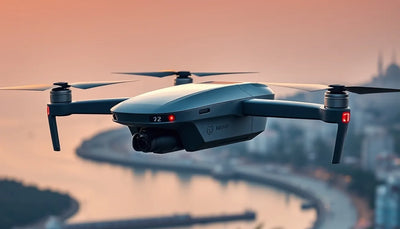
Chinese agricultural drones gain ground in Chilean farming operations
Chinese agricultural drones are reshaping Chilean farmland operations, according to a China News Network report. The development signals growing international demand for commercial UAV platforms and a widening market for parts, service, and pre-owned equipment as fleets scale beyond China.

Quick answer
A China News Network report describes how Chinese agricultural drones are being adopted on Chilean farms, changing crop treatment and farm workflows.
- Chinese-made agricultural UAVs are active in Chilean farmland operations
- The report frames this as part of APEC-region technology exchange
- Adoption points to growing commercial demand for agricultural drone platforms
- International fleet growth could shape parts, service, and pre-owned equipment markets
A China News Network report published through Google News describes how Chinese agricultural drones are changing farmland operations in Chile. The report frames the development within the APEC Circle of Friends series, which tracks economic and technology exchange across Asia-Pacific economies. Chinese-made multirotor platforms are being used on Chilean farms for crop treatment workflows, and the reporting suggests that adoption is moving beyond isolated pilot projects into more routine farm use.
Market context
Turn market news into a buy, repair, or trade-in decision.
Compare pre-owned availability, resale timing, and repair economics before the market moves again.

For commercial UAV operators and fleet buyers, the report matters less for any single technical claim and more for what it signals about market direction. Agricultural drone demand is no longer a purely domestic Chinese story. Chilean farms represent one visible example of how Chinese UAV manufacturers are finding commercial buyers in new geographies, and that shift has practical consequences for parts availability, service networks, and the pre-owned equipment market.
What the China News Network report actually says
The primary reporting comes from China News Network, which describes Chinese drones being used to transform Chilean farmland. The report does not specify exact model names, payload capacities, or fleet sizes in the material reviewed. What it does establish is that Chinese agricultural UAV platforms are present and active in Chilean farming regions, and that their use is being covered as a meaningful example of APEC-region cooperation and technology transfer.
Reboot Hub analysis: the absence of detailed operational data in the source means buyers should treat this as a directional market signal rather than a procurement benchmark. The report confirms adoption is happening and that it is visible enough to attract coverage from a major Chinese state-affiliated news outlet. That visibility itself is commercially relevant, because it indicates that manufacturers and distributors are investing enough in the Chilean market to generate real field activity.
Why agricultural drone adoption is spreading beyond China
Chinese agricultural drone manufacturers have spent years building domestic scale in crop spraying, seeding, and field mapping. That domestic volume has driven down platform costs and created a large installed base of operators, parts channels, and service experience. When those manufacturers look abroad, they carry that cost structure with them. Chilean agriculture, with its large fruit and wine export sector, presents a natural fit for precision spraying and crop monitoring workflows.
The China News Network report positions Chilean farmland as a beneficiary of that technology flow. For commercial readers, the practical takeaway is that agricultural UAV demand is becoming more geographically distributed. A farm operator in Chile buying a Chinese agricultural drone today is entering a market where parts and service infrastructure may still be maturing, but where the underlying platform economics are already proven at scale in China.
What this means for drone owners and the market
When agricultural drone fleets expand into new regions, the commercial ecosystem around those fleets expands with them. Buyers in Chile and elsewhere will need batteries, arms, motors, pumps, nozzles, and flight controllers over the life of each platform. That creates demand for genuine OEM spare parts and for service providers who can diagnose and repair agricultural platforms without waiting on slow international shipping. The report does not provide data on Chilean service infrastructure, but the direction of travel is clear: more platforms in the field means more maintenance events.
For operators and fleet managers, the report is a reminder that agricultural drone ownership is not a one-time purchase. Platforms that operate in dusty, wet, and chemical-heavy farm environments wear faster than consumer camera drones. Buyers evaluating Chinese agricultural UAVs should ask about parts lead times, local repair capacity, and whether the distributor maintains an inventory of consumable components. In markets where service networks are still developing, access to OEM-pulled parts and experienced repair support can determine whether a platform stays in the air during peak spraying windows. Reboot Hub maintains a Drone Wiki that helps operators understand platform maintenance and parts considerations across different commercial UAV categories. For owners evaluating service and lifecycle risk, Drone Wiki explains the relevant repair, parts, resale, or operational path.
The pre-owned market implications are also worth watching. As agricultural fleets grow internationally, early adopters will eventually upgrade or rotate platforms. That creates a secondary market for inspected pre-owned agricultural drones, particularly in regions where new platform pricing remains high relative to local farm margins. The Chilean example is one early signal that agricultural UAV resale and parts demand may become a more global, rather than China-centric, market over the next several years.
What buyers and fleet planners should watch next
The China News Network report does not provide pricing, import data, or regulatory detail for Chinese agricultural drones in Chile. Fleet planners should therefore monitor follow-on reporting for concrete signals: distributor announcements, local service center openings, parts inventory commitments, and any Chilean agricultural authority guidance on UAV spraying rules. Those operational details will matter more than the broad adoption narrative.
For now, the responsible read is that Chinese agricultural drone manufacturers are actively expanding their commercial footprint in Latin American agriculture, and Chile is one visible test market. Operators who already run Chinese agricultural platforms, or who are considering them, should factor international parts and service availability into their procurement decisions. A platform that is cheap to buy but hard to repair locally can become expensive quickly when a spray season is on the line.
FAQ
Frequently asked questions
Are Chinese agricultural drones actually being used on Chilean farms?
Yes. A China News Network report describes Chinese agricultural drones being used to transform Chilean farmland, and the coverage positions the adoption as part of APEC-region technology exchange.
Does the report specify which drone models are being used in Chile?
No. The source material reviewed does not identify specific model names, payload capacities, or fleet sizes. Buyers should treat the report as a market direction signal rather than a technical benchmark.
What should a fleet manager do differently after reading this?
Fleet managers evaluating Chinese agricultural UAVs for international operations should investigate parts lead times, local repair capacity, and distributor parts inventory before committing to a platform, especially in markets where service networks are still developing.
Which sources support this update?
The article distinguishes reported information from analysis and does not present an unverified source as official confirmation.
What remains subject to change?
Retail pricing, availability, product bundles and regulatory timelines can change. Readers should verify the latest terms with the named retailer, manufacturer or regulator before acting.
How should buyers or operators use this analysis?
Use the verified facts as a starting point, then compare mission fit, lifecycle support, maintenance needs and current procurement terms before making a purchase or fleet decision.
تمت استشارة المصادر
- Source material - primary source
ولم تكن الوثائق الرسمية الإضافية متاحة في وقت النشر.
تضيف افتتاحية Reboot Hub المشتري والإصلاح وإعادة البيع والتحليل التشغيلي لأصحاب الطائرات بدون طيار. إذا اكتشفت خطأ، فاتصل بنا لمراجعة التصحيح من خلال سياستنا التحريرية.