Amazon MK30 Crash in Darlington Raises CAA Safety Questions
An Amazon Prime Air MK30 drone crashed into a Darlington garden, adding to a troubling safety record. We analyze what it means for UK drone regulations, fleet operators, and the second-hand drone market.

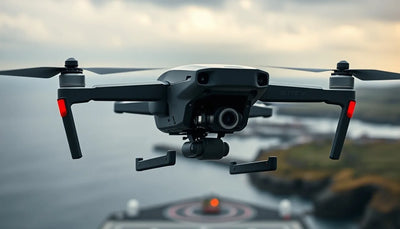
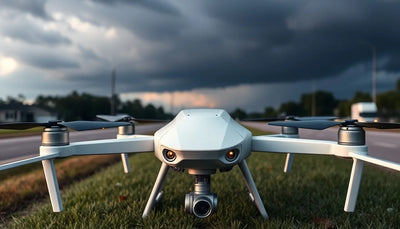
On July 30, 2026, an Amazon Prime Air MK30 drone landed unannounced in a residential garden in Darlington, UK — the latest in a series of incidents that have dogged the e-commerce giant's drone delivery ambitions. According to a report from SUAS News, the MK30 descended into private property without warning, adding to a record that includes brush fires in Oregon and building collisions in Texas. For UK drone operators, fleet managers, and buyers, the event raises urgent questions about regulatory oversight by the Civil Aviation Authority (CAA) and the safety architecture of the world's largest drone delivery program.
The crash comes as Amazon pushes to scale its Prime Air service across the UK and U.S., positioning itself as a logistics innovator. Yet the pattern of failures suggests a systemic gap between operational ambition and real-world safety. In contrast, operators like Manna Aero have demonstrated that high-redundancy drone delivery can be executed safely, placing Amazon's record in stark relief. For commercial drone buyers and fleet operators evaluating delivery platforms, the MK30 incidents reinforce the importance of proven reliability over novelty.
The MK30 Incident and Amazon's Growing Safety Record
The Darlington crash is not an isolated event. SUAS News details previous Amazon drone incidents: an MK27 that sparked a brush fire in Oregon during a failed landing, and an MK30 that collided with a building in Texas. Each incident has been met with minimal public disclosure from Amazon, leaving operators and regulators to piece together patterns. The Darlington event occurred in broad daylight in a suburban garden, increasing the risk of injury to persons or pets — a scenario that undermines public trust in drone delivery.
Industrial drone procurement
Source a brand-new industrial drone for this mission.
Discuss mission fit, aircraft model, quantities, configuration, pickup, and lifecycle support with Reboot Hub.

Amazon has not yet released a formal statement about the cause of the Darlington incident. The lack of transparency frustrates fleet operators who need data to assess risk for their own operations. The CAA, which oversees UK drone operations, has a regulatory framework that relies on operator self-reporting and post-incident investigation. Critics argue this reactive posture is insufficient, especially when an operator with Amazon's resources may treat incidents as isolated failures rather than systemic risks.
For drone buyers and repair customers, the MK30's track record matters beyond news headlines. A platform prone to uncommanded landings or control loss requires robust contingency planning — redundant flight controllers, terrain awareness systems, and parachutes. Many enterprise drones on the market today, including pre-owned DJI models, incorporate these safeguards as standard. The gap between Amazon's design philosophy and operator best practice is now visible.
What this means for enterprise operators
The Darlington crash is a case study for any fleet manager deploying unmanned aircraft in populated areas. It highlights three immediate operational considerations: risk assessment, platform selection, and regulatory compliance.
First, risk assessment must include a detailed review of the drone's failure history. Operators evaluating delivery drones should demand incident logs, autonomous landing test data, and redundancy schematics from manufacturers. Amazon's reluctance to share such details should be a red flag for procurement teams. In contrast, open-source incident databases and FAA accident reports for platforms like the DJI Matrice or Mavic series provide transparency that fleet operators can use to model their own risk profiles.
Second, platform selection increasingly favors modular, repairable systems with proven safety records. While Amazon's MK30 is a bespoke design with limited field serviceability, most commercial operators rely on platforms that can be repaired or upgraded with professional DJI repair services using genuine OEM spare parts. The ability to replace flight controllers, motors, and sensors quickly reduces downtime and maintains safety margins. For fleet operators already invested in such systems, the MK30 incident reinforces the value of a mature ecosystem over a proprietary black box.
Third, regulatory compliance must account for operator behavior, not just airframe certification. The CAA permits Amazon to operate under specific BVLOS exemptions, but the Darlington crash suggests those exemptions may need revisiting. Fleet operators should proactively document their safety management systems and maintain open dialogue with regulators. Doing so builds trust that can smooth future approvals, even as Amazon's track record provokes stricter oversight. For teams translating this development into deployment-scale and logistics requirements, Reboot Hub's B2B drone procurement service can help scope configuration, fleet quantity, maintenance planning, and lifecycle support before a quotation.
CAA Oversight and the Gap in Certification
The CAA's approach to drone delivery has been broadly permissive, granting exemptions to Amazon, Skye, and others under the assumption that corporate operators will self-regulate. The MK30 incidents challenge that assumption. Amazon's Oregon and Texas events — and now Darlington — indicate that the company's certification processes may not adequately test for real-world anomalies like GPS dropouts, wind shear, or obstacle avoidance failures.
Manna Aero, an Irish drone delivery company, has operated thousands of flights without a single injury incident, using a proprietary flight control system with triple redundancy and automatic landing site selection. The contrast with Amazon's record underscores that safety is a design philosophy, not a feature list. For UK drone buyers and fleet operators, the Darlington crash should prompt questions about the CAA's willingness to mandate redundant safety systems as a condition of operating permits.
The regulatory gap also affects the second-hand drone market. When incidents erode trust in a specific manufacturer's platform, residual values for used drones from that manufacturer may fall. Operators with mixed fleets may accelerate divestment of Amazon-linked airframes, while pre-owned DJI drones, supported by a mature service network and abundant spare parts, become more attractive as reliable alternatives. The Darlington crash could accelerate a shift toward open-architecture, repairable platforms.
Market Implications and Second-Hand Drone Sector
For buyers in the pre-owned drone market, incidents like the MK30 crash have a cascading effect. They increase demand for drones with proven safety records and transparent maintenance histories. Sellers of used DJI Mavic 3 Enterprise or Matrice 300 series drones may see sustained interest as fleet operators rotate out more experimental platforms. The drone trade-in guide becomes a useful resource for operators looking to upgrade from less reliable airframes.
Repair businesses also benefit from the incident. Platforms that require frequent firmware updates or proprietary parts create a secondary market for OEM-pulled components. When a manufacturer's design is implicated in repeated crashes, savvy repair technicians stock genuine parts for platforms that customers trust, such as the DJI Mavic 3 or Autel EVO series. The MK30 crash may accelerate this trend, as operators seek to standardize on platforms with better supportability.
In the broader commercial drone sector, the Darlington incident is a reminder that reliability drives residual value. Fleet operators who invest in redundant systems, regular maintenance, and professional repair will protect their asset base. Customers in the second-hand market should prioritize drones with documented service records and a known safety profile.
Will the CAA ground Amazon's MK30 fleet after the Darlington crash?
The CAA has not yet announced any grounding order. Historically, the agency has allowed operators to self-correct after incidents. However, given the pattern of MK30 failures, regulatory pressure is mounting. Fleet operators should monitor CAA announcements and prepare for possible temporary restrictions on Amazon's UK operations.
Should delivery drone operators switch to platforms like Manna Aero?
Manna Aero's safety record is exemplary, but its delivery range and payload are tailored for food and small packages. For operators needing higher payloads or longer range, proven enterprise platforms like the DJI Matrice series offer a safer, more transparent alternative than Amazon's MK30. The choice depends on mission requirements, but the Darlington crash highlights the cost of choosing unproven airframes.
How can fleet operators protect themselves from similar incidents?
Fleet operators should require incident histories from manufacturers, invest in dual-redundant flight controllers, and ensure their drones have autonomous landing systems. Insurance underwriters may begin demanding such features as a condition of coverage. Regularly updating firmware and performing professional inspections can also reduce risk.
Surse consultate
- Gravity Wins Again: Amazon’s MK30 Hits Darlington and the CAA’s Blind Spot – sUAS News - primary source
La momentul publicării, nu era disponibilă documentație oficială suplimentară.
Redacția Reboot Hub oferă analize privind achiziția, reparația, revânzarea și operarea pentru proprietarii de drone. Dacă observați o eroare, contactați-ne pentru revizuirea corecției conform politicii noastre editoriale.