AeroVironment Shares Slide 65% Even as Defense Bookings Stay Strong
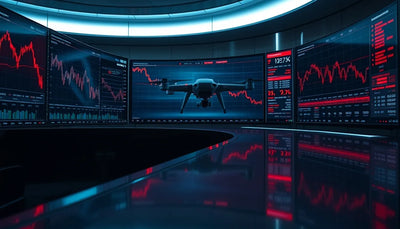
AeroVironment's stock has fallen 65.5% over the past year despite record military bookings and large contract headlines. The disconnect between share price and news flow raises questions about valuation, defense spending momentum, and what the slide means for commercial drone buyers watching the broader market.

Quick answer
AeroVironment shares have fallen 65.5% over the past 12 months even as the company reported large military contracts and record bookings, creating a disconnect between stock performance and operational news flow.
- AeroVironment stock declined 65.5% over the trailing 12-month period.
- The company has continued to secure large military contracts and record bookings.
- The valuation question centers on whether the current share price aligns with long-term cash generation.
- The slide has shifted investor focus toward fundamental valuation rather than headline momentum.
Evidence: Source material · AeroVironment unmanned systems solutions · Defense.gov official source
Purchase timing
Use market shifts to buy, sell, repair, or wait with more context.
Compare trade-in timing, pre-owned DJI pricing, and repair economics before committing new capital.

Verified facts
What the available evidence confirms
| Metric | Source Detail |
|---|---|
| 12-month share decline | 65.5% |
| Business activity | Large military contracts and record bookings |
| Investor focus | Whether current price aligns with long-term cash generation |
AeroVironment has spent the past year generating exactly the kind of headlines that defense investors typically reward: large military contracts, record bookings, and a steady drumbeat of demand signals from the Pentagon and allied procurement programs. Yet the company's share price has moved in the opposite direction, falling 65.5% over the trailing 12 months, according to reporting from Yahoo Finance. That gap between operational news flow and market performance is now the central question for anyone trying to read the defense drone sector.
The sharp decline has pushed the conversation away from momentum and toward fundamentals. Investors and industry observers are no longer asking whether AeroVironment can win contracts. They are asking whether the current share price lines up with the cash the business can realistically generate over time. For commercial drone buyers, fleet operators, and repair customers, that shift matters more than it might first appear.
The disconnect between contracts and share price
Yahoo Finance's reporting frames the situation clearly: AeroVironment has remained in the headlines for large military contract wins and record bookings, but the stock has still lost 65.5% of its value over the past 12 months. That is a striking divergence. In a typical defense cycle, sustained contract activity and rising bookings tend to support share prices, or at least cushion declines. Here, the opposite has happened.
The source-limited nature of the reporting means we should be careful about assigning a single cause. What the data does show is that the market has repriced the stock aggressively even as the company's operational narrative stayed positive. That kind of repricing often reflects concerns about future margins, execution risk, or broader sector rotation rather than any single negative event. Reboot Hub analysis suggests the decline may also reflect a broader cooling in defense valuations after a period of elevated expectations.
For commercial operators, the takeaway is not about AeroVironment's internal operations. It is about how quickly defense-adjacent drone valuations can shift even when contract activity remains strong. A fleet manager budgeting for multi-year hardware commitments should note that public market sentiment can diverge from procurement reality for extended periods.
What the valuation reset signals for defense drone spending
The Yahoo Finance piece points to a specific investor question: whether the current price aligns with the cash the business can generate over time. That is a valuation question, not a demand question. It suggests the market is no longer willing to pay a premium for defense drone exposure simply because contracts are being announced. Instead, investors are looking for evidence that those contracts translate into durable, predictable cash flow.
This matters for the broader defense drone ecosystem. AeroVironment is one of the most visible publicly traded pure-play defense drone companies in the United States. When its valuation resets this sharply, it can influence how private defense drone startups are valued, how procurement teams think about supplier stability, and how commercial operators assess the long-term health of the defense-side drone market.
The reporting does not provide specific revenue or earnings figures, so we should avoid drawing conclusions about AeroVironment's financial health beyond what the source supports. What we can say is that a 65.5% share decline over 12 months is a significant repricing event. For commercial buyers who also operate in regulated or security-adjacent sectors, it is a reminder that defense demand and defense equity valuations do not always move together.
What this means for drone owners and the market
Most commercial drone owners do not fly AeroVironment systems. The majority of the commercial market, especially in inspection, mapping, agriculture, and public safety, runs on DJI hardware or a small number of enterprise alternatives. But the defense valuation story still reaches the commercial side in indirect ways. When defense drone equities fall sharply, it can signal shifting capital flows across the entire drone sector, including the supply chains, component makers, and service providers that support both defense and commercial operations.
For a repair customer or a pre-owned DJI buyer, the practical question is whether a defense stock decline changes anything about hardware pricing, parts availability, or service costs. The honest answer is that it does not, at least not directly. DJI's commercial ecosystem operates on a different supply chain and a different demand profile than AeroVironment's defense business. But market sentiment can bleed across categories. If investors become more cautious about drone hardware generally, that caution can eventually influence how aggressively enterprise buyers expand fleets or how quickly service providers invest in new capacity. For owners evaluating service and lifecycle risk, Drone Wiki explains the relevant repair, parts, resale, or operational path.
One operator-facing takeaway is to watch whether defense valuation pressure spreads to broader drone-adjacent equities. If it does, procurement cycles in enterprise and public safety segments could slow, even if underlying demand remains healthy. For those managing pre-owned DJI fleets or planning repair budgets, the defense stock story is a useful early indicator of sector sentiment, not a direct pricing signal. Readers tracking the commercial drone repair and pre-owned market can find additional context in the Drone Wiki.
Reading the signal without overreacting
The source material is limited, and it does not provide the kind of detailed financial breakdown that would let us model AeroVironment's cash generation with confidence. What it does provide is a clear, verifiable fact: the stock has fallen 65.5% over 12 months while the company continued to announce large military contracts and record bookings. That is enough to frame the story as a valuation reset rather than a demand collapse.
For commercial drone buyers, fleet managers, and repair customers, the sensible response is measured attention, not alarm. Defense drone equities are volatile, and a single year of share price decline does not necessarily signal a downturn in military drone adoption. The reporting itself frames the stock as potentially reasonable at current levels, which suggests the market may be finding a floor rather than anticipating further deterioration.
The broader lesson is about how quickly sentiment can shift in drone-adjacent markets. A company can win contracts, grow bookings, and still see its equity value fall by nearly two-thirds in a year. That is a useful reminder for anyone making long-term hardware commitments in a sector where public market signals and operational fundamentals can diverge sharply.
FAQ
Frequently asked questions
Why did AeroVironment stock fall 65.5% over the past year?
According to Yahoo Finance reporting, the stock declined 65.5% over the trailing 12 months despite large military contracts and record bookings. The source frames the key issue as whether the current share price aligns with the cash the business can generate over time, suggesting a valuation reset rather than a collapse in demand.
Does the AeroVironment stock decline affect DJI drone pricing?
There is no direct evidence in the source data that AeroVironment's share decline affects DJI hardware pricing, parts availability, or repair costs. DJI's commercial ecosystem operates on a different supply chain and demand profile. However, broader sector sentiment shifts can indirectly influence enterprise procurement behavior over time.
What should commercial drone buyers watch after this stock decline?
Buyers and fleet managers should watch whether defense valuation pressure spreads to broader drone-adjacent equities. If investor caution widens, enterprise and public safety procurement cycles could slow even if underlying demand remains healthy. The defense stock story is a sentiment indicator, not a direct pricing signal for commercial hardware.
Which sources support this update?
The visible evidence links identify Source material and AeroVironment unmanned systems solutions and Defense.gov official source; each source is used only for the claim it directly supports.
What remains subject to change?
Retail pricing, availability, product bundles and regulatory timelines can change. Readers should verify the latest terms with the named retailer, manufacturer or regulator before acting.
How should buyers or operators use this analysis?
Use the verified facts as a starting point, then compare mission fit, lifecycle support, maintenance needs and current procurement terms before making a purchase or fleet decision.
Surse consultate
- Source material - primary source
- AeroVironment unmanned systems solutions - official company source
- Defense.gov official source - official government source
Redacția Reboot Hub oferă analize privind achiziția, reparația, revânzarea și operarea pentru proprietarii de drone. Dacă observați o eroare, contactați-ne pentru revizuirea corecției conform politicii noastre editoriale.
Acest articol reprezintă un comentariu de piață destinat operatorilor și cumpărătorilor de drone, nu un sfat de investiții. Reboot Hub nu oferă consultanță financiară și nu recomandă tranzacții cu instrumente financiare.