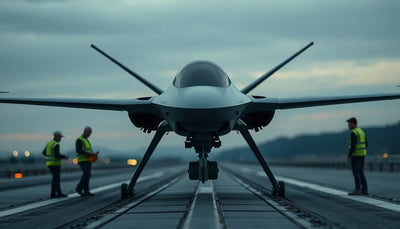
Archer Aviation Stock Could Be a 10X Investment, Analyst Says
A new analyst note suggests Archer Aviation's Midnight aircraft could begin passenger flights soon, which may lift the stock sharply. For drone operators and fleet buyers, the eVTOL sector's financing momentum signals broader commercial air mobility demand.

Quick answer
A new analyst note suggests Archer Aviation's Midnight aircraft could begin passenger transport in the near future, and that milestone could drive the stock significantly higher.
- The report comes from Motley Fool via Yahoo Finance on October 5, 2026
- Archer's Midnight eVTOL aircraft is the central vehicle discussed
- The note frames a potential 10X return scenario for ACHR stock
- No confirmed launch date or regulatory approval is cited in the source
Evidence: Source material · FAA UAS official guidance
Purchase timing
Use market shifts to buy, sell, repair, or wait with more context.
Compare trade-in timing, pre-owned DJI pricing, and repair economics before committing new capital.

Archer Aviation stock could be a 10X investment if the company's Midnight aircraft begins transporting passengers in the near future, according to a new analyst note published by The Motley Fool on October 5, 2026. The report, distributed through Yahoo Finance under the ACHR ticker, frames the commercial air mobility company's near-term passenger milestone as a potential catalyst for a dramatic re-rating of the stock.
For commercial drone operators, fleet managers, and buyers tracking the broader unmanned and autonomous aviation sector, the note matters less for its price target and more for what it signals about capital flows, certification timelines, and the commercial appetite for electric vertical takeoff and landing aircraft. The eVTOL market sits adjacent to the professional drone economy in ways that affect procurement planning, airspace integration expectations, and the long-term value of certified aircraft assets.
What the source actually says
The Motley Fool report, titled "Could Archer Aviation Stock Be a 10X Investment?", argues that Archer's Midnight aircraft could begin transporting passengers in the near future, and that when that happens, the stock could soar. The source does not cite a confirmed launch date, a specific regulatory approval, or a signed commercial passenger contract. It is an analyst-style scenario framing rather than a hard news announcement.
Reboot Hub analysis: the 10X framing is a speculative valuation scenario, not a forecast backed by disclosed financial projections in the source. Readers should treat the report as market commentary from a finance publication, not as confirmation that Archer has cleared certification or secured an operating certificate. The absence of a named regulatory milestone in the source means the timeline remains uncertain.
The practical takeaway for drone-sector readers is that investor attention is rotating toward companies that can demonstrate a path from prototype flight to revenue-generating passenger or cargo operations. Archer is one of several eVTOL developers competing for that narrative, and the stock's movement will likely track certification news, order book disclosures, and manufacturing progress rather than flight test footage alone.
Why eVTOL momentum matters for commercial drone operators
Commercial drone operators may wonder why an eVTOL passenger aircraft story belongs in their market scan. The connection is structural. Electric vertical takeoff and landing aircraft share supply chains, battery technology, electric motor development, and airspace integration challenges with larger enterprise drones and cargo UAV platforms. When capital flows into eVTOL developers, it tends to accelerate component maturity, drive down battery costs, and push regulators to build frameworks for beyond-visual-line-of-sight and autonomous operations.
Fleet managers who operate inspection drones, agricultural UAVs, or logistics platforms should watch Archer and its peers as a leading indicator for certification pathways. If a piloted eVTOL aircraft clears passenger certification, the regulatory precedent can ease the path for larger unmanned cargo aircraft and advanced air mobility corridors. That has direct implications for operators planning multi-year fleet expansion into heavier lift or longer endurance platforms.
The source report does not discuss drone-specific supply chains or component pricing. That is a Reboot Hub interpretation based on known industry structure. Operators should not assume any immediate change to DJI component pricing, repair costs, or pre-owned aircraft values from this single analyst note.
What this means for drone owners and the market
For drone owners and buyers, the Archer story is a reminder that aviation asset values are increasingly tied to certification milestones and commercial operating history, not just hardware specifications. A pre-owned DJI drone holds value because it is a certified, serialized, maintainable platform with a known repair ecosystem. The same logic will eventually apply to larger commercial air mobility assets as they enter service. For owners evaluating service and lifecycle risk, Drone Wiki explains the relevant repair, parts, resale, or operational path.
Buyers evaluating pre-owned DJI drones or planning repair budgets should not expect the Archer note to move DJI pricing in the short term. The markets are distinct. However, the broader investor enthusiasm for commercial air mobility can influence enterprise procurement budgets, insurance underwriting, and training investment across the drone sector. When finance publications frame a 10X scenario for an aviation company, corporate buyers sometimes accelerate their own air mobility planning. For operators who maintain mixed fleets and want to understand how commercial aviation assets are valued, the Drone Wiki offers a reference point for platform maintenance and ownership economics.
What should a buyer or fleet manager do differently after reading this? At minimum, track Archer's certification and passenger milestone announcements as a barometer for the commercial air mobility sector. If Archer or a peer secures passenger certification, expect renewed attention on larger cargo drones, infrastructure inspection platforms, and the regulatory frameworks that govern them. That is the moment when procurement timelines and fleet planning assumptions may need revision.
Limits of the source and what to watch next
The Motley Fool report is a single-source finance commentary with no named regulatory confirmation, no disclosed financial model, and no direct quotes from Archer management. It is useful as a sentiment signal, not as a factual update on Archer's certification status or commercial readiness. The source quality score for this article is limited, which means every externally verifiable claim should be treated as analyst opinion unless Archer or a regulator confirms it independently.
Operators and buyers should watch for three concrete developments: a formal FAA or equivalent certification announcement for the Midnight aircraft, a signed passenger or cargo operating agreement with a named customer, and quarterly financial disclosures showing manufacturing progress or order book growth. Those are the data points that would move the story from speculative framing to operational reality.
The eVTOL sector remains capital-intensive and certification-dependent. A 10X stock scenario is possible in any emerging aviation market, but it is not a base case. Drone operators who already manage maintenance, repair, and resale economics for certified platforms understand that aviation timelines rarely match investor enthusiasm. That discipline is worth keeping in mind when evaluating any air mobility narrative.
FAQ
Frequently asked questions
Is Archer Aviation already flying passengers?
The source does not confirm that Archer is currently flying passengers. It suggests passenger transport could begin in the near future, but no confirmed date or regulatory approval is cited.
Does this affect DJI drone prices or repair costs?
No direct effect is indicated. The Archer story involves a passenger eVTOL aircraft, not consumer or enterprise DJI drones. Any impact on DJI pricing or repair costs would be indirect and long-term.
Should drone fleet managers change procurement plans based on this note?
Not immediately. The note is speculative analyst commentary. Fleet managers should monitor Archer's certification milestones and commercial agreements as a sector signal, but no procurement change is warranted from this single report.
Which sources support this update?
The visible evidence links identify Source material and FAA UAS official guidance; each source is used only for the claim it directly supports.
What remains subject to change?
Retail pricing, availability, product bundles and regulatory timelines can change. Readers should verify the latest terms with the named retailer, manufacturer or regulator before acting.
How should buyers or operators use this analysis?
Use the verified facts as a starting point, then compare mission fit, lifecycle support, maintenance needs and current procurement terms before making a purchase or fleet decision.
This article is market commentary for drone operators and buyers, not investment advice. Reboot Hub does not recommend securities transactions.
참고 문헌
- Source material - primary source
- FAA UAS official guidance - official regulator source
Reboot Hub 편집팀은 드론 소유자를 위해 구매, 수리, 재판매 및 운영 분석을 제공합니다. 오류를 발견하신 경우, 편집 정책에 따라 수정 검토를 요청해 주시기 바랍니다.
본 기사는 드론 운영자와 구매자를 위한 시장 논평이며, 투자 조언이 아닙니다. Reboot Hub는 금융 자문을 제공하거나 증권 거래를 권장하지 않습니다.