GeoComm and SkyfireAI Integrate DFR Routing for Faster Emergency Response
GeoComm and SkyfireAI are integrating DFR routing with autonomous drone platforms to give public safety agencies better location intelligence before launch. The move could reshape how emergency response fleets plan coverage.

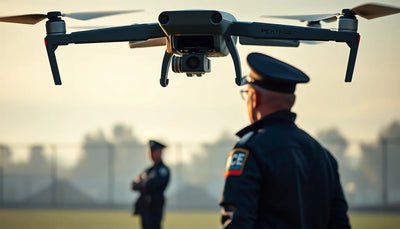
GeoComm and SkyfireAI have announced a new integration designed to give Drone as First Responder (DFR) programs more complete location intelligence before an aircraft ever leaves the launch pad. The partnership combines GeoComm's DFR Routing technology with SkyfireAI's autonomous drone platform, aiming to close a gap that has long frustrated public safety operators: knowing exactly where to send a drone before the call for service is even fully processed.
For fleet operators and commercial buyers watching the public safety market, this is a meaningful signal. DFR programs have moved from pilot projects to permanent operational tools in many municipalities, and the software layer that routes them is becoming as important as the airframe itself. The announcement, covered by DRONELIFE on July 31, 2026, points to a broader trend: the value in drone operations is shifting toward intelligence and automation, not just hardware endurance or camera resolution.
The integration and what it changes
The core of the announcement is straightforward. GeoComm's DFR Routing technology is being paired with SkyfireAI's autonomous drone platform so that public safety agencies can receive location intelligence before launch. In practical terms, this means the system can analyze an incoming emergency call, determine the most relevant geographic response area, and prepare the drone mission with better context than a simple GPS coordinate drop.
Industrial drone procurement
Source a brand-new industrial drone for this mission.
Discuss mission fit, aircraft model, quantities, configuration, pickup, and lifecycle support with Reboot Hub.

For a DFR operator, the difference is significant. A typical emergency call includes address data, but not always the precise location of the incident on a property, the best approach vector, or the obstacles that might be in the way. GeoComm's routing layer is designed to address that by providing a more complete picture of the response area before the aircraft is committed. SkyfireAI's platform then takes that intelligence and executes the autonomous flight, reducing the cognitive load on the pilot or teleoperator.
This is not a new airframe or a new sensor. It is a software and data integration, and that is precisely why it matters for the broader market. Public safety agencies are increasingly realizing that the bottleneck in DFR operations is not the drone's flight time or camera quality; it is the decision-making pipeline that happens before the motors spin up. By improving that pipeline, GeoComm and SkyfireAI are addressing the operational pain point that most limits DFR scalability.
For commercial operators who work alongside public safety agencies, the practical implication is clear: expect DFR programs to become more efficient at responding to calls, which means more flights, more flight hours, and more wear on airframes. That has downstream effects on maintenance planning and spare parts inventory.
What this means for enterprise operators
For enterprise operators, particularly those running fleets that support emergency services or critical infrastructure, this integration reinforces a key procurement principle: the software and routing layer deserves as much attention as the aircraft itself. When evaluating a new DFR deployment or expanding an existing one, the mission fit is not just about payload capacity or flight endurance. It is about how the drone receives its mission data, how quickly it can be launched, and how well the routing intelligence matches the realities of the operating area.
This is also a moment to consider whether brand-new industrial drone procurement is the practical next step. DFR programs are demanding on airframes. They fly frequently, often in challenging conditions, and they need to be ready to launch at a moment's notice. If an agency is expanding its DFR coverage area or adding a second shift of operations, the fleet needs to grow. That growth can come from new aircraft, but it can also come from adding pre-owned DJI drones to the fleet for training, backup, or secondary coverage roles.
Configuration matters in this context. A DFR platform that sits on a rooftop needs to be integrated with the routing software, and that integration is often easier with a standardized fleet. Quantity planning should account for maintenance downtime; a DFR program that flies multiple times per day will need spare airframes or a rapid repair turnaround. Lifecycle support is another factor. Public safety agencies cannot afford long waits for parts, so the availability of genuine OEM spare parts and professional repair services becomes a critical procurement consideration.
Deployment constraints also come into play. The integration announced by GeoComm and SkyfireAI is designed for fixed launch sites, which means the aircraft needs to be positioned correctly before the call arrives. That is a physical planning exercise as much as a software one. Agencies need to evaluate rooftop access, power availability, and line-of-sight considerations for each launch location. For teams translating this development into public-safety mission and fleet requirements, Reboot Hub's B2B drone procurement service can help scope configuration, fleet quantity, maintenance planning, and lifecycle support before a quotation.
Market implications for drone buyers and fleet planning
The public safety drone market has been a reliable growth segment for several years, and integrations like this one tend to accelerate the adoption curve. When routing intelligence improves, DFR programs become more defensible in budget discussions, which leads to more procurement. That is good news for drone manufacturers, but it also has implications for the secondary market.
As agencies upgrade their DFR capabilities, older airframes often enter the pre-owned market. For commercial operators and smaller public safety agencies, this creates an opportunity to acquire capable aircraft at a lower entry cost. The key is to ensure that those pre-owned DJI drones are inspected and verified before they enter service, particularly if they will be used for critical missions.
Fleet managers should also watch how the integration affects flight hours. More efficient routing means more successful responses, which means more flight time per aircraft. That accelerates the maintenance cycle. Operators who plan for this by stocking genuine OEM spare parts and scheduling regular professional repair services will avoid the downtime that plagues under-prepared fleets.
For buyers in the market for used equipment, the takeaway is to focus on aircraft that have been maintained to a high standard. A drone that has flown hundreds of DFR missions needs a different level of scrutiny than one used for occasional inspections. Battery health, motor wear, and gimbal condition are all critical factors. The drone trade-in guide can help operators understand how to value their current fleet when considering an upgrade.
Operational takeaways for DFR and commercial pilots
The most immediate takeaway for pilots and fleet managers is to review how their current DFR or emergency response workflow handles location intelligence. If the current process relies on manual address entry or basic mapping, there is room for improvement. The GeoComm-SkyfireAI integration is a reminder that the software layer can do more of the heavy lifting, freeing the pilot to focus on the mission rather than the logistics of getting airborne.
For repair customers, the integration reinforces the importance of keeping airframes in top condition. DFR programs are unforgiving on equipment. A drone that needs to launch within seconds of a call cannot be grounded for repairs. That means proactive maintenance is not optional; it is a core operational requirement. Operators should have a relationship with a repair provider that uses genuine OEM parts and can turn around repairs quickly.
The pre-owned DJI market also stands to benefit from this trend. As public safety agencies standardize their DFR fleets and upgrade to newer platforms, the aircraft they retire will find their way to the secondary market. Buyers should look for pre-owned DJI drones that come with documented maintenance history and verified condition. The value of a well-maintained used airframe is higher than ever, particularly for operators who want to expand capacity without committing to new aircraft pricing.
One practical question every operator should ask after reading this news: does my current fleet have the endurance and reliability to support a DFR-style mission profile? If the answer is no, it may be time to evaluate both new and pre-owned options. If the answer is yes, the next question is whether the routing and dispatch software is keeping pace with the hardware.
How does this integration affect existing DFR programs?
Agencies already running DFR programs can likely integrate these capabilities without replacing their airframes, since the integration is primarily a software and data layer. The practical benefit is faster, more accurate launch decisions, which reduces response time and improves mission outcomes.
What should a fleet manager do differently after this announcement?
Fleet managers should review their maintenance planning and spare parts inventory, because improved routing efficiency will likely lead to more flight hours per aircraft. Ensuring access to genuine OEM spare parts and professional repair services will help avoid downtime as mission frequency increases.
Is this relevant for buyers of pre-owned DJI drones?
Yes. As public safety agencies upgrade their DFR capabilities, older airframes will enter the pre-owned market. Buyers should prioritize inspected pre-owned DJI drones with documented maintenance history, since these aircraft are often subjected to demanding flight schedules and need to be verified before they are used for critical missions.
参照ソース
- DRONELIFE - primary source
- DIU Blue UAS - official government source
Reboot Hub編集部は、ドローン所有者のために購入、修理、再販、および運用の分析を提供します。誤りを発見した場合は、編集方針に基づき修正レビューを依頼してください。