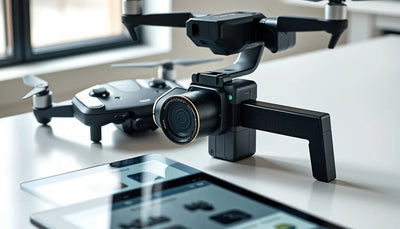
BRINC launches iOS app for public safety drone command
BRINC has introduced an iOS application that lets iPhones and iPads function as command interfaces for public safety drone operations. The development signals a shift toward more portable, lower-friction control setups for emergency response teams and security-focused drone programs.

Quick answer
BRINC has launched an iOS app that turns iPhones and iPads into command interfaces for public safety drone operations, according to DroneDJ reporting.
- The app expands control options beyond dedicated hardware controllers.
- Public safety teams can potentially reduce equipment complexity in the field.
- The development highlights growing software-centric approaches to drone fleet management.
- Commercial operators should monitor how iOS-based command tools affect procurement and training.
BRINC has introduced a new iOS application designed to let iPhones and iPads serve as command interfaces for public safety drone operations, according to reporting from DroneDJ. The development marks another step in the broader movement toward software-defined drone control, where familiar consumer hardware replaces or complements purpose-built ground stations and dedicated controllers.
Industrial drone procurement
Source a brand-new industrial drone for this mission.
Discuss mission fit, aircraft model, quantities, configuration, pickup, and lifecycle support with Reboot Hub.

For public safety agencies, the appeal is straightforward. Officers and emergency responders already carry iPhones and iPads as standard equipment. Extending drone command functions to those devices could reduce the amount of specialized gear a team needs to deploy, maintain, and train on. The announcement also carries implications for how drone manufacturers and software providers think about hardware-software separation in the enterprise and defense segments.
What the source actually confirms
The DroneDJ report identifies the core development: BRINC's new iOS app enables iPhones and iPads to function as command centers for public safety drone operations. The source frames this as a capability expansion for BRINC's ecosystem rather than a standalone hardware release. No specific technical specifications, compatibility lists, latency figures, or security certifications were included in the available source data.
Reboot Hub analysis: The absence of detailed spec information in the initial reporting is notable. Public safety drone programs operate under strict procurement and operational standards. Agencies evaluating iOS-based command tools will need to assess encryption, data handling, offline functionality, and integration with existing evidence management systems before adoption. The announcement should be read as a directional signal rather than a fully documented deployment package.
What this means for enterprise operators
Enterprise and public sector drone programs have traditionally relied on dedicated controllers, often with integrated screens, physical joysticks, and proprietary telemetry links. A credible iOS command application suggests that at least some mission-critical functions can now be handled through general-purpose mobile hardware. That has real consequences for fleet planning, training budgets, and equipment refresh cycles. For teams translating this development into fleet planning, Enterprise drone procurement support helps scope mission fit, unit quantity, maintenance coverage, and lifecycle support.
For organizations managing mixed fleets, the shift toward software-centric control could lower the barrier to adding new airframes or sensors. If the command layer lives on a tablet or phone, hardware upgrades become less disruptive. At the same time, operators should be cautious about assuming that a consumer iOS device can fully replace ruggedized, purpose-built controllers in all conditions. Battery life, screen visibility in sunlight, glove compatibility, and device overheating remain practical concerns that source data does not address.
For buyers and fleet managers tracking this space, the practical takeaway is to evaluate how much of your current control infrastructure is hardware-locked versus software-flexible. Teams that can decouple command software from proprietary controllers may find more negotiating room when planning multi-year procurement cycles. For those exploring broader enterprise drone procurement support, understanding these software shifts can inform smarter fleet investment decisions.
Pre-owned DJI market and repair implications
The BRINC announcement does not directly involve DJI hardware, but it touches the same commercial logic that shapes the pre-owned DJI market. Public safety agencies in the United States and other markets have historically operated DJI platforms alongside domestic alternatives. As software-defined command tools become more common, the resale value of a drone increasingly depends on whether the airframe can integrate with modern control ecosystems.
Reboot Hub analysis: Pre-owned DJI drones that remain compatible with evolving software interfaces are likely to hold value better than models locked into aging or discontinued control systems. Buyers in the second-hand market should pay attention to firmware support and app compatibility, not just airframe condition. A pristine pre-owned DJI unit with outdated control software may carry hidden integration costs. Conversely, models that work cleanly with current iOS or Android command applications can be attractive to agencies and commercial operators looking to stretch procurement budgets.
Repair decisions follow a similar logic. When a dedicated controller fails, the repair or replacement cost can be significant. If a software-based command path exists, operators may have more flexibility to keep flying while a hardware controller is serviced. That does not eliminate the need for professional DJI repair or genuine OEM spare parts, but it does change the urgency and cost structure around controller downtime.
What buyers and fleet managers should watch next
The most important follow-up questions are not yet answered by the available source data. Will BRINC publish compatibility details for specific iPhone and iPad models? Will the iOS app support offline operations in areas with poor cellular coverage? How does the app handle secure data transmission and chain-of-custody requirements for public safety evidence? These are the questions procurement officers and fleet managers should be asking vendors directly.
For now, the prudent approach is to treat the BRINC iOS app as an early signal of where public safety drone control is heading. Software-defined command layers are becoming more common across defense and enterprise robotics. Organizations that plan for this shift, rather than reacting to it, will be better positioned to manage costs, extend fleet life, and avoid being locked into single-vendor hardware paths.
Operators should also watch how this development influences training requirements. A tablet-based command interface may reduce the learning curve for new pilots, but it can also create complacency if teams rely too heavily on familiar consumer interfaces rather than mission-specific workflows. Training programs will need to adapt alongside the software.
FAQ
Frequently asked questions
What did BRINC announce?
BRINC announced a new iOS application that allows iPhones and iPads to function as command centers for public safety drone operations, according to DroneDJ reporting.
Does this replace dedicated drone controllers?
The source data does not confirm that the iOS app fully replaces dedicated controllers. It suggests an additional command pathway, but operational details such as compatibility, security, and offline capability were not specified in the available reporting.
How does this affect pre-owned DJI drone buyers?
The development reinforces the importance of software compatibility when buying pre-owned DJI drones. Units that integrate cleanly with modern command applications may retain better resale value and offer more flexible repair and downtime options.
Which sources support this update?
The article distinguishes reported information from analysis and does not present an unverified source as official confirmation.
What remains subject to change?
Retail pricing, availability, product bundles and regulatory timelines can change. Readers should verify the latest terms with the named retailer, manufacturer or regulator before acting.
How should buyers or operators use this analysis?
Use the verified facts as a starting point, then compare mission fit, lifecycle support, maintenance needs and current procurement terms before making a purchase or fleet decision.
参照ソース
- DroneDJ via Google News - primary source
公開時点で、追加の公式ドキュメントは入手できませんでした。
Reboot Hub編集部は、ドローン所有者のために購入、修理、再販、および運用の分析を提供します。誤りを発見した場合は、編集方針に基づき修正レビューを依頼してください。