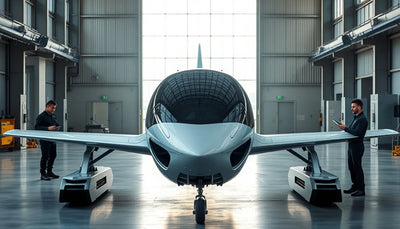
Tesla flying sports car news lifts China low-altitude economy stocks
A Tesla sports car taking to the air has rippled through China's low-altitude economy stocks, with 26 companies including Jiezhong Technology hitting daily limits. The market reaction signals rising investor attention on urban air mobility and commercial drone infrastructure.

Quick answer
Tesla sports car flight news triggered a rally in China's low-altitude economy concept stocks, with 26 companies including Jiezhong Technology hitting daily limit up, according to 21 Finance.
- The rally was reported by 21 Finance on October 17, 2026
- 26 stocks hit daily limit up, including Jiezhong Technology
- The move reflects investor focus on urban air mobility and low-altitude economy infrastructure
- No verified technical specifications for the Tesla vehicle were provided in the source
Verified facts
Purchase timing
Use market shifts to buy, sell, repair, or wait with more context.
Compare trade-in timing, pre-owned DJI pricing, and repair economics before committing new capital.

What the available evidence confirms
| Item | Reported detail |
|---|---|
| Trigger event | Tesla sports car takes to the air |
| Market reaction | Low-altitude economy concept stocks rallied |
| Stocks hitting daily limit | 26, including Jiezhong Technology |
| Reporting source | 21 Finance |
A Tesla sports car taking to the air has become the latest catalyst for China's low-altitude economy concept stocks. According to a report published by 21 Finance on October 17, 2026, the development lifted investor sentiment across the sector, with 26 stocks including Jiezhong Technology hitting the daily limit up.
The market reaction underscores how quickly air mobility narratives can move capital. For commercial drone operators, fleet managers, and buyers watching the second-hand DJI market, the rally is less about one vehicle and more about the broader signal: capital markets are treating low-altitude infrastructure, urban air mobility, and supporting supply chains as a serious growth category rather than a speculative sideshow.
What the source actually reported
The primary reporting from 21 Finance is specific and narrow. A Tesla sports car was shown taking to the air, and that visual development was enough to lift low-altitude economy concept stocks in China. The report names Jiezhong Technology among 26 companies that hit the daily limit up, a standard trading threshold in Chinese equity markets that reflects maximum allowable single-day price movement.
What the source does not provide is equally important for a commercially grounded reading. There are no verified technical specifications for the vehicle, no confirmed production timeline, no regulatory approval details, and no official Tesla statement included in the source data. Reboot Hub analysis treats this as a sentiment event with tangible market consequences, not as confirmation of a shipping product or an imminent commercial air taxi rollout.
Why low-altitude economy stocks react this way
The low-altitude economy is a policy-backed growth theme in China, covering drones, electric vertical takeoff and landing aircraft, airspace management systems, ground infrastructure, and component supply chains. When a globally recognized brand like Tesla is associated with flying vehicles, even through a single visual event, it validates the category in the eyes of retail and institutional investors who may not follow commercial drone technology closely.
For operators who already work in this space, the reaction pattern is familiar. Drone-adjacent equities have repeatedly moved on demonstration flights, regulatory announcements, and corporate partnerships. The difference here is the brand recognition involved. Tesla carries consumer mindshare that most industrial drone manufacturers do not, which can pull new attention into adjacent sectors including drone logistics, inspection services, and airspace management software.
What this means for drone owners and the market
The immediate commercial impact on drone buyers and operators is indirect but real. When low-altitude economy stocks rally, the companies in that basket often include component makers, sensor suppliers, battery producers, and service providers that also support conventional commercial drones. Sustained investor interest can translate into more available capital for research, expanded manufacturing capacity, and faster iteration on parts and subsystems that eventually reach the operator market.
For pre-owned DJI drone buyers, the connection runs through market confidence. A rising low-altitude economy narrative tends to strengthen the perceived long-term value of professional drone hardware, which supports healthier resale demand for inspected pre-owned units and genuine OEM spare parts. Fleet managers evaluating procurement budgets may also find internal stakeholders more receptive to drone investments when air mobility is making mainstream financial headlines. Reboot Hub tracks these market signals alongside practical ownership considerations in the Drone Wiki. For owners evaluating service and lifecycle risk, Drone Wiki explains the relevant repair, parts, resale, or operational path.
The operator-facing takeaway is to separate signal from noise. A stock rally driven by a single flying car visual does not change DJI firmware, battery chemistry, or repair intervals. What it can change is procurement urgency, resale timing, and the competitive landscape for talent and parts. Buyers who were already planning a fleet expansion or a pre-owned DJI purchase may face slightly more competition if the broader sector narrative continues to heat up.
The limits of source-limited reporting
Because this article is built from a single source report with no verified technical context, several questions remain open. The source does not specify whether the Tesla vehicle is a concept, a prototype, a rendering, or a modified sports car with rotor systems. It does not identify which exchange the 26 limit-up stocks trade on beyond the Chinese market context, nor does it provide percentage moves for individual names other than the daily limit event itself.
Reboot Hub analysis treats these gaps as material. A flying car demonstration can generate headlines without changing the fundamentals of drone repair, spare parts availability, or pre-owned DJI pricing. Operators should monitor whether this event leads to concrete supply chain orders, regulatory filings, or corporate partnerships. Until those follow-on developments appear, the commercial drone market impact remains a sentiment story rather than an operational shift.
FAQ
Frequently asked questions
Did Tesla confirm a flying sports car product?
The source data does not include an official Tesla statement or product confirmation. The report describes a sports car taking to the air as the market catalyst, but no verified specifications, timeline, or regulatory details were provided.
Which companies were named in the stock rally?
The source names Jiezhong Technology as one of 26 low-altitude economy concept stocks that hit the daily limit up. No additional company names or ticker symbols were included in the source data.
Should drone operators change buying plans after this news?
Not based on this event alone. The rally reflects investor sentiment around air mobility, not a change in DJI hardware, parts supply, or repair economics. Operators should watch for follow-on supply chain or regulatory developments before adjusting procurement or resale timing.
Which sources support this update?
The article distinguishes reported information from analysis and does not present an unverified source as official confirmation.
What remains subject to change?
Retail pricing, availability, product bundles and regulatory timelines can change. Readers should verify the latest terms with the named retailer, manufacturer or regulator before acting.
How should buyers or operators use this analysis?
Use the verified facts as a starting point, then compare mission fit, lifecycle support, maintenance needs and current procurement terms before making a purchase or fleet decision.
This article is market commentary for drone operators and buyers, not investment advice. Reboot Hub does not recommend securities transactions.
Konzultált források
- Source material - primary source
A közzététel időpontjában további hivatalos dokumentáció nem állt rendelkezésre.
A Reboot Hub szerkesztősége vásárlási, javítási, viszonteladási és üzemeltetési elemzéseket nyújt dróntulajdonosok számára. Ha hibát észlel, kérjük, jelezze nekünk a szerkesztői irányelvünknek megfelelően a javítás érdekében.
Ez a cikk piaci elemzés drónüzemeltetők és vevők számára, nem jelent befektetési tanácsot. A Reboot Hub nem nyújt pénzügyi tanácsadást és nem javasol értékpapír-tranzakciókat.