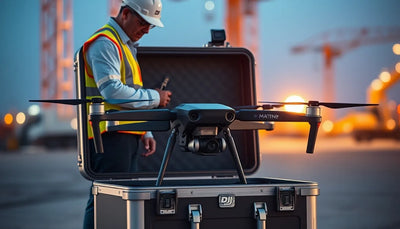
DJI Matrice 5T compact drone adds first LiDAR and 1K thermal imaging
DJI has launched the Matrice 5T, a compact commercial drone that introduces LiDAR and 1K thermal imaging to the Matrice 5 line. The payload shift matters for inspection, mapping, and public safety teams evaluating smaller airframes for multi-sensor work.

Quick answer
DJI launched the Matrice 5T, a compact commercial drone that brings LiDAR and 1K thermal imaging to the Matrice 5 series for the first time.
- The Matrice 5T is positioned as a compact platform with LiDAR and thermal payload capability.
- The launch signals broader multi-sensor options in smaller enterprise airframes.
- Commercial inspection and public safety teams may evaluate the 5T against larger mapping platforms.
- The pre-owned DJI market could see renewed interest in compact enterprise drones as fleets refresh.
DJI has expanded its Matrice 5 series with the Matrice 5T, a compact commercial drone that introduces LiDAR and 1K thermal imaging to the line for the first time. The launch, reported by Notebookcheck, marks a notable payload shift for an airframe class that has traditionally leaned on visual and radiometric sensors without integrated LiDAR. For drone buyers and fleet operators, the announcement raises a practical question: does a smaller enterprise platform with LiDAR and high-resolution thermal change the calculus for inspection, mapping, and public safety work?
Industrial drone procurement
Source a brand-new industrial drone for this mission.
Discuss mission fit, aircraft model, quantities, configuration, pickup, and lifecycle support with Reboot Hub.

The Matrice 5T arrives at a moment when commercial operators are weighing airframe size against sensor capability more carefully than ever. Compact platforms reduce transport and deployment friction, but they have historically forced compromises on payload depth. The reported addition of LiDAR and 1K thermal imaging suggests DJI is testing whether a smaller Matrice airframe can carry multi-sensor workloads that previously pushed buyers toward larger, heavier systems. That positioning matters for procurement teams planning mixed fleets across construction, energy, utilities, and emergency response.
What the Matrice 5T launch signals about DJI's enterprise direction
According to Notebookcheck, the Matrice 5T is the first compact drone in the Matrice 5 family to combine LiDAR with 1K thermal imaging. The source frames the launch as a product-line expansion rather than a replacement of existing Matrice models, which suggests DJI is layering sensor options into a familiar airframe category rather than forcing operators into a single flagship configuration. For commercial buyers, that kind of incremental platform development is easier to plan around than a disruptive redesign.
Reboot Hub analysis: the move reflects a broader enterprise trend toward consolidating multiple sensing modalities into smaller, more deployable packages. Inspection teams that once needed separate visual, thermal, and LiDAR flights may now evaluate whether a single compact airframe can cover more of the workflow. That has direct implications for mission planning, pilot training, and spare-part inventory. A fleet built around fewer airframe types with broader sensor coverage can simplify logistics, but it also concentrates operational risk if a platform proves difficult to repair or source parts for in a given region.
What this means for enterprise operators
For enterprise operators, the Matrice 5T's reported LiDAR and 1K thermal imaging combination is most relevant to teams that need dense point clouds and detailed thermal data from a platform that can be deployed quickly. Utility inspection, bridge and infrastructure assessment, solar farm monitoring, and search-and-rescue missions are the obvious use cases. The compact form factor suggests operators may be able to move between sites faster and operate in tighter launch zones than with larger mapping rigs, though the source does not provide weight, flight time, or transmission specifications.
Buyers should treat the launch as a signal to revisit fleet planning assumptions rather than an immediate procurement mandate. The practical question is whether the Matrice 5T's sensor package matches the accuracy and data quality standards that inspection clients and public safety agencies require. LiDAR performance varies significantly by scanner type, point density, and integration quality, and the source does not confirm those details. Fleet managers evaluating the 5T should request demonstration data and compare it against existing LiDAR-equipped platforms before shifting budget. For organizations that need help structuring multi-unit enterprise purchases, Enterprise drone procurement support can help align airframe selection with mission requirements and lifecycle cost planning. For teams translating this development into fleet planning, Enterprise drone procurement support helps scope mission fit, unit quantity, maintenance coverage, and lifecycle support.
The pre-owned DJI market will also feel the ripple. When DJI introduces a new sensor configuration in an existing airframe family, some operators refresh their fleets and release older Matrice or equivalent platforms into the secondary market. That can create buying opportunities for smaller inspection firms and public safety departments that need capable hardware without new-unit pricing. The key is verifying sensor condition and calibration history, since LiDAR and thermal payloads are more sensitive to wear and mishandling than standard visual cameras.
Repair, parts, and long-term ownership considerations
New sensor payloads change the repair and parts conversation for commercial drone owners. LiDAR units and high-resolution thermal cameras are precision components, and their integration into a compact airframe raises questions about serviceability, calibration, and OEM part availability. The source does not provide repair or warranty details for the Matrice 5T, so operators should not assume that existing Matrice 5 service procedures or spare-part channels apply unchanged.
For repair customers and fleet maintainers, the practical takeaway is to confirm parts access before committing to a new platform. A drone that cannot be serviced quickly after a gimbal strike or sensor fault becomes a grounded asset, and downtime costs can exceed the initial purchase price in inspection-heavy operations. OEM-pulled parts and professional DJI repair networks become more valuable as sensor complexity increases, because third-party fixes on LiDAR and thermal systems carry higher calibration risk. Operators who run mixed fleets should also consider whether the 5T's payload architecture shares components with other Matrice models, which could reduce spare-part duplication.
Market context and what buyers should watch next
The Matrice 5T launch fits a pattern of DJI expanding enterprise sensor options while keeping airframe categories recognizable. That strategy supports incremental fleet upgrades and protects training investments, but it also means buyers need to scrutinize what each new payload actually delivers. The source confirms the LiDAR and 1K thermal imaging additions but does not detail scanning range, thermal resolution specifications, or software compatibility. Those missing details will determine whether the 5T competes with dedicated mapping platforms or serves as a more portable complement to them.
What should a buyer, pilot, or fleet manager do differently after this news? First, map current inspection workflows against the reported sensor combination and identify which missions could move to a compact airframe without sacrificing data quality. Second, wait for verified performance data and real-world operator feedback before making budget decisions. Third, review the pre-owned DJI market for capable alternatives if the 5T's final specifications do not justify a new-unit purchase for your use case. The launch is a meaningful signal, but signal is not the same as validated field performance.
FAQ
Frequently asked questions
What is the DJI Matrice 5T?
The Matrice 5T is a compact commercial drone in DJI's Matrice 5 series that introduces LiDAR and 1K thermal imaging to the line, as reported by Notebookcheck.
Who should consider the Matrice 5T?
Inspection, mapping, utility, energy, and public safety teams that need multi-sensor data from a compact deployable platform are the most likely early evaluators of the Matrice 5T.
Will the Matrice 5T affect pre-owned DJI drone prices?
New enterprise sensor options often trigger fleet refreshes, which can release older Matrice and equivalent platforms into the pre-owned market and create buying opportunities for smaller operators.
Which sources support this update?
The article distinguishes reported information from analysis and does not present an unverified source as official confirmation.
What remains subject to change?
Retail pricing, availability, product bundles and regulatory timelines can change. Readers should verify the latest terms with the named retailer, manufacturer or regulator before acting.
How should buyers or operators use this analysis?
Use the verified facts as a starting point, then compare mission fit, lifecycle support, maintenance needs and current procurement terms before making a purchase or fleet decision.
Konsultierte Quellen
- Notebookcheck via Google News - primary source
Zum Zeitpunkt der Veröffentlichung waren keine weiteren offiziellen Dokumentationen verfügbar.
Die Redaktion von Reboot Hub liefert Käufer-, Reparatur-, Wiederverkaufs- und Betriebsanalysen für Drohnenbesitzer. Sollten Sie einen Fehler finden, kontaktieren Sie uns für eine Korrekturprüfung gemäß unseren Redaktionsrichtlinien.