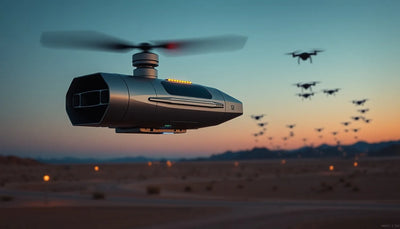
Vertical Aerospace Reports Piloted eVTOL Transition Flights in H1 2026
Vertical Aerospace disclosed first-half 2026 milestones including piloted transition flights with two full-scale prototypes and a Farnborough Airshow campaign. The company also outlined a financing package intended to fund development into the third quarter of 2026, a timeline that matters for commercial drone and advanced air mobility operators watching certification progress.

Quick answer
Vertical Aerospace reported first-half 2026 progress including piloted transition flights with two full-scale prototypes, a public eVTOL demonstration at the Farnborough International Airshow, and a financing package intended to support development through Q3 2026.
- Piloted transition flights were completed with two full-scale prototypes
- A public eVTOL demonstration campaign ran at the Farnborough International Airshow
- A financing package is intended to support development through the third quarter of 2026
- The company trades on the NYSE under the ticker EVTL
Evidence: Source material · DIU Blue UAS
Purchase timing
Use market shifts to buy, sell, repair, or wait with more context.
Compare trade-in timing, pre-owned DJI pricing, and repair economics before committing new capital.

Verified facts
What the available evidence confirms
| Milestone | Detail | Reported period |
|---|---|---|
| Piloted transition flights | Two full-scale prototypes | First half 2026 |
| Public demonstration | Farnborough International Airshow | First half 2026 |
| Financing package | Intended to support development through Q3 2026 | Announced in Q2 2026 update |
Vertical Aerospace, the New York Stock Exchange-listed electric vertical takeoff and landing developer trading under the ticker EVTL, used its second-quarter 2026 earnings update to highlight a series of first-half milestones. According to the Q2 earnings call summary published by MarketBeat on August 13, 2026, the company reported piloted transition flights completed with two full-scale prototypes, a public eVTOL demonstration campaign at the Farnborough International Airshow, and a financing package intended to support development through the third quarter of 2026.
The update matters beyond the company's own shareholder base. Advanced air mobility programs like Vertical Aerospace's serve as a bellwether for how quickly piloted electric aircraft can move from controlled testing into public demonstration and, eventually, commercial operation. For commercial drone operators, fleet buyers, and repair-focused businesses watching the broader unmanned and electric aircraft market, these milestones signal where capital is flowing and how certification timelines are shifting.
Reading the Q2 2026 update: what was actually reported
The MarketBeat summary frames the first half of 2026 around three concrete developments. First, Vertical Aerospace said it completed piloted transition flights with two full-scale prototypes. Transition flight, the phase where an eVTOL aircraft moves between vertical hover and wing-borne forward flight, is one of the most technically demanding parts of the certification path. Completing that maneuver with a pilot on board, rather than remotely or autonomously, is a meaningful step for a company seeking type certification from aviation regulators.
Reboot Hub analysis: Second, the company ran a public eVTOL demonstration campaign at the Farnborough International Airshow. Farnborough is a major aerospace industry event, and public demonstration there places the aircraft in front of potential customers, suppliers, regulators, and investors. Third, Vertical Aerospace disclosed a financing package intended to support development through the third quarter of 2026. That is a relatively short runway by aerospace standards, and it tells market observers that the company is likely to need additional capital or partnership arrangements before the end of the year.
Reboot Hub analysis: the financing timeline is the most commercially significant detail in the update. A development runway measured in months, not years, means procurement teams and potential early customers should treat Vertical Aerospace's commercial timeline as conditional. The flight milestones are real, but the capital position suggests the company remains in a pre-revenue, development-stage posture.
Why eVTOL progress matters to conventional drone operators
Commercial drone operators may wonder why an eVTOL earnings call deserves attention in a publication focused on DJI hardware, repair services, and pre-owned drone markets. The connection is structural. Electric aircraft programs share supply chains, battery technology, flight control software, and regulatory infrastructure with the commercial drone sector. When a company like Vertical Aerospace advances piloted flight testing, it validates components and engineering approaches that eventually filter into smaller electric aircraft and advanced drone platforms.
There is also a market-signaling effect. Investor interest in eVTOL companies influences how capital flows across the broader electric aviation and drone ecosystem. A well-funded advanced air mobility sector tends to pull investment into battery density, electric propulsion, and autonomous flight systems, all of which benefit conventional drone operators over time. Conversely, a capital-constrained eVTOL sector can slow supplier investment in components that drone fleets depend on.
For repair and maintenance businesses, the eVTOL market represents a future service category. Piloted electric aircraft will require inspection, component replacement, and battery lifecycle management at a scale far beyond current consumer drone repair. Businesses that build competency in electric aircraft maintenance today, even on smaller platforms, are positioning for that eventual demand.
What this means for drone owners and the market
The immediate practical impact on DJI drone owners, pre-owned buyers, and repair customers is limited. Vertical Aerospace does not compete with DJI in the consumer or enterprise drone segments, and its Q2 update does not change DJI pricing, availability, or spare parts supply. But the report does offer a useful lens on how the market values electric aircraft progress, and that sentiment can influence the broader technology environment in which drone operators plan purchases and fleet upgrades. For owners evaluating service and lifecycle risk, Drone Wiki explains the relevant repair, parts, resale, or operational path.
For fleet managers and procurement teams, the key takeaway is caution around advanced air mobility timelines. Vertical Aerospace's financing package is described as supporting development through the third quarter of 2026, which means the company will likely need to secure additional funding or strategic partnerships soon. Operators evaluating eVTOL platforms for future logistics or passenger applications should treat delivery schedules as provisional and build contingency plans around conventional drone and ground-based alternatives. Readers tracking repair and resale dynamics in the pre-owned DJI market can find relevant context in the Drone Wiki.
The second-order effect worth watching is certification progress. Piloted transition flights with full-scale prototypes suggest Vertical Aerospace is moving toward the flight test data regulators require, but the update does not confirm any regulatory milestone. Without a confirmed certification timeline or type certificate progress, the commercial readiness of the aircraft remains uncertain. Buyers should distinguish between demonstration flights and certified, production-ready aircraft.
Capital discipline and the advanced air mobility outlook
Vertical Aerospace's financing disclosure highlights a recurring theme across the advanced air mobility sector: flight testing is expensive, and capital runways are often shorter than certification timelines. The company's stated runway through the third quarter of 2026 implies that additional fundraising, debt, or partnership capital will be necessary to continue development into 2027. That is not unusual for a pre-revenue aerospace company, but it does frame the risk profile for investors and potential customers.
The Farnborough demonstration campaign is strategically important in that context. Public demonstrations at major airshows serve multiple purposes: they generate visibility, support customer conversations, and can help attract the next round of capital. For a company with a short financing runway, a successful public showing is as much a fundraising event as a technical milestone.
For the commercial drone market, the lesson is familiar. Capital-intensive hardware programs require sustained funding, and milestones do not always translate into near-term product availability. Operators who have watched drone hardware cycles understand that demonstration flights and commercial deliveries are separated by certification, manufacturing scale-up, and service infrastructure. Advanced air mobility is simply that same dynamic at larger scale and higher cost.
What should a buyer, pilot, or fleet manager do differently after reading this update? Treat eVTOL progress as a long-horizon signal rather than a near-term procurement trigger. Continue planning around proven, available drone platforms for current operations, monitor advanced air mobility certification timelines for future logistics applications, and watch Vertical Aerospace's next financing announcement as the clearest indicator of whether its development pace is sustainable.
FAQ
Frequently asked questions
What did Vertical Aerospace report in its Q2 2026 earnings update?
According to the MarketBeat summary of the earnings call, Vertical Aerospace reported piloted transition flights with two full-scale prototypes, a public eVTOL demonstration campaign at the Farnborough International Airshow, and a financing package intended to support development through the third quarter of 2026.
Does Vertical Aerospace's progress affect DJI drone prices or availability?
No. Vertical Aerospace operates in the advanced air mobility segment and does not compete with DJI in consumer or enterprise drones. The Q2 2026 update has no direct impact on DJI pricing, spare parts supply, or pre-owned drone market conditions.
Why does the financing timeline matter for drone operators and buyers?
The financing package is described as supporting development only through the third quarter of 2026, which suggests the company will need additional capital soon. For operators evaluating future eVTOL logistics or passenger platforms, this means delivery timelines should be treated as provisional until certification and funding milestones are confirmed.
Which sources support this update?
The visible evidence links identify Source material and DIU Blue UAS; each source is used only for the claim it directly supports.
What remains subject to change?
Retail pricing, availability, product bundles and regulatory timelines can change. Readers should verify the latest terms with the named retailer, manufacturer or regulator before acting.
How should buyers or operators use this analysis?
Use the verified facts as a starting point, then compare mission fit, lifecycle support, maintenance needs and current procurement terms before making a purchase or fleet decision.
Konzultované zdroje
- Source material - primary source
- DIU Blue UAS - official government source
Redakce Reboot Hub poskytuje vlastníkům dronů analýzy nákupů, oprav, prodejní hodnoty a provozu. Pokud narazíte na chybu, kontaktujte nás pro revizi opravy v souladu s našimi redakčními zásadami.
Tento článek je tržním komentářem pro provozovatele a kupce dronů, nikoli investičním poradenstvím. Reboot Hub neposkytuje finanční poradenství ani nedoporučuje transakce s cennými papíry.