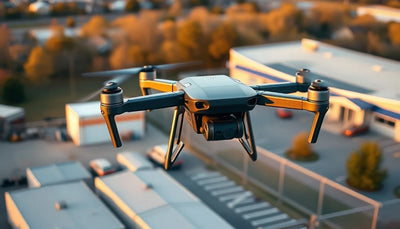
UMAC Scales U.S. Drone Manufacturing as Enterprise Demand Rises
Unusual Machines is scaling domestic drone production as enterprise demand, reshoring, and NDAA-compliant supply chains accelerate revenue growth, according to Yahoo Finance reporting. The shift could reshape procurement and resale dynamics for commercial operators.

Quick answer
Yahoo Finance reports Unusual Machines is scaling U.S. drone manufacturing as enterprise demand, reshoring, and NDAA-compliant supply chains drive rapid revenue growth.
- Unusual Machines is expanding domestic drone production capacity
- Enterprise demand and reshoring are cited as key growth drivers
- NDAA-compliant supply chains are central to the company's positioning
- The development may influence procurement decisions for commercial fleet operators
Evidence: Source material
Purchase timing
Use market shifts to buy, sell, repair, or wait with more context.
Compare trade-in timing, pre-owned DJI pricing, and repair economics before committing new capital.

Unusual Machines, the U.S.-listed drone manufacturer trading under the ticker UMAC, is scaling domestic production as enterprise demand, reshoring momentum, and NDAA-compliant supply chains create what Yahoo Finance describes as favorable industry tailwinds. The report, published under the Yahoo Finance markets desk, frames the company's trajectory as a direct response to structural shifts in how commercial and government-adjacent buyers source drone hardware.
For commercial operators, fleet managers, and buyers tracking the second-hand market, the development is worth watching beyond the stock chart. A growing pool of domestically manufactured, compliance-friendly airframes could gradually alter procurement calculations, parts availability, and the long-term value of existing equipment. The report does not include specific revenue figures, unit volumes, or production timelines, so the practical near-term impact remains source-limited. Still, the direction of travel is clear: U.S.-based drone assembly is no longer a niche experiment.
What the Yahoo Finance report actually says
According to the primary reporting from Yahoo Finance, Unusual Machines is benefiting from three overlapping forces: rising enterprise adoption of commercial drones, a broader reshoring trend in hardware manufacturing, and growing buyer preference for NDAA-compliant supply chains. The source frames these as industry-level tailwinds rather than company-specific anomalies, suggesting the conditions could support multiple domestic manufacturers over time.
The report does not disclose verified production capacity numbers, contract values, or named enterprise customers. That absence matters for operators trying to assess whether UMAC-built platforms will appear in their procurement pipelines soon. What the source does establish is that the company is actively scaling U.S. manufacturing operations, a move that carries implications for lead times, spare parts availability, and warranty support if the expansion translates into commercially available airframes at volume.
Why NDAA compliance is becoming a procurement filter
The Yahoo Finance article identifies NDAA-compliant supply chains as a central element of Unusual Machines' positioning. For fleet operators working with public agencies, critical infrastructure clients, or federally adjacent contracts, NDAA compliance has shifted from a background checkbox to a hard procurement filter. Buyers who previously defaulted to imported platforms are now evaluating domestic or allied-manufactured alternatives, even when those options carry higher unit costs or fewer accessory ecosystems.
That shift has a secondary effect on the pre-owned market. If enterprise and government-adjacent buyers increasingly require NDAA-compliant hardware, older imported fleets may face softer resale demand in certain commercial channels, even as they retain value for private operators, agricultural users, and creative professionals who face no such restriction. Reboot Hub analysis suggests the market could bifurcate: compliance-sensitive buyers on one side, cost-sensitive private operators on the other.
What this means for drone owners and the market
For a working drone operator, the most immediate question is whether a domestic manufacturing ramp changes anything about the equipment they buy, fly, or repair today. The honest answer is that it depends on segment. Private pilots, inspection contractors, and small mapping firms operating outside federal procurement rules are unlikely to feel direct pressure in the near term. Their existing platforms, including pre-owned DJI drones, remain operationally relevant and widely supported through independent repair channels and OEM-pulled parts. For owners evaluating service and lifecycle risk, Drone Wiki explains the relevant repair, parts, resale, or operational path.
Fleet managers with public-sector exposure should start mapping their hardware mix against likely compliance requirements. If a client or contract demands NDAA-compliant platforms, waiting until renewal season to evaluate alternatives is a poor strategy. Operators who maintain mixed fleets may find that imported airframes remain the cost-effective choice for non-restricted work, while domestic or compliant platforms are reserved for specific contract lines. For repair customers, the practical takeaway is simpler: keep current equipment serviceable, because replacement cycles in the commercial segment are becoming more complex, not less. Buyers evaluating pre-owned DJI drones or genuine OEM spare parts can use resources like the Drone Wiki to understand platform longevity and repair considerations before committing to a purchase.
The resale angle deserves attention. If domestic manufacturing scales and compliance requirements tighten, the pre-owned market for imported commercial platforms could see pricing pressure in enterprise-adjacent channels. Private buyers, however, may benefit from that same dynamic, acquiring capable used airframes at more attractive prices. The key is matching the platform to the actual operating environment rather than assuming one hardware category will dominate all segments.
What to watch next
The Yahoo Finance report leaves several questions unanswered for commercial buyers. Production volume, delivery timelines, pricing, and after-sales support infrastructure are all unverified in the source material. Operators should monitor whether Unusual Machines or its domestic peers announce specific enterprise contracts, distribution partnerships, or service networks. Those signals would indicate whether the manufacturing ramp is translating into real procurement options or remaining largely a capital-markets story.
Supply chain visibility is another watch item. Domestic assembly does not automatically mean domestic component sourcing. Motors, flight controllers, sensors, and battery cells may still originate from overseas suppliers, which affects both compliance claims and repair part availability. Buyers evaluating any new entrant should ask where critical components are manufactured and how warranty and repair workflows will function at scale. For now, the responsible read is that U.S. drone manufacturing is gaining momentum, but the operational proof points are still developing.
This article is market commentary for drone operators and buyers, not investment advice. Reboot Hub does not recommend securities transactions.
FAQ
Frequently asked questions
Is Unusual Machines a major drone supplier to enterprise fleets right now?
The Yahoo Finance report describes the company as scaling U.S. manufacturing amid rising enterprise demand, but it does not confirm named enterprise customers, contract values, or production volumes. Operators should treat the development as an emerging trend rather than an established procurement channel.
Will NDAA compliance affect the resale value of imported drones?
It could, particularly in government-adjacent and critical infrastructure segments where compliance is becoming a procurement requirement. Private operators outside those channels are unlikely to see the same pressure, and pre-owned imported platforms may remain attractive for cost-sensitive buyers.
What should a fleet manager do differently after this news?
Fleet managers with public-sector or federally adjacent contracts should audit their hardware mix against likely NDAA compliance requirements now, rather than waiting for contract renewals. Those without compliance exposure can continue normal procurement and repair planning without immediate changes.
Which sources support this update?
The visible evidence links identify Source material; each source is used only for the claim it directly supports.
What remains subject to change?
Retail pricing, availability, product bundles and regulatory timelines can change. Readers should verify the latest terms with the named retailer, manufacturer or regulator before acting.
How should buyers or operators use this analysis?
Use the verified facts as a starting point, then compare mission fit, lifecycle support, maintenance needs and current procurement terms before making a purchase or fleet decision.
Konzultované zdroje
- Yahoo Finance market report - primary source
V době publikování nebyla k dispozici žádná další oficiální dokumentace.
Redakce Reboot Hub poskytuje vlastníkům dronů analýzy nákupů, oprav, prodejní hodnoty a provozu. Pokud narazíte na chybu, kontaktujte nás pro revizi opravy v souladu s našimi redakčními zásadami.
Tento článek je tržním komentářem pro provozovatele a kupce dronů, nikoli investičním poradenstvím. Reboot Hub neposkytuje finanční poradenství ani nedoporučuje transakce s cennými papíry.