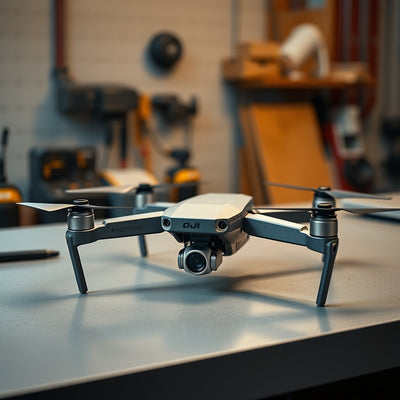
Rick Scott Backs DJI Ban as Florida Idles an Estimated $200M Fleet
Sen. Rick Scott has backed keeping DJI and Autel on the FCC Covered List, while Florida's own restrictions have idled an estimated $200 million in agency drones. The standoff is reshaping fleet planning, repair demand, and pre-owned DJI market expectations for commercial operators.

Quick answer
Sen. Rick Scott supports keeping DJI and Autel on the FCC Covered List, and Florida's own ban has idled an estimated $200 million in agency drones, according to DroneXL.co reporting.
- Florida agencies have an estimated $200 million in idled drone assets
- Rick Scott wants DJI and Autel to remain on the FCC Covered List
- The policy conflict affects fleet utilization, repair demand, and procurement planning
- Commercial operators face continued uncertainty around DJI equipment availability and resale
Evidence: DroneXL.co
Industrial drone procurement
Source a brand-new industrial drone for this mission.
Discuss mission fit, aircraft model, quantities, configuration, pickup, and lifecycle support with Reboot Hub.

Verified facts
What the available evidence confirms
| Entity | Position or status | Reported impact |
|---|---|---|
| Sen. Rick Scott | Backs keeping DJI and Autel on FCC Covered List | Reinforces federal restriction posture |
| Florida state agencies | Subject to state-level drone ban | Estimated $200 million in drones idled |
| DJI and Autel | Named in FCC Covered List debate | Procurement and operational uncertainty for operators |
Florida's drone policy standoff sharpened this week after Sen. Rick Scott signaled support for keeping DJI and Autel on the FCC Covered List, according to reporting by DroneXL.co. The development arrives as Florida's own state-level restrictions have already idled an estimated $200 million in agency drones, creating a layered compliance environment that commercial operators, fleet managers, and repair providers are now forced to navigate.
The report from DroneXL.co, published on October 21, 2026, frames the issue as a collision between federal security priorities and the practical reality of grounded public-sector fleets. For commercial buyers and service providers, the signal matters less as a single policy event and more as confirmation that DJI-related procurement friction is not easing in the near term.
The policy position and the idled fleet
DroneXL.co reports that Sen. Rick Scott wants DJI and Autel to remain on the FCC Covered List, a designation that restricts federal funding and procurement pathways for equipment from those manufacturers. At the same time, Florida's own ban has idled an estimated $200 million in agency drones, leaving public-sector assets grounded despite their original acquisition cost.
The practical consequence is a two-tier market: agencies that already own DJI hardware may be unable to deploy it, while new procurement is constrained by both state and federal policy signals. For repair shops and parts suppliers, this creates an unusual condition where service demand may persist for privately operated fleets even as public-sector utilization drops.
What this means for enterprise operators
Enterprise drone operators should read this as a warning that fleet planning cannot assume stable access to DJI or Autel hardware in regulated sectors. The Florida example shows that even fully purchased equipment can be grounded by policy, not by technical failure. Operators with exposure to state contracts, federally funded programs, or security-sensitive clients should evaluate whether their current fleet mix can survive a similar restriction in their own jurisdiction.
Reboot Hub analysis: The pre-owned DJI market is likely to feel this in two directions. On one side, agencies looking to offload idled equipment may increase supply of used DJI airframes and accessories. On the other side, private operators who remain legally able to fly DJI hardware may turn to inspected pre-owned units and genuine OEM spare parts to keep existing fleets operational without triggering new procurement restrictions. For teams evaluating their options, enterprise drone procurement support can help clarify which acquisition paths remain viable under current policy signals. For teams translating this development into fleet planning, Enterprise drone procurement support helps scope mission fit, unit quantity, maintenance coverage, and lifecycle support.
Fleet managers should also consider that repair and parts availability may become a more important variable than new-unit pricing. If new DJI procurement is constrained in certain sectors, the ability to source OEM-pulled parts and professional DJI repair services for existing airframes becomes a continuity strategy rather than a cost-saving measure.
Repair, resale, and the pre-owned DJI market
The Florida situation highlights a structural shift in how drone value is preserved. When new purchases are politically constrained, the remaining value concentrates in existing hardware that can be legally operated, maintained, and resold. For pre-owned DJI drones, this could support demand from private operators who face fewer restrictions than public agencies.
Repair providers may see a shift in customer mix. Public-sector fleets that are grounded may defer maintenance or offload equipment, while private operators with active flight operations will prioritize keeping current airframes airworthy. That means demand for genuine OEM spare parts, battery replacements, gimbal service, and airframe repair could remain steady even as new-unit sales face headwinds in restricted segments.
Reboot Hub analysis: Operators holding DJI inventory should monitor whether additional states follow Florida's lead. A broader pattern of state-level restrictions would likely compress resale values for agency-owned equipment while sustaining demand among private buyers who remain outside the restricted categories.
What operators should watch next
The immediate question is whether the FCC Covered List position translates into new federal procurement restrictions or remains a policy posture. Operators should watch for any formal rulemaking, updated agency guidance, or state-level legislation that mirrors Florida's approach. The DroneXL.co report does not indicate a specific new enforcement action, but the political alignment around DJI and Autel restrictions suggests continued pressure.
For buyers and fleet managers, the prudent move is to model multiple scenarios: continued access to DJI hardware, partial restriction by sector, or broader state-level bans. Each scenario changes the math on new purchases, pre-owned acquisitions, repair budgets, and parts inventory. Teams that plan for policy friction now will be better positioned than those that assume current access continues indefinitely.
FAQ
Frequently asked questions
What did Rick Scott support on DJI?
According to DroneXL.co reporting, Sen. Rick Scott supports keeping DJI and Autel on the FCC Covered List, which restricts federal procurement pathways for equipment from those manufacturers.
How many Florida agency drones are idled?
Florida's state-level ban has idled an estimated $200 million in agency drones, as reported by DroneXL.co.
What should commercial drone operators do after this news?
Operators should review their fleet exposure to DJI and Autel hardware, evaluate repair and parts continuity plans, and assess whether their jurisdiction or client base could face similar restrictions before making new procurement commitments.
Which sources support this update?
The visible evidence links identify DroneXL.co; each source is used only for the claim it directly supports.
What remains subject to change?
Retail pricing, availability, product bundles and regulatory timelines can change. Readers should verify the latest terms with the named retailer, manufacturer or regulator before acting.
How should buyers or operators use this analysis?
Use the verified facts as a starting point, then compare mission fit, lifecycle support, maintenance needs and current procurement terms before making a purchase or fleet decision.
Konsulterade källor
- DroneXL.co - primary source
Ytterligare officiell dokumentation var inte tillgänglig vid publiceringstillfället.
Reboot Hub Editorial tillför analys gällande köp, reparation, andrahandsvärde och drift för drönarägare. Om du upptäcker ett fel, kontakta oss för granskning av rättelse via vår redaktionella policy.