Evolver DFR Launches Turnkey Drone as First Responder Program for Public Safety
Evolver DFR has introduced a complete drone as first responder solution for public safety agencies, combining Parrot ANAFI UKR aircraft with DBOX autonomous docking stations and support from Drone Nerds. The launch signals a shift toward integrated, vendor-supported DFR procurement.

Quick answer
Evolver DFR has launched a complete drone as first responder program for public safety agencies, powered by Drone Nerds and combining Parrot ANAFI UKR aircraft with DBOX autonomous docking stations.
- The program packages aircraft, docking infrastructure, and vendor support into one public safety offering.
- It targets agencies seeking integrated DFR capability rather than piecemeal hardware procurement.
- SUAS News reported the launch; no independent agency confirmation was available in the source data.
- The move reflects broader commercial momentum around autonomous first responder drone systems.
Evidence: SUAS News
Industrial drone procurement
Source a brand-new industrial drone for this mission.
Discuss mission fit, aircraft model, quantities, configuration, pickup, and lifecycle support with Reboot Hub.

Verified facts
What the available evidence confirms
| Component | Role in the Evolver DFR program |
|---|---|
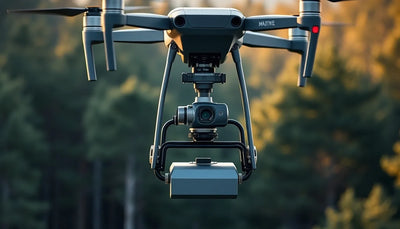
| Parrot ANAFI UKR aircraft | Airframe platform for first responder operations |
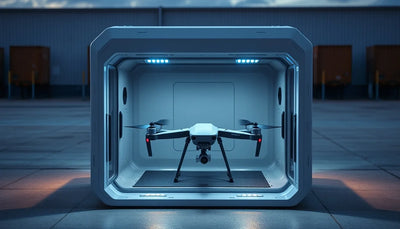
| DBOX autonomous docking station | Autonomous launch, landing, and charging infrastructure |
| Drone Nerds | Program power and vendor support partner |
| Public safety agencies | Target customer base for the integrated DFR solution |
Evolver DFR has debuted a complete drone as first responder program aimed at public safety agencies, according to reporting from SUAS News. The integrated solution pairs Parrot ANAFI UKR aircraft with DBOX autonomous docking stations, with Drone Nerds serving as the program's power and support partner. The announcement frames the offering as a turnkey route for agencies that want to stand up drone first responder capability without assembling hardware, software, and service relationships on their own.
For fleet operators and procurement teams watching the public safety segment, the launch matters less for any single hardware detail than for what it signals: vendors are now packaging DFR as a managed, repeatable program rather than a bespoke integration project. That shift has implications for how agencies budget, how they evaluate total cost of ownership, and how commercial drone service providers position themselves against integrated vendor offerings.
What the Evolver DFR program actually includes
Based on the SUAS News report, the Evolver DFR program combines three named components: Parrot ANAFI UKR aircraft, DBOX autonomous docking stations, and support delivered through Drone Nerds. The source summary does not provide detailed technical specifications, pricing, deployment timelines, or specific agency customers. Reboot Hub analysis should therefore treat the announcement as a program-level market signal rather than a fully specified product launch.
The practical takeaway for buyers is that the program appears designed to reduce integration friction. Instead of an agency sourcing an airframe from one vendor, a docking station from another, and support from a third, Evolver DFR presents a bundled path. For public safety procurement teams, that can simplify vendor management and clarify accountability when something goes wrong. For repair and maintenance planning, it also means agencies should ask early how spare parts, airframe service, and docking station upkeep are handled under the program.
What this means for enterprise operators
Enterprise drone operators and fleet managers should read the Evolver DFR launch as evidence that autonomous docking infrastructure is moving from pilot projects toward packaged commercial offerings. When a program bundles aircraft, docking hardware, and vendor support, the competitive landscape shifts: agencies may find it easier to justify procurement when one accountable vendor stands behind the full stack. That can accelerate adoption, but it can also lock buyers into a specific hardware and service ecosystem.
For commercial operators who already run multi-vendor fleets, the implication is to scrutinize interoperability and service terms before committing to an integrated DFR package. A bundled program may offer faster deployment, but fleet managers should still map out what happens when an aircraft needs repair, when a docking station requires firmware updates, or when mission requirements change. For organizations evaluating procurement options, enterprise drone procurement support can help clarify total cost of ownership across bundled and multi-vendor approaches. For teams translating this development into fleet planning, Enterprise drone procurement support helps scope mission fit, unit quantity, maintenance coverage, and lifecycle support.
The pre-owned DJI market is unlikely to see immediate disruption from this announcement. Public safety DFR programs built around Parrot and DBOX hardware operate in a different procurement lane than the broader commercial DJI ecosystem. However, if integrated DFR programs push more agencies toward vendor-managed service contracts, some fleet buyers may shift budget away from outright hardware purchases, which could indirectly influence demand patterns in the secondary market over time. For now, the effect is directional rather than direct.
Why integrated DFR programs are gaining ground
The Evolver DFR announcement fits a broader pattern in the public safety drone market: agencies want operational capability, not component assembly. Autonomous docking stations address a core DFR challenge by enabling remote launch and recovery without a pilot physically present at the scene. Pairing that infrastructure with a specific airframe and a named support partner reduces the number of decisions an agency must make before standing up a program.
SUAS News is the sole named source for this launch, and the report does not include independent confirmation from Evolver DFR, Drone Nerds, Parrot, or any public safety agency. Reboot Hub analysis should therefore treat the program's scope and availability as source-limited. Buyers evaluating the offering should request direct documentation from the vendors, including service-level commitments, repair turnaround expectations, and docking station maintenance requirements.
For repair providers and parts suppliers, integrated DFR programs raise a strategic question: will bundled vendor support channels capture maintenance revenue that independent shops previously served? If public safety agencies increasingly buy service contracts alongside hardware, independent repair businesses may need to position themselves as multi-vendor specialists capable of servicing docking stations, airframes, and supporting electronics. The DBOX component, in particular, introduces electromechanical infrastructure that differs from airframe-only repair work.
What buyers and fleet managers should watch next
The most important next step for any public safety agency or commercial operator evaluating this program is to request specifics that the initial announcement does not provide. Those include airframe service intervals, docking station uptime guarantees, spare parts availability, and whether the program supports mixed fleets or requires exclusive hardware commitments. Without those details, a turnkey label can obscure meaningful differences in long-term operating cost.
Fleet managers should also monitor whether other vendors respond with competing integrated DFR packages. When one player bundles aircraft, docking, and support, competitors often follow with their own programmatic offerings. That can benefit buyers through clearer pricing and service comparisons, but it also increases the importance of disciplined procurement. A program that looks complete on day one may still carry hidden costs in repair, parts, and software over a five-year deployment horizon.
For the broader commercial drone market, the Evolver DFR launch reinforces that public safety remains a leading edge for autonomous operations. Lessons learned in DFR deployments often migrate into infrastructure inspection, security patrol, and logistics use cases. Operators outside public safety should watch how docking station reliability, remote operations workflows, and vendor support models mature in DFR programs, because those patterns will likely shape adjacent commercial segments.
FAQ
Frequently asked questions
What is the Evolver DFR drone as first responder program?
According to SUAS News, Evolver DFR has introduced a complete drone as first responder program for public safety agencies, combining Parrot ANAFI UKR aircraft, DBOX autonomous docking stations, and support powered by Drone Nerds.
Who is the target customer for the Evolver DFR program?
The program targets public safety agencies that want an integrated drone first responder capability without assembling aircraft, docking infrastructure, and vendor support from separate sources.
What should a fleet manager do before evaluating this program?
Fleet managers should request detailed service terms, repair turnaround commitments, spare parts availability, and docking station maintenance responsibilities directly from the vendors, since the initial announcement does not specify those operational details.
Which sources support this update?
The visible evidence links identify SUAS News; each source is used only for the claim it directly supports.
What remains subject to change?
Retail pricing, availability, product bundles and regulatory timelines can change. Readers should verify the latest terms with the named retailer, manufacturer or regulator before acting.
How should buyers or operators use this analysis?
Use the verified facts as a starting point, then compare mission fit, lifecycle support, maintenance needs and current procurement terms before making a purchase or fleet decision.
Использованные источники
- SUAS News - primary source
На момент публикации дополнительная официальная документация отсутствовала.
Редакция Reboot Hub предоставляет анализ по вопросам покупки, ремонта, перепродажи и эксплуатации БПЛА для их владельцев. Если вы заметили ошибку, свяжитесь с нами для ее исправления в соответствии с нашей редакционной политикой.