FCC Votes to Cut Off Chinese Test Labs, DroneSense Adds LAANC
The FCC is moving to exclude Chinese test labs from U.S. equipment authorization, while DroneSense adds LAANC through Aloft and DJI reveals a faster Dock 4 battery swap. Commercial operators should track how these shifts affect certification, airspace access, and dock-based fleet planning.

Quick answer
The FCC is scheduled to vote October 29 on cutting off Chinese test labs from U.S. equipment authorization, DroneSense added LAANC through Aloft, and DJI's Dock 4 can swap batteries in 25 seconds, according to DroneXL.co reporting.
- FCC vote set for October 29 on Chinese test lab exclusion
- DroneSense integrates LAANC via Aloft
- DJI Dock 4 battery swap reported at 25 seconds
- Source: DroneXL.co, October 16, 2026
Evidence: DroneXL.co
Industrial drone procurement
Source a brand-new industrial drone for this mission.
Discuss mission fit, aircraft model, quantities, configuration, pickup, and lifecycle support with Reboot Hub.

Verified facts
What the available evidence confirms
| Development | Reported detail | Operational relevance |
|---|---|---|
| FCC Chinese lab vote | FCC to vote October 29 on cutting off Chinese test labs | May shift equipment authorization and certification paths for U.S. drone hardware |
| DroneSense LAANC | LAANC integration added through Aloft | Streamlines airspace authorization for DroneSense fleet users |
| DJI Dock 4 | Battery swap reported at 25 seconds | Reduces dock downtime for high-frequency enterprise missions |
Three developments this week touch different parts of the commercial drone stack: federal equipment certification, airspace authorization software, and dock-based fleet hardware. The common thread is operational friction, and each item changes how U.S. drone programs may need to plan procurement, compliance, and maintenance over the next several quarters.
According to reporting from DroneXL.co on October 16, 2026, the Federal Communications Commission is scheduled to vote October 29 on a measure that would cut off Chinese test labs from U.S. equipment authorization processes. The same report notes that DroneSense has added LAANC capability through Aloft, and that DJI's Dock 4 can swap batteries in 25 seconds. These are early signals rather than final rules or mass deployments, but they sit directly in the path of enterprise drone buyers and fleet managers.
The FCC vote and the certification question
The FCC action reported by DroneXL.co targets Chinese test laboratories that currently play a role in equipment authorization for radio-frequency devices entering the U.S. market. If the October 29 vote moves forward as described, manufacturers that rely on those labs for testing and certification could face a narrower set of approved facilities and potentially longer authorization timelines.
For commercial operators, the practical question is whether this shifts the availability or timing of new drone hardware, payloads, or RF accessories in the U.S. market. Certification bottlenecks rarely make headlines the way a product launch does, but they can quietly delay accessory releases, firmware-dependent radio modules, and enterprise peripherals. Fleet managers with multi-quarter procurement cycles should treat this as a supply-chain signal rather than an immediate operational problem.
Reboot Hub analysis: the most likely near-term effect is administrative, not a sudden halt to existing equipment. Hardware already authorized and in service would not automatically become non-compliant based on this vote alone. The larger risk sits with future product introductions and any manufacturer that has not already diversified its testing and certification pathways.
What this means for enterprise operators
The DroneSense LAANC integration through Aloft is the most immediately usable item for U.S. commercial teams. LAANC, the Low Altitude Authorization and Notification Capability, allows pilots to request controlled airspace access through approved service suppliers. If DroneSense users can now initiate those requests inside their existing fleet platform, the operational benefit is fewer software handoffs and a cleaner flight authorization record.
For operators running mixed fleets or evaluating fleet management platforms, airspace authorization workflow should be weighed alongside hardware compatibility and maintenance support. A platform that centralizes LAANC requests, flight logging, and asset tracking reduces the administrative burden on pilots and safety managers. Teams that currently juggle separate airspace tools may want to test whether this integration removes enough friction to justify a platform consolidation decision.
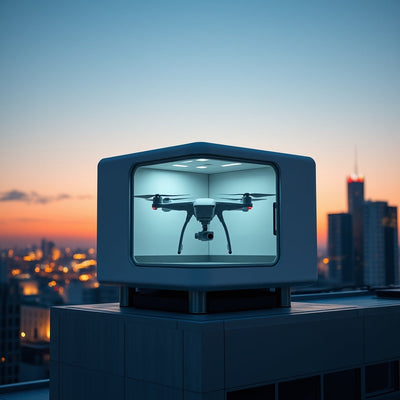
The DJI Dock 4 battery swap detail, reported at 25 seconds, matters most for high-frequency inspection, security, and mapping programs that run dock-based missions with minimal human presence. Faster battery turnaround means shorter gaps between automated flights, which can improve throughput at a fixed site. However, operators should not treat a reported swap time as a full duty-cycle guarantee. Site power, thermal conditions, battery logistics, and maintenance access all affect real-world dock availability. For organizations planning pre-owned DJI hardware or spare battery inventories, the dock ecosystem remains a separate procurement track from standalone aircraft, and OEM-pulled parts availability should be verified before committing to a dock-based expansion. For teams translating this development into fleet planning, Enterprise drone procurement support helps scope mission fit, unit quantity, maintenance coverage, and lifecycle support.
Pre-owned DJI market and repair implications
Regulatory pressure on Chinese test labs and the broader U.S.-China equipment environment continues to shape how commercial buyers think about DJI hardware. For the pre-owned DJI market, the relevant question is not whether existing aircraft suddenly lose value, but how buyers weigh near-term operational capability against longer-term certification and support uncertainty.
Pre-owned DJI drones remain attractive to operators who need proven airframes, established repair paths, and predictable spare parts supply. The FCC vote does not change the airworthiness or utility of aircraft already in service, but it does reinforce a pattern that procurement teams should monitor. Buyers who depend on a specific DJI model for recurring work may want to secure inspected pre-owned units and genuine OEM spare parts before any future certification or import shift tightens availability. For repair customers, the practical step is to confirm that replacement components are OEM-pulled and tested, rather than relying on unverified third-party parts that may not meet the same performance baseline.
For organizations evaluating larger fleet commitments, enterprise drone procurement support can help align hardware decisions with current compliance and maintenance realities.
What buyers and fleet managers should do now
The immediate action items differ by role. Fleet managers using DroneSense should verify whether LAANC access is available in their operating area and whether their current authorization workflow can move into the platform. Procurement leads should note the October 29 FCC vote date and ask hardware suppliers how their certification path may be affected for upcoming releases. Maintenance teams running dock-based operations should test whether faster battery swaps actually improve their mission cadence, rather than assuming a spec sheet number translates directly to field performance.
None of these developments requires an emergency response. They are early indicators of where U.S. drone regulation, airspace software, and enterprise hardware are heading. The operators who benefit most are those who track these signals calmly and adjust procurement, platform, and maintenance decisions before any single change becomes a bottleneck.
FAQ
Frequently asked questions
What is the FCC voting on regarding Chinese test labs?
According to DroneXL.co reporting, the FCC is scheduled to vote October 29, 2026 on a measure that would cut off Chinese test labs from U.S. equipment authorization processes. The full regulatory text and enforcement timeline were not detailed in the source report.
How does DroneSense LAANC integration help commercial pilots?
DroneSense added LAANC capability through Aloft, which means users may be able to request controlled airspace authorization within the DroneSense platform. This reduces the need to switch between separate tools for flight planning and airspace requests.
Does the FCC vote affect existing DJI drones already in service?
The source report does not indicate that existing authorized equipment would become non-compliant immediately. The likely effect is on future certification pathways and product introductions, but operators should monitor official FCC actions after the October 29 vote for definitive guidance.
Which sources support this update?
The visible evidence links identify DroneXL.co; each source is used only for the claim it directly supports.
What remains subject to change?
Retail pricing, availability, product bundles and regulatory timelines can change. Readers should verify the latest terms with the named retailer, manufacturer or regulator before acting.
How should buyers or operators use this analysis?
Use the verified facts as a starting point, then compare mission fit, lifecycle support, maintenance needs and current procurement terms before making a purchase or fleet decision.
Surse consultate
- DroneXL.co - primary source
La momentul publicării, nu era disponibilă documentație oficială suplimentară.
Redacția Reboot Hub oferă analize privind achiziția, reparația, revânzarea și operarea pentru proprietarii de drone. Dacă observați o eroare, contactați-ne pentru revizuirea corecției conform politicii noastre editoriale.