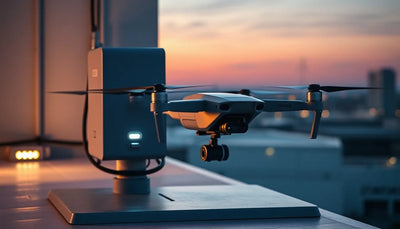
DJI Drone Dock Reportedly Adds 25-Second Battery Swapping
A new report points to a DJI drone dock with automated battery swapping in roughly 25 seconds. For enterprise fleet operators, the development signals a shift toward continuous, low-touch drone operations and new planning considerations around uptime and maintenance.

Quick answer
A report from BigGo Finance indicates DJI has unveiled a drone dock featuring battery swapping in approximately 25 seconds.
- The development was reported by BigGo Finance via Google News DJI
- The dock is said to perform battery swaps in about 25 seconds
- The report focuses on DJI enterprise and commercial drone infrastructure
- No official DJI specification confirmation was available in the source data
DJI has reportedly introduced a drone dock capable of swapping a battery in roughly 25 seconds, according to a report carried by BigGo Finance and surfaced through Google News DJI. The development, while light on technical detail in the available source material, points to a meaningful step in automated drone infrastructure for commercial and enterprise users.
Industrial drone procurement
Source a brand-new industrial drone for this mission.
Discuss mission fit, aircraft model, quantities, configuration, pickup, and lifecycle support with Reboot Hub.

The report frames the dock as a new product unveiling from DJI, the dominant player in commercial small unmanned aircraft. For fleet operators, repair customers, and second-hand market watchers, the timing and direction matter even when the full specification sheet is not yet public. Automated battery handling changes how drones are used, how often they fly, and how their components wear over time.
What the source makes clear is narrow but significant: DJI has unveiled a drone dock, and the headline feature is a battery swap cycle measured in seconds rather than minutes. BigGo Finance is the named primary reporting source for this development. Reboot Hub has not independently confirmed additional operational details, and no official DJI specification document was available for this analysis.
What the report actually says
The central claim in the BigGo Finance report is that DJI has unveiled a drone dock featuring a 25-second battery swapping capability. That is the concrete, source-supported fact. The report does not, in the material available to Reboot Hub, detail the dock's dimensions, compatible aircraft, environmental ratings, or regional availability.
This matters because enterprise drone infrastructure is often evaluated on total cycle time. If a dock can remove a depleted battery and install a charged one in about 25 seconds, the aircraft spends less time grounded between missions. For operators running inspection routes, security patrols, or mapping flights, that reduction in turnaround time can translate directly into more completed flights per shift.
Reboot Hub analysis: the 25-second figure should be read as a reported capability, not a verified specification. Battery swap mechanisms vary widely in design, and real-world performance can differ based on temperature, battery condition, and dock maintenance. Fleet managers should treat the number as a planning benchmark until official DJI documentation confirms it.
What this means for enterprise operators
Enterprise drone programs are increasingly built around repeatable, scheduled missions. A dock that automates battery replacement reduces the need for a human operator to be physically present for every flight cycle. That has direct implications for labor planning, remote site operations, and the economics of high-frequency data collection.
For buyers and fleet managers, the reported development suggests that automated docking infrastructure is becoming a more serious part of DJI's commercial roadmap. Operators who have been waiting for lower-touch drone operations may want to factor dock-compatible aircraft and charging infrastructure into their next procurement cycle. Reboot Hub analysis suggests that early adopters of dock systems often face a secondary cost: maintaining a larger pool of batteries and managing more frequent charge cycles.
The pre-owned DJI market may also feel the shift. As enterprise fleets adopt newer dock-compatible platforms, older aircraft can enter the inspected pre-owned market. For buyers considering pristine pre-owned DJI drones, the key question becomes compatibility: does the aircraft work with the operator's intended dock or charging workflow? Reboot Hub's enterprise drone procurement support helps commercial buyers evaluate fleet transitions without overcommitting to unverified infrastructure claims. For teams translating this development into fleet planning, Enterprise drone procurement support helps scope mission fit, unit quantity, maintenance coverage, and lifecycle support.
Repair and maintenance considerations also change. Automated battery swapping introduces mechanical contact points, alignment mechanisms, and wear surfaces that do not exist in manual operations. A dock that cycles batteries hundreds of times per month will require its own maintenance schedule. Operators should plan for dock servicing alongside aircraft servicing, and repair customers should ask whether their maintenance provider understands dock-related wear patterns.
Why battery logistics are becoming the bottleneck
Battery handling has long been one of the least glamorous parts of drone operations. Manual swaps are simple but labor-intensive. Charging hubs help, but they still require someone to move batteries between the charger and the aircraft. A dock that automates the swap step removes a key manual touchpoint.
The reported 25-second swap time is notable because it approaches the practical limit of what a mechanical system can do without compromising battery seating and electrical contact integrity. Faster is not always better if the mechanism damages battery connectors or misaligns the pack. Enterprise buyers should ask about cycle testing, contact wear, and failure modes before committing to any automated dock system.
For repair customers, the implication is forward-looking. As more fleets adopt automated docks, repair shops may see an increase in battery connector wear, dock alignment faults, and firmware-related charging errors. Genuine OEM spare parts and professional DJI repair will become more important for operators who cannot afford extended downtime on a dock that is central to their mission schedule.
What operators should watch next
The BigGo Finance report leaves several questions open. Which DJI aircraft are compatible with the dock? What is the dock's price position? Is the 25-second swap figure measured from landing to takeoff, or only the battery exchange itself? These details will determine whether the product is a niche enterprise tool or a broader commercial inflection point.
Reboot Hub analysis: operators should not delay current procurement decisions based on a single report. Dock infrastructure tends to roll out in phases, and compatibility is rarely universal. The practical move is to evaluate current fleet utilization, identify missions where automated turnaround would create measurable value, and monitor official DJI announcements for confirmation of the dock's specifications.
For the pre-owned DJI market, the reported dock development reinforces a pattern: enterprise hardware cycles are shortening as automation becomes more capable. Buyers looking at inspected pre-owned DJI drones should pay close attention to battery health, connector condition, and firmware status, because those factors increasingly determine whether an aircraft can slot into an automated workflow.
FAQ
Frequently asked questions
What did DJI reportedly unveil?
According to a BigGo Finance report carried by Google News DJI, DJI unveiled a drone dock featuring battery swapping in approximately 25 seconds.
Is the 25-second battery swap figure officially confirmed by DJI?
No official DJI specification document was available in the source data reviewed by Reboot Hub. The figure should be treated as a reported capability until DJI confirms it.
How could this affect pre-owned DJI drone buyers?
As enterprise fleets adopt dock-compatible aircraft, older models may enter the inspected pre-owned market. Buyers should verify battery health, connector condition, and dock compatibility before purchasing.
Which sources support this update?
The article distinguishes reported information from analysis and does not present an unverified source as official confirmation.
What remains subject to change?
Retail pricing, availability, product bundles and regulatory timelines can change. Readers should verify the latest terms with the named retailer, manufacturer or regulator before acting.
How should buyers or operators use this analysis?
Use the verified facts as a starting point, then compare mission fit, lifecycle support, maintenance needs and current procurement terms before making a purchase or fleet decision.
Surse consultate
- BigGo Finance via Google News - primary source
La momentul publicării, nu era disponibilă documentație oficială suplimentară.
Redacția Reboot Hub oferă analize privind achiziția, reparația, revânzarea și operarea pentru proprietarii de drone. Dacă observați o eroare, contactați-ne pentru revizuirea corecției conform politicii noastre editoriale.