DJI's New Drone Dock Swaps Batteries Instead of Waiting for Recharge
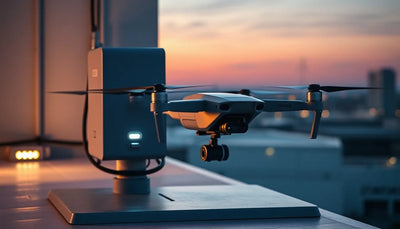
DJI has introduced a drone dock that swaps batteries automatically instead of waiting for a recharge. The development could reduce downtime for commercial operators running continuous missions and reshape how enterprise fleets plan charging cycles.

Quick answer
DJI has introduced a drone dock that swaps batteries automatically rather than waiting for a recharge cycle, according to a report by The Gadgeteer.
- The dock replaces recharge waiting time with automated battery swapping.
- The report appeared in The Gadgeteer's coverage of DJI products.
- The development is relevant to enterprise and commercial drone fleet operators.
- No official DJI specification details were confirmed in the source material.
DJI has introduced a drone dock that swaps batteries automatically instead of waiting for a recharge, according to a report by The Gadgeteer. The report, surfaced through Google News DJI coverage, describes a hardware approach that changes the operational rhythm of commercial drone missions. Instead of a drone sitting idle while its battery charges, the dock removes a depleted battery and installs a fresh one, potentially keeping the aircraft in service for longer stretches.
Industrial drone procurement
Source a brand-new industrial drone for this mission.
Discuss mission fit, aircraft model, quantities, configuration, pickup, and lifecycle support with Reboot Hub.

The development matters because charging time has long been one of the quiet constraints on commercial drone operations. A drone that can fly for 30 or 40 minutes may need an hour or more to recharge before the next mission. Battery swapping compresses that gap. For operators running inspection routes, security patrols, mapping flights, or delivery trials, the difference between waiting and swapping is measured in mission availability, not just convenience.
What the source actually reports
The Gadgeteer's report is the primary source for this development. The publication describes DJI's new drone dock as a system that swaps batteries instead of waiting for a recharge. The report does not include detailed technical specifications, compatibility lists, pricing, or official launch timing in the source material available to Reboot Hub. That is an important distinction: the central fact is the battery-swap approach itself, not a verified spec sheet.
Reboot Hub analysis should be careful here. Without verified specification context, it would be premature to state which DJI drone models the dock supports, how many batteries the dock can hold, what the swap cycle time is, or whether the dock integrates with specific enterprise software platforms. Those details may exist in DJI's official materials, but they are not present in the source data for this article. What the source supports is narrower: DJI has a dock product that swaps batteries, and that represents a meaningful shift in how drone downtime is managed.
The absence of confirmed specifications does not reduce the commercial significance. Battery swapping as a concept has been discussed in the drone industry for years, but seeing a major manufacturer like DJI move toward it in a dock form factor signals that the company is thinking about continuous operations, not just single-flight performance. For buyers and fleet planners, that is a signal worth tracking even before full specifications are public.
What this means for enterprise operators
For enterprise drone operators, battery swapping changes the arithmetic of fleet planning. A single drone with a recharge cycle may only complete a limited number of missions per shift. A drone paired with a swapping dock could, in principle, complete back-to-back missions as long as charged batteries are available. That shifts the bottleneck from the aircraft's battery to the dock's battery inventory and the operator's charging infrastructure. For teams translating this development into fleet planning, Enterprise drone procurement support helps scope mission fit, unit quantity, maintenance coverage, and lifecycle support.
The practical implication is that fleet managers may need to rethink how they allocate drones, batteries, and charging stations. If a dock can swap batteries quickly, the value of having multiple spare batteries on hand increases. The value of a second or third drone as a downtime workaround may decrease in some scenarios. For operators who currently run two drones to maintain coverage while one charges, a single drone with a swapping dock could potentially deliver similar availability with less hardware.
There is also a procurement angle. Enterprise buyers evaluating DJI hardware should consider whether battery-swap docks will become a standard part of future enterprise bundles. If DJI positions the dock as a core accessory for commercial lines, procurement teams may want to factor dock compatibility into their next purchase decision. For organizations that need continuous coverage, the dock could become as important as the drone itself. Reboot Hub's enterprise drone procurement support can help fleet buyers evaluate how new DJI hardware fits into their operational plans.
Repair and maintenance considerations also shift. A dock with mechanical battery-swapping components introduces new points of wear. Robotic arms, battery connectors, and alignment mechanisms will require inspection and servicing over time. Operators who adopt this technology should plan for dock maintenance as part of their total cost of ownership, not just drone maintenance. That is a new line item for many fleet budgets.
Pre-owned DJI market implications
The introduction of a battery-swap dock could influence the pre-owned DJI market in several ways. First, if the dock is compatible only with newer DJI enterprise models, older drones may become less attractive to operators who want dock-based continuous operations. That could accelerate trade-in cycles and increase the supply of pre-owned DJI drones as operators upgrade to dock-compatible hardware.
Second, the pre-owned market may see a shift in what buyers value. A used drone that is compatible with a battery-swap dock could command a premium over a similar drone that is not. Buyers in the pre-owned market should ask about dock compatibility before purchasing, even if they do not plan to buy a dock immediately. The resale value of a drone is increasingly tied to its ecosystem, not just its flight performance.
Third, battery inventory becomes a more important part of the pre-owned conversation. Operators who sell or trade in drones may also be selling batteries, chargers, and now potentially dock components. Buyers of pristine pre-owned DJI drones should evaluate whether the included battery set is sufficient for their mission profile, especially if they plan to pair the drone with a swapping dock later.
For repair customers, the dock development reinforces a broader trend: DJI hardware is becoming more modular and more mechanically complex at the same time. Professional DJI repair services will need to stay current with dock components, battery connectors, and swap mechanisms. Operators who invest in dock-based systems should identify repair partners who can service both the drone and the dock, rather than treating them as separate systems.
What operators should watch next
The most important next step for operators is to wait for verified specifications from DJI. The source report establishes the battery-swap concept, but it does not provide the details that procurement decisions require. Compatibility, swap cycle time, battery capacity, environmental ratings, and software integration are all open questions. Operators should treat the current report as an early signal, not a final specification.
In the meantime, fleet managers can take one concrete action: audit their current charging infrastructure and battery inventory. If battery-swap docks become a standard part of DJI's enterprise lineup, operators with a well-organized battery rotation system will be better positioned to adopt the technology. Operators who currently rely on ad-hoc charging schedules may find the transition more disruptive.
The broader market signal is also worth noting. DJI's move toward battery swapping suggests that the company sees continuous operations as a growth area. That aligns with trends in security, inspection, and logistics, where mission frequency matters more than single-flight endurance. For commercial drone buyers, the question is no longer just how long a drone can fly, but how quickly it can fly again.
FAQ
Frequently asked questions
What did DJI announce about the new drone dock?
According to a report by The Gadgeteer, DJI has introduced a drone dock that swaps batteries automatically instead of waiting for a recharge. The source report does not include detailed specifications or compatibility information.
Which DJI drones are compatible with the battery-swap dock?
The source material does not confirm which DJI drone models are compatible with the new dock. Operators should wait for verified specifications from DJI before making procurement decisions based on dock compatibility.
How does battery swapping affect pre-owned DJI drone values?
If the dock is compatible only with newer DJI enterprise models, older drones may become less attractive to operators who want continuous operations. That could accelerate trade-in cycles and shift pre-owned market demand toward dock-compatible hardware.
Which sources support this update?
The article distinguishes reported information from analysis and does not present an unverified source as official confirmation.
What remains subject to change?
Retail pricing, availability, product bundles and regulatory timelines can change. Readers should verify the latest terms with the named retailer, manufacturer or regulator before acting.
How should buyers or operators use this analysis?
Use the verified facts as a starting point, then compare mission fit, lifecycle support, maintenance needs and current procurement terms before making a purchase or fleet decision.
참고 문헌
- The Gadgeteer via Google News - primary source
발행 시점에 이용 가능한 추가 공식 문서는 없었습니다.
Reboot Hub 편집팀은 드론 소유자를 위해 구매, 수리, 재판매 및 운영 분석을 제공합니다. 오류를 발견하신 경우, 편집 정책에 따라 수정 검토를 요청해 주시기 바랍니다.