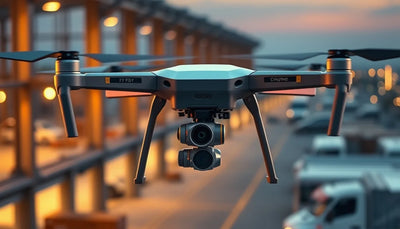
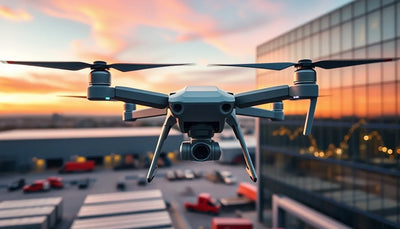
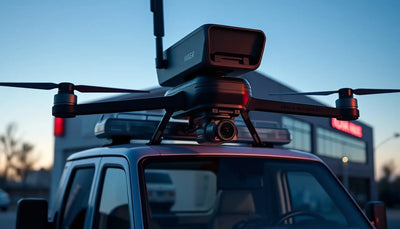
Infinit Drones Launches Dock M400 for DJI Matrice 400
Infinit Drones has launched the Dock M400, an autonomous docking platform built for the DJI Matrice 400. The announcement signals growing third-party infrastructure support for enterprise drone fleets and could reshape how operators plan persistent, repeatable missions.

Quick answer
Infinit Drones launched the Dock M400, an autonomous docking platform designed for the DJI Matrice 400, according to an EIN News report.
- The Dock M400 targets autonomous docking for the DJI Matrice 400 platform
- The launch was reported by EIN News and surfaced via Google News DJI
- The development points to expanding third-party infrastructure for enterprise drone operations
- Specific pricing, availability, and technical specifications were not included in the source report
Infinit Drones has introduced the Dock M400, an autonomous docking platform built specifically for the DJI Matrice 400, according to a report distributed by EIN News. The announcement, which surfaced through Google News DJI, marks another step in the expansion of third-party infrastructure designed to support enterprise drone operations without requiring a pilot to be physically present at the launch site.
Industrial drone procurement
Source a brand-new industrial drone for this mission.
Discuss mission fit, aircraft model, quantities, configuration, pickup, and lifecycle support with Reboot Hub.

The report, attributed to Infinit Drones, frames the Dock M400 as a purpose-built solution for the Matrice 400 airframe. While the source material does not include detailed technical specifications, pricing, or a confirmed availability timeline, the launch itself carries meaningful weight for commercial operators who are already evaluating how to scale repeatable inspection, survey, and security missions across distributed sites.
What the Dock M400 announcement signals
The central development here is straightforward: a third-party manufacturer is publicly aligning a docking product with the DJI Matrice 400, one of the enterprise-focused platforms in DJI's industrial lineup. According to the EIN News report, Infinit Drones is positioning the Dock M400 as an autonomous docking platform for that airframe. This matters because docking stations represent a shift away from manual battery swaps and pilot-supervised landings toward scheduled, remotely initiated operations.
For fleet managers, the practical implication is that infrastructure decisions are becoming as important as airframe decisions. A docking station is not a casual accessory; it is a fixed asset that determines where a drone can operate, how it recharges or transfers data, and how much human intervention a routine mission requires. The Dock M400 announcement suggests that third-party vendors see enough demand in the Matrice 400 ecosystem to justify building dedicated hardware around it.
Reboot Hub analysis: the absence of published specifications in the source report means operators should treat the Dock M400 as an early-stage product announcement rather than a procurement-ready item. Buyers evaluating docking infrastructure should request detailed compatibility, power, environmental, and maintenance documentation directly from Infinit Drones before committing budget.
What this means for enterprise operators
Enterprise operators running Matrice 400 aircraft should read this announcement as a signal to revisit their infrastructure planning assumptions. Autonomous docking platforms can reduce the labor cost of routine missions, but they also introduce new considerations around site security, power availability, network connectivity, and maintenance of the dock itself. A docking station that sits idle or fails in the field can disrupt operations just as effectively as a damaged airframe.
For organizations that already operate mixed fleets or are planning to expand beyond manually supervised flights, the Dock M400 represents another potential building block in a broader autonomous workflow. The practical question for a fleet manager is not simply whether the dock works with the Matrice 400, but whether the total cost of ownership—installation, power, connectivity, spare parts, and service—fits within the operating budget. Operators who need help structuring multi-unit procurement or evaluating total fleet cost can use enterprise drone procurement support resources to compare infrastructure and airframe investments side by side. For teams translating this development into fleet planning, Enterprise drone procurement support helps scope mission fit, unit quantity, maintenance coverage, and lifecycle support.
The pre-owned DJI market may also feel a secondary effect. As docking infrastructure matures for platforms like the Matrice 400, demand for compatible airframes can shift. Operators who previously considered selling or replacing older Matrice units may instead retain them as dock-deployed assets, while buyers in the pre-owned DJI market may begin looking specifically for airframes that are compatible with emerging docking ecosystems. This kind of infrastructure-driven demand can influence residual values and the availability of inspected pre-owned enterprise drones.
Repair, spare parts, and long-term ownership
One underappreciated dimension of docking platforms is their impact on maintenance cycles. A drone that lands, charges, and launches repeatedly from a fixed dock experiences different wear patterns than one that is hand-launched and hand-recovered. Landing gear, sensors, and charging contacts become routine wear items, and operators may need to plan for more frequent inspections of components that were previously considered low-maintenance.
The Dock M400 announcement does not include details about spare parts availability, service intervals, or repair support for the dock itself. That is a gap operators should press on. A docking station is a mechanical and electrical system with its own failure modes, and a fleet manager who budgets only for airframe repairs may be caught off guard by dock-side maintenance costs. Professional DJI repair services and genuine OEM spare parts remain relevant for the airframe, but the dock introduces a new category of infrastructure upkeep that must be factored into long-term ownership planning.
For repair customers and independent operators, the broader lesson is that enterprise drone ownership is becoming more system-oriented. The value of a single airframe is increasingly tied to the infrastructure and software around it. A Matrice 400 that is compatible with a growing range of docking platforms may hold its operational value longer than an airframe that lacks such compatibility, which is a meaningful consideration for anyone buying or selling in the pre-owned DJI market.
What buyers and fleet managers should watch next
The Dock M400 launch is best understood as an early indicator of where enterprise drone infrastructure is heading. Third-party vendors are betting that autonomous docking will become a standard feature of industrial drone programs, not a niche experiment. For buyers, that means the evaluation criteria for enterprise drones are expanding beyond flight performance and camera payloads to include docking compatibility, remote operation workflows, and infrastructure serviceability.
Fleet managers should monitor whether Infinit Drones releases detailed specifications, environmental ratings, power requirements, and service documentation for the Dock M400. Those details will determine whether the platform is viable for real-world deployments or remains a concept-stage announcement. In the meantime, operators who are planning multi-site or persistent missions should begin mapping where docking infrastructure could reduce labor costs and where site constraints—power, connectivity, security—might limit its usefulness.
The commercial drone market is moving toward systems that operate with less human supervision, and docking stations are a core piece of that shift. Whether the Dock M400 becomes a widely adopted platform or a niche product remains to be seen, but the direction of travel is clear: enterprise drone programs are becoming infrastructure programs.
FAQ
Frequently asked questions
What is the Dock M400?
The Dock M400 is an autonomous docking platform announced by Infinit Drones and built for the DJI Matrice 400, according to an EIN News report.
Does the announcement include pricing or technical specifications?
No. The source report does not include pricing, availability, or detailed technical specifications for the Dock M400. Operators should request those details directly from Infinit Drones.
How could this affect the pre-owned DJI market?
If docking infrastructure for the Matrice 400 gains adoption, compatible airframes may hold operational value longer, which could influence demand and pricing in the pre-owned DJI market.
Which sources support this update?
The article distinguishes reported information from analysis and does not present an unverified source as official confirmation.
What remains subject to change?
Retail pricing, availability, product bundles and regulatory timelines can change. Readers should verify the latest terms with the named retailer, manufacturer or regulator before acting.
How should buyers or operators use this analysis?
Use the verified facts as a starting point, then compare mission fit, lifecycle support, maintenance needs and current procurement terms before making a purchase or fleet decision.
Fonti consultate
- DIU Blue UAS - official government source
Al momento della pubblicazione non era disponibile ulteriore documentazione ufficiale.
Reboot Hub Editorial fornisce analisi sugli acquisti, le riparazioni, la rivendita e l'operatività per i proprietari di droni. In caso di errori, contattateci per una revisione della correzione in conformità con la nostra politica editoriale.
Questo articolo rappresenta un commento di mercato per operatori e acquirenti di droni e non costituisce una consulenza finanziaria. Reboot Hub non fornisce consulenza finanziaria né raccomanda operazioni su titoli.