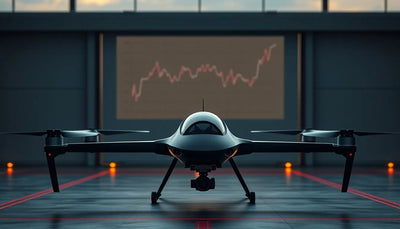
USAF Now Plans At Least 500 Collaborative Combat Aircraft By 2032
The U.S. Air Force has reportedly raised its Collaborative Combat Aircraft target to at least 500 airframes by 2032, alongside plans for 500 additional drones to succeed the MQ-9. The shift signals long-term demand for attritable unmanned systems and a changing procurement landscape.

Quick answer
The U.S. Air Force now reportedly plans a fleet of at least 500 Collaborative Combat Aircraft by 2032, up from previously stated figures, and also wants roughly 500 additional drones to succeed the MQ-9.
- The 500 CCA target is higher than recently stated USAF planning figures
- The service also reportedly wants around 500 new drones to replace or succeed MQ-9 platforms
- The development points to sustained multi-year demand for attritable unmanned systems
- The report comes from The War Zone, citing USAF planning discussions
Evidence: The War Zone
Industrial drone procurement
Source a brand-new industrial drone for this mission.
Discuss mission fit, aircraft model, quantities, configuration, pickup, and lifecycle support with Reboot Hub.

Verified facts
What the available evidence confirms
| Program element | Reported target | Timeframe |
|---|---|---|
| Collaborative Combat Aircraft | At least 500 airframes | By 2032 |
| MQ-9 successor drones | Around 500 additional drones | Not specified in source |
The U.S. Air Force has reportedly raised its planning target for Collaborative Combat Aircraft to at least 500 airframes by 2032, according to reporting from The War Zone. The same report indicates the service now also wants roughly 500 additional drones to succeed its MQ-9 fleet, a figure that would represent a substantial expansion of the Air Force's unmanned inventory over the next decade.
For commercial drone operators, repair providers, and fleet buyers, the development matters less for the specific airframes involved and more for what it signals about the broader unmanned systems market. When a major military customer commits to attritable, mass-produced drone architectures at this scale, it tends to accelerate component supply chains, normalize high-volume production methods, and reshape expectations around drone lifecycle management.
What the reported USAF planning shift actually says
The War Zone reports that the 500-aircraft CCA target represents a step up from recently stated U.S. Air Force plans. The publication frames the figure as part of evolving service planning rather than a final acquisition decision. The report also notes the service now wants 500 more new drones to succeed its MQ-9 platforms, a separate line of effort from the CCA program.
Reboot Hub analysis: the key commercial signal here is volume. A 500-unit CCA fleet, plus a parallel 500-unit MQ-9 successor program, implies a production cadence that would require sustained manufacturing capacity, standardized components, and repair pipelines that can handle high operational tempo. Even if the final numbers shift, the direction of travel points toward larger, more predictable unmanned fleet investments.
What this means for enterprise operators
Enterprise drone buyers and fleet managers should read this as an early indicator of where the broader unmanned systems supply chain is heading. Military programs at this scale tend to pull component suppliers, battery makers, sensor manufacturers, and airframe producers toward higher-volume, lower-cost production models. That dynamic can eventually filter into commercial markets through shared suppliers and manufacturing techniques.
The reported MQ-9 successor planning is also relevant for operators who think about fleet longevity. If the Air Force is preparing to replace a platform that has been in service for decades, it suggests that even mature unmanned systems eventually face obsolescence pressure. Commercial fleet managers should apply the same logic to their own hardware planning: a drone bought today will not be operationally current forever, and the cost of replacement cycles deserves as much attention as the initial purchase price. For organizations evaluating pre-owned DJI drones or professional DJI repair as ways to manage fleet costs, understanding replacement cycle economics is essential. Reboot Hub offers enterprise drone procurement support for teams building cost-effective multi-aircraft programs. For teams translating this development into fleet planning, Enterprise drone procurement support helps scope mission fit, unit quantity, maintenance coverage, and lifecycle support.
Why volume targets matter for the drone supply chain
The War Zone's reporting highlights a planning environment where unmanned systems are no longer treated as niche or experimental. A 500-airframe CCA fleet, combined with hundreds of MQ-9 successor drones, would require a level of parts standardization and repair throughput that the defense industrial base has not historically maintained for unmanned platforms.
For commercial repair providers and spare parts suppliers, this is a meaningful signal. High-volume military programs often drive investment in testing equipment, diagnostic tooling, and component qualification processes that later benefit commercial repair operations. The same suppliers that build connectors, actuators, and flight controllers for defense programs frequently serve commercial drone manufacturers as well. A sustained military demand signal can stabilize those supplier relationships and reduce lead times across the board.
What buyers and fleet planners should watch next
The reported CCA and MQ-9 successor targets are planning figures, not signed contracts. Fleet planners should watch for formal budget submissions, contract awards, and production milestones that would confirm the trajectory. The War Zone's report does not indicate that any agency or official has publicly confirmed the specific numbers, so the figures should be treated as reported planning discussions rather than finalized commitments.
Still, the direction is consistent with broader trends in defense robotics and unmanned systems. Operators who manage multi-aircraft commercial fleets should consider how standardized platforms, modular repair approaches, and pre-owned hardware can reduce total ownership costs as the market matures. The lesson from the reported USAF planning is straightforward: unmanned fleets are scaling up, and the operators who plan for lifecycle costs early will be better positioned than those who treat each drone as a standalone purchase.
FAQ
Frequently asked questions
Is the 500 Collaborative Combat Aircraft target confirmed by the U.S. Air Force?
No. The figure is reported by The War Zone as part of evolving USAF planning discussions. It has not been confirmed through a formal contract announcement or official public statement in the source data.
What is the MQ-9 successor drone program mentioned in the report?
The source indicates the U.S. Air Force now wants around 500 new drones to succeed its MQ-9 platforms. Specific program names, timelines, and technical details for the successor drones were not provided in the source data.
How does this affect commercial drone buyers and repair customers?
The reported scale signals sustained investment in unmanned systems, which can strengthen component supply chains and normalize high-volume production methods. Commercial operators may benefit indirectly through more stable parts availability and shared supplier capacity over time.
Which sources support this update?
The visible evidence links identify The War Zone; each source is used only for the claim it directly supports.
What remains subject to change?
Retail pricing, availability, product bundles and regulatory timelines can change. Readers should verify the latest terms with the named retailer, manufacturer or regulator before acting.
How should buyers or operators use this analysis?
Use the verified facts as a starting point, then compare mission fit, lifecycle support, maintenance needs and current procurement terms before making a purchase or fleet decision.
Konzultált források
- The War Zone - primary source
A közzététel időpontjában további hivatalos dokumentáció nem állt rendelkezésre.
A Reboot Hub szerkesztősége vásárlási, javítási, viszonteladási és üzemeltetési elemzéseket nyújt dróntulajdonosok számára. Ha hibát észlel, kérjük, jelezze nekünk a szerkesztői irányelvünknek megfelelően a javítás érdekében.