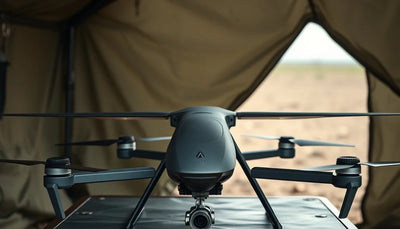
DJI Drone Dock Report Points to 25-Second Automated Battery Swaps
A new industry report describes a DJI drone dock capable of automated battery swaps in roughly 25 seconds. The development matters for fleet operators evaluating continuous, low-touch drone operations and for buyers tracking how DJI enterprise hardware is evolving.

Quick answer
A Google News DJI report describes a DJI drone dock with automated battery swaps completed in approximately 25 seconds.
- The report attributes the 25-second battery swap figure to the named DJI drone dock development.
- The dock concept targets automated, low-touch drone operations for commercial users.
- No official DJI confirmation or full technical specification was included in the source data.
- Fleet operators should treat the timing figure as a source-limited report until verified.
A new industry report circulating through Google News DJI describes a DJI drone dock concept built around automated battery swaps completed in roughly 25 seconds. The report, titled “DJI Drone Dock with Automated 25-Second Battery Swaps,” frames the development as a step toward continuous drone operations with minimal human intervention. For commercial drone buyers and fleet managers, the headline figure matters because battery handling remains one of the most labor-intensive parts of repeat-mission drone work.
Industrial drone procurement
Source a brand-new industrial drone for this mission.
Discuss mission fit, aircraft model, quantities, configuration, pickup, and lifecycle support with Reboot Hub.

The source material is limited to a summary-level report and does not include official DJI confirmation, a product name, pricing, availability, or full technical specifications. Reboot Hub analysis therefore treats the 25-second swap figure as a source-limited data point rather than a verified DJI specification. Even so, the reported concept aligns with a broader enterprise shift toward dock-based drone infrastructure that reduces manual battery handling and extends operational windows.
What the report actually says
According to the named Google News DJI source, the DJI drone dock is described as supporting automated battery swaps in approximately 25 seconds. The report does not specify which DJI airframe the dock would serve, whether the dock handles one drone or multiple units, or what power and connectivity requirements the system would need. Those omissions are significant for procurement teams because dock compatibility determines whether an existing fleet can adopt the system without replacing airframes.
The 25-second figure, if accurate, would represent a meaningful reduction in ground time between missions. Manual battery swaps on commercial drones typically require a pilot or technician to land the aircraft, power it down, remove a depleted pack, insert a fresh one, and run pre-flight checks. Automating that sequence inside a dock could compress turnaround time and reduce the risk of connector wear, improper seating, or missed pre-flight steps. However, without verified spec context, operators should not build fleet planning models around the exact timing.
What this means for enterprise operators
For enterprise fleet managers, the reported dock concept points to a future where routine inspection, security, and mapping missions run on a schedule without a technician physically present at every battery change. That has direct implications for labor planning, site staffing, and the total cost of ownership for high-frequency drone programs. A dock that handles battery swaps automatically could make overnight or early-morning missions more practical, particularly for perimeter security, infrastructure monitoring, and agricultural survey work.
Operators evaluating this development should focus on integration risk rather than the headline speed. A dock only creates value if it works with the drones a fleet already owns or plans to buy. If the dock requires a specific airframe, firmware version, or mounting configuration, adoption becomes a capital decision rather than an accessory purchase. Reboot Hub analysis suggests that procurement teams ask vendors for confirmed compatibility lists and service intervals before committing budget. For organizations building or refreshing enterprise drone programs, Enterprise drone procurement support can help structure multi-unit purchasing decisions around verified hardware requirements. For teams translating this development into fleet planning, Enterprise drone procurement support helps scope mission fit, unit quantity, maintenance coverage, and lifecycle support.
The pre-owned DJI market could also feel the effect over time. If dock-compatible airframes become the standard for enterprise deployments, older models without dock support may see softer demand from commercial buyers even if they remain capable standalone aircraft. Conversely, operators who do not need continuous automated missions may find value in inspected pre-owned DJI drones that still perform well for manual or semi-automated workflows. The key is matching the airframe to the operational model rather than assuming every fleet needs dock infrastructure.
Repair and maintenance implications
Automated battery swaps introduce a new maintenance surface for drone service providers. A dock with a robotic swap mechanism includes motors, actuators, alignment sensors, and battery contacts that will require inspection and eventual repair. Fleet operators who adopt dock-based systems should expect to add dock maintenance to their service agreements, not just airframe and battery upkeep. The report does not describe service intervals, spare part availability, or repair workflows for the dock itself, which leaves a gap for third-party repair providers to fill as the technology matures.
For repair customers, the practical takeaway is that battery connectors and seating mechanisms become even more critical when a machine handles the swap instead of a human. A misaligned battery can damage connectors, cause power interruptions, or create heat buildup. Professional DJI repair providers will need to inspect not only the drone battery bay but also the dock-side contacts and alignment hardware. Genuine OEM spare parts will matter here because aftermarket battery connectors or dock components could introduce tolerance issues that automated systems are less forgiving of than human operators.
What buyers should do differently now
The responsible near-term move for drone buyers and fleet operators is to treat the reported DJI drone dock as an early signal rather than a confirmed product. Budget planning can account for dock infrastructure as a potential future line item, but purchase decisions should still be based on verified airframe performance, payload needs, and current operational requirements. Rushing to buy dock-compatible hardware before official specifications exist creates unnecessary risk.
Operators who run high-frequency missions should document their current battery turnaround times and labor costs. That baseline makes it easier to evaluate whether a 25-second automated swap would actually change their economics once verified details emerge. For some teams, the bottleneck is not battery swaps but data offload, airspace approval, or sensor calibration. In those cases, a dock may deliver less value than the headline suggests. The source report does not address those workflow factors, so Reboot Hub analysis recommends a full operational review before any procurement commitment.
FAQ
Frequently asked questions
Is the 25-second battery swap figure officially confirmed by DJI?
No. The figure comes from a Google News DJI report and has not been confirmed by DJI in the source data provided. Operators should treat it as a source-limited report until official specifications are published.
Which DJI drones would work with the reported dock?
The source report does not specify which airframes the dock supports. Compatibility remains unverified, so fleet managers should not assume existing DJI models will work with the dock without official confirmation.
How could this affect the pre-owned DJI drone market?
If dock-compatible enterprise airframes become the standard, older models without dock support could see softer commercial demand. However, operators without continuous mission needs may still find strong value in inspected pre-owned DJI drones for manual or semi-automated workflows.
Which sources support this update?
The article distinguishes reported information from analysis and does not present an unverified source as official confirmation.
What remains subject to change?
Retail pricing, availability, product bundles and regulatory timelines can change. Readers should verify the latest terms with the named retailer, manufacturer or regulator before acting.
How should buyers or operators use this analysis?
Use the verified facts as a starting point, then compare mission fit, lifecycle support, maintenance needs and current procurement terms before making a purchase or fleet decision.
تمت استشارة المصادر
- Content + Technology via Google News - primary source
ولم تكن الوثائق الرسمية الإضافية متاحة في وقت النشر.
تضيف افتتاحية Reboot Hub المشتري والإصلاح وإعادة البيع والتحليل التشغيلي لأصحاب الطائرات بدون طيار. إذا اكتشفت خطأ، فاتصل بنا لمراجعة التصحيح من خلال سياستنا التحريرية.